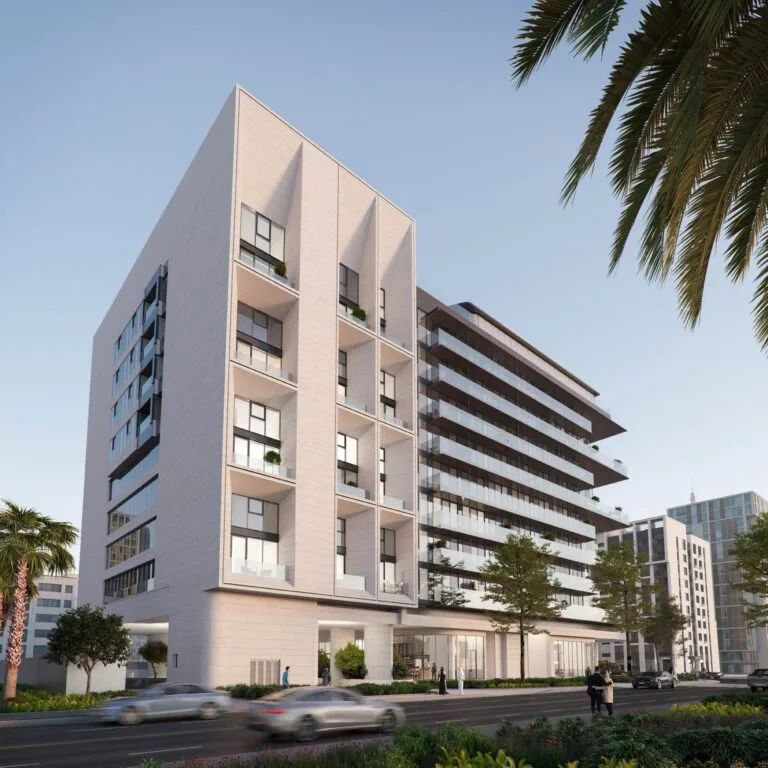
How to sell an apartment in Phase 2 – in this article we analyse real transaction data, prices, rental yields and liquidity for owners and investors.
For clarity, we may refer to the same unit as an apartment, a property, or a home depending on context.
How to sell a 1-bedroom apartment in Phase 2 Dubai
How to sell a 1-bedroom apartment in Phase 2 Dubai if you have been renting it short-term and now want to exit at a strong price? The answer is not only about “market price per square foot”. Serious buyers in Al Furjan today look very closely at income history, operating model (short-term vs yearly rent), online ratings on booking platforms and, increasingly, the status of your holiday home license. All of this directly affects how they calculate risk and what they are willing to pay.
In this article, we use real-time data for 1-bedroom units in Phase 2, Al Furjan and combine it with practical transaction experience to show how a landlord can transition from short-term operations to a clean, well-structured sale. The focus is on investor-type buyers, because they are usually the ones who pay the best price for income-generating apartments if the documentation and story are clear.

What you must know about the Dubai market before selling
Related Articles
- ROI analysis of apartment in BOTANICA: DLD data and real deals
- How to sell an apartment in Dubai in Dubai Wharf Tower 3 – analysis 2026
- Top 10 Tallest Skyscrapers in the UAE: Living, Investing and Working Above the Clouds
- How to buy an unit in Dubai in Mediterranean Villas – analysis 2026
- Off-plan vs ready property in Dubai: why the launch price sits above the resale market
The first thing to understand is that Dubai is in an investor-driven phase. Even when an end user buys a 1-bedroom in Al Furjan, they usually compare your asking price with what they could earn if they rented the unit out long-term or as a holiday home. For a seller who has been operating short-term rentals, this is good news: if you can clearly show what the apartment can generate, you can justify a stronger price.
In the analysed dataset for this specific building, there are no recorded sales or rental transactions yet. That means two things:
- There is no internal, building-level history of concluded prices to anchor negotiations.
- Buyers will benchmark your apartment against the wider Al Furjan market and, very practically, against current asking rents in Phase 2.
At the same time, Dubai regulations around holiday homes have matured. Serious buyers now ask:
- Is the unit licensed for holiday home use (if relevant to their strategy)?
- How stable is the cash flow versus a standard yearly lease?
- Can the buyer easily switch from short-term to yearly rent if the market changes?
For you as a landlord, the key is to package your apartment not just as “a 1-bedroom in Phase 2”, but as a compliant, well-documented income asset with a clear operating history and options for the next owner.
Deal history for the building: price and demand dynamics
Based on the analysed dataset, there are currently zero recorded purchase transactions and zero recorded rental contracts for this particular 1-bedroom building in Phase 2. This does not mean there were no deals at all; it simply means that in our sample there is no closed deal history yet to statistically describe price dynamics inside the building.
This has a few implications for your sale strategy:
- You cannot credibly say “recent deals in this tower closed at X AED” using building-specific evidence. Any such numbers would be speculation.
- Buyers will rely more on comparable rents and prices in neighbouring buildings, as well as citywide expectations for 1-bedroom units in Al Furjan.
- Your own documented income history becomes more important, because there is no official, building-based yield benchmark in our data sample.
If you have operated the apartment on daily or weekly stays, your personal track record effectively substitutes for the missing transaction history. A serious investor will want to see:
- At least 12–24 months of booking data (occupancy, nightly rates, seasonality).
- Actual net income after costs (platform commissions, utilities, cleaning, management fees, license fees).
- Any periods of vacancy and reasons (renovation, owner’s use, low season).
In other words, when there is no robust public deal history in the analysed dataset, your own numbers and documentation become the “micro history” that guides buyers’ price expectations.
Official data sources and live market tools
For readers who want to explore the raw data behind this analysis, here are the key open sources:
-
Dubai Land Department open data (historical transactions)
-
Property Finder – live listings and asking prices
-
Bayut – live listings and asking prices
Current listings and liquidity: what apartments are really asking now
Even though there is no recorded deal history in the sample, we do have live rental listings for 1-bedroom units in Phase 2. In our dataset, there are 2 active yearly rental listings for 1-bedroom apartments in Phase 2, Al Furjan:
- Median asking annual rent: 54,000 AED.
- Median size: 467 sq ft.
- Median asking rent per sq ft: about 116 AED per year.
The two sample listings show slightly different sizes but identical asking rent:
- Unit A: 440 sq ft, 54,000 AED yearly, unfurnished.
- Unit B: 494 sq ft, 54,000 AED yearly, unfurnished.
This small sample suggests that, at least at the listing level, the market is clustering around 54,000 AED per year for unfurnished 1-beds in this subcommunity, regardless of minor size differences. For you as a seller, this gives an anchor for reverse-calculating price expectations from long-term rental yields.
Since there are no sale listings in the analysed dataset, we cannot quote a direct asking price per square foot for sales. Instead, investors will mentally compute: “If a long-term rent is around 54,000 AED, what purchase price gives me an acceptable gross yield?” We will walk through this logic in the next block and use it to position your short-term-rented apartment correctly.
From a liquidity angle, a very small listing sample means:
- Limited direct competition within Phase 2 at this moment, at least based on the data we see.
- Buyers scanning Al Furjan may extend their search to neighbouring subcommunities if they do not see enough options in Phase 2.
To use this to your advantage, you should understand how these 54,000 AED long-term rents translate into investor pricing ranges for a 1-bedroom apartment in Phase 2 Dubai.
Rent and yields: how ROI is calculated and what local numbers show
Our ROI and overheat section for this building is blank, so we do not have pre-computed yields or liquidity scores. However, using the sample of 2 current rental listings at 54,000 AED per year, we can outline how a rational investor will think when you present a 1-bedroom apartment in Phase 2 as an income asset.
How investors back-calculate a fair price from long-term rent
If a 1-bedroom can realistically earn 54,000 AED per year on a long-term contract, a buyer will typically target a gross yield band, for example:
- 7% gross: implies a price around 771,000 AED.
- 8% gross: implies a price around 675,000 AED.
- 9% gross: implies a price around 600,000 AED.
These are simple calculations: annual rent divided by target yield. Actual offers will be adjusted for service charges, building quality, views, and any premium for short-term rental licensing and fit-out.
How your short-term rental history changes the equation
If your short-term rental operation has generated, for example, 70,000–80,000 AED gross per year, an investor may consider paying more than someone who only looks at 54,000 AED long-term rent, but only if:
- There is verifiable booking history (from Airbnb, Booking.com or the operator’s PMS).
- You can show a realistic net income after all operating costs.
- The buyer is confident they can maintain similar ratings and occupancy after the handover.
If, on the other hand, your short-term income has been unstable or significantly below long-term rent after costs, a rational investor will mentally “rebase” your unit to the 54,000 AED yearly rent scenario and price accordingly.
Regulatory and license impact on ROI
Dubai’s holiday home framework requires proper licensing. From an investor’s point of view:
- If your license is in good standing and transferable or easily re-obtained, the unit can be marketed as “short-term ready”. This can justify a modest price premium if the buyer wants to continue this model.
- If there is no license, or if operations were informal, the buyer will factor in the cost, time and uncertainty of becoming compliant. That usually reduces any premium they might pay for your short-term rental story.
Your task when selling is to turn raw numbers (54,000 AED long-term rent vs your short-term performance) into a clear, documented ROI narrative that an investor can quickly plug into their models.
Seller strategy: how to sell a 1-bedroom apartment in Phase 2 Dubai if you rent it short-term
How to sell a 1-bedroom apartment in Phase 2 Dubai with an active short-term rental history comes down to three elements: documentation, positioning and transition planning. The better you address these, the closer you get to the upper edge of investor pricing ranges.
1. Turn your revenue history into a professional “income dossier”
Investors do not buy screenshots; they buy patterns they can trust. Before listing, prepare:
- A 12–24 month income and occupancy summary, month by month.
- A breakdown of all operating costs: OTA commissions, cleaning, utilities, internet, maintenance, license, management fees.
- A simple P&L table: gross income, total costs, net income per year.
- Evidence of ratings and reviews across platforms (average score, number of reviews, cancellation rates).
This dossier lets a buyer see how your short-term performance compares with the 54,000 AED long-term rent benchmark visible in current listings for similar units in Phase 2.
2. Clarify the license and operator situation
Buyers will ask specific questions:
- Is the holiday home license in your personal name or under a management company?
- Will the buyer be able to work with the same operator or easily appoint a new one?
- Are there any unresolved fines or compliance issues?
If the license history is clear and positive, include that in your marketing story: “Fully compliant holiday home with documented performance and an existing operator in place.” If it is not, decide whether to sell the apartment as a standard long-term investment and avoid over-promising on the short-term potential.
3. Decide which buyer you are targeting
Your pricing, marketing copy and negotiation arguments will differ depending on your ideal buyer:
- Short-term investor: cares about occupancy, ratings, license status and potential to increase ADR. They may pay a premium if your income dossier is strong.
- Long-term investor: will compare everything against 54,000 AED yearly rent and typical yields in Al Furjan. They may ignore the short-term story if it looks complex or risky.
- End user: focuses more on layout, noise, building community and service charge levels; your nightly rate history matters less, but ratings and reviews can still help as social proof of the apartment’s comfort.
Aligning your asking price and marketing angle with one of these profiles makes your sale process cleaner and avoids mixed messages.
4. Plan the transition from bookings to sale
A common pain point when selling a short-term rental is existing bookings:
- Decide a cut-off date after which you will not accept new reservations.
- Clarify with your agent whether the buyer wants the unit vacant or is open to honouring future bookings.
- Ensure your sale contract and marketing information are consistent with this plan.
A clean, predictable handover reduces perceived risk and makes serious buyers more comfortable paying closer to your target price.
How an investor sees this apartment: risks, scenarios and horizons
From an investor’s perspective, a 1-bedroom apartment in Phase 2, Al Furjan is evaluated through the lens of yield, risk and flexibility. With current long-term rental listings in our dataset pointing to around 54,000 AED per year, they will structure their thinking around three scenarios.
Scenario 1: Pure long-term rental
Here, the investor assumes they will lease the apartment yearly at, or close to, 54,000 AED:
- Pros: stable occupancy, lower operational complexity, easier to delegate to a standard property manager.
- Cons: yield is capped by the long-term rent level; less upside from seasonality or events.
If your current short-term net income is similar to what they could get from a long-term contract, they may ignore your holiday home history and price purely off the long-term yield benchmarks.
Scenario 2: Continue short-term rental with your existing rating base
If you bring strong platform ratings and repeat guests, a buyer may see value in continuity:
- Upside: potential to earn more than 54,000 AED gross, especially in high season, if occupancy and ADR remain strong.
- Risks: dependence on platform algorithms, need to maintain high service quality, regulatory changes, and the possibility that performance drops after operator or owner change.
Your historical data, ratings and license clarity directly influence whether the buyer believes this scenario is realistic and therefore whether they are willing to edge above the price implied by long-term yields.
Scenario 3: Hybrid approach or future exit
Some investors will think in terms of a 3–5 year horizon:
- Operate short-term for several years while yields are attractive.
- Switch to long-term rent if regulations tighten or if managing bookings becomes less appealing.
- Potentially resell the apartment once there is a richer transaction history in the building and community.
For this profile, flexibility is key. They will ask if the building and community are friendly to both models, how service charges affect net yield, and whether the apartment’s design and condition suit both tourists and long-term tenants.
Your role as the current owner is to show that your 1-bedroom in Phase 2 can perform reasonably in all three scenarios, not only in the narrowly-optimised version you have been running.
Summary and answers to common questions
Selling a short-term-rented 1-bedroom apartment in Phase 2, Al Furjan is not just about quoting a price per square foot. It is about presenting a transparent income story, a clear regulatory status and a realistic comparison with the 54,000 AED long-term rent level shown by current listings in our dataset. When there is no deep closed-deal history for the building in the analysed data, your own documentation becomes the main tool for convincing investors.
If you are wondering how to sell a 1-bedroom apartment in Phase 2 Dubai at the top of what the market will reasonably pay, focus on:
- Preparing a solid income dossier with verifiable numbers and costs.
- Clarifying and documenting your holiday home license and operator relationships.
- Deciding which buyer profile you are targeting and aligning your marketing accordingly.
- Planning a clean transition from ongoing bookings to new ownership.
FAQ
Is short-term rental history always a price premium? Not automatically. It becomes a premium only if your documented net income clearly beats what a long-term tenant would pay and if the buyer feels confident they can maintain similar performance.
Do I need to stop short-term rentals before listing the apartment for sale? Not necessarily. Many investors prefer buying with an operating track record in place. What matters is that you clearly communicate how and when existing bookings will be handled after transfer.
Does a holiday home license guarantee better ROI? No. The license is a prerequisite for compliant operations, not a guarantee of profit. Profitability depends on demand, pricing strategy, management quality and costs. Buyers will examine your actual numbers rather than the license alone.
How can a brokerage help in this process? A specialist Dubai agency can benchmark your apartment against current Al Furjan rents, help you structure your income dossier, advise on realistic pricing ranges under different yield scenarios and negotiate with the right buyer profile for your asset.
If you want a data-driven view of your specific unit and support in preparing it for sale, a tailored consultation using your real booking history and the latest Al Furjan market evidence is the most efficient next step.