How to sell an unit in Legacy – in this article we analyse real transaction data, prices, rental yields and liquidity for owners and investors.
For clarity, we may refer to the same unit as an apartment, a property, or a home depending on context.
How to sell a 1-bedroom apartment in Legacy Dubai
How to sell a 1-bedroom apartment in Legacy Dubai if there are almost no public records and the usual “price per square foot” benchmarks are missing? This is exactly the situation for owners in Legacy, Jumeirah Park: the community is villa-driven, 1-bedroom apartments are a niche product, and current open-data samples show zero registered sales, zero rental contracts and no active listings for this specific unit type in the analysed period.
This does not mean there is no value or no demand. It means that your property sits in a thin, illiquid segment where every deal is negotiated individually, often off-market, and where the right pricing and marketing strategy matters even more than in a typical tower with dozens of recent transactions. Below we will unpack what this lack of data really means for a potential seller, how to position your property, and how to decide between selling now or waiting for further market growth.
We will also look at how to sell a 1-bedroom apartment in Legacy Dubai in practical terms: how to set expectations when there is no direct evidence of recent comparable deals, how to use the broader Jumeirah Park and Dubai trends, and how an experienced brokerage can structure the sale path for such a rare asset.
What you must know about the Dubai market before selling
Related Articles
- How to sell an unit in Dubai in Samana Ibiza – analysis 2026
- ROI analysis of apartment in BAHWAN TOWER: DLD data and real deals
- ROI analysis of apartment in Dawn By Binghatti: DLD data and real deals
- ROI analysis of apartment in Burj Crown: DLD data and real deals
- ROI analysis of apartment in Azizi Riviera 20: DLD data and real deals
In the analysed dataset for this particular 1-bedroom apartment in Legacy there are no recorded sales or rental transactions and no active listings. In isolation, this could look alarming, but from a professional investment perspective it mainly tells us two things: this is a very small and specialised segment, and most activity for this format, if any, happens off the public radar or very infrequently.
To make an informed decision, an owner should look not only at the building-level data (which is effectively absent here) but also at the macro environment:
- Dubai as a whole has been in a multi-year uptrend supported by population growth, visa reforms and strong end-user and investor demand.
- Jumeirah Park is a mature villa community with limited new supply and stable family demand. Apartments here, including your 1-bedroom, are an exception rather than the rule.
- Thin segments tend to be less “transparent” in pricing: instead of dozens of comparable sales, each deal is a custom negotiation between a motivated seller and a narrow pool of buyers.
For you as an owner thinking about timing the sale, this context is important. Broader Dubai trends may continue to support prices over the medium term, but you cannot rely on frequent transactions in your exact building to “prove” an automatic price increase in the short term. The decision to sell now or wait should balance macro optimism with the micro reality: illiquid properties can take longer to monetise, and the best opportunities often arise when the right buyer appears, not when the chart looks perfect.
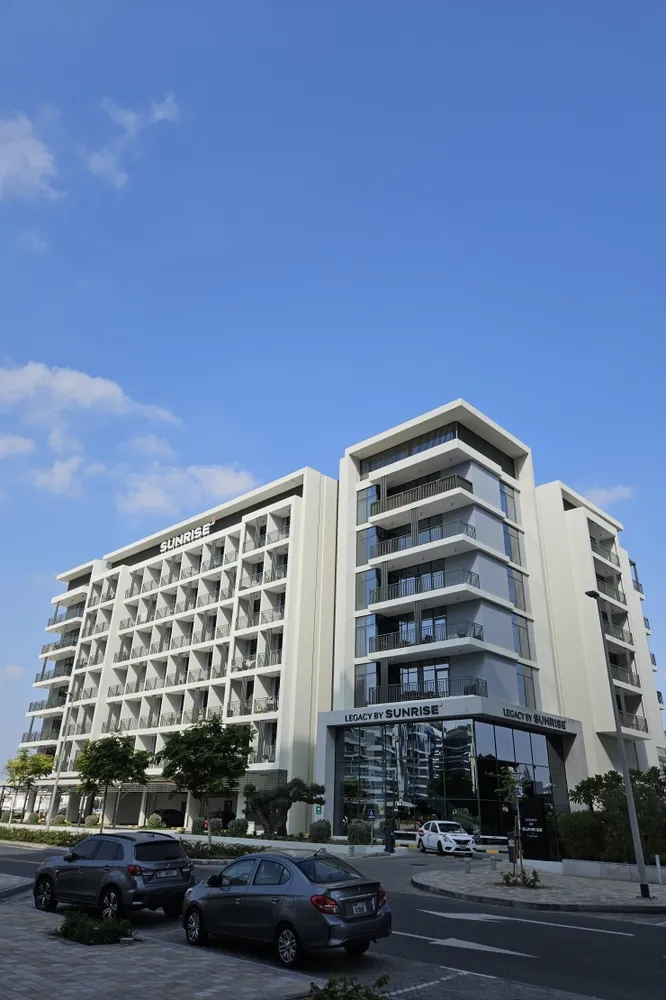
Deal history for the building: price and demand dynamics
Based on the current dataset, there are zero recorded sale transactions for a 1-bedroom apartment in Legacy, Jumeirah Park. There is no time series of closing prices, no average price per square foot and no visible volume trend for this exact format in this specific building.
For an analytical agency or brokerage, this means we cannot honestly draw a line saying “prices grew X% over the last 12 months in this building” or “demand increased because Y deals were registered.” Any such claim would be speculation, not analysis.
Instead, we approach the history question differently:
- We treat your apartment as a rare asset within a primarily villa-based subcommunity.
- We cross-reference with broader Jumeirah Park and Dubai apartment trends to estimate a realistic value corridor.
- We look at qualitative demand: what buyer profiles search for something like this (for example, downsizing villa owners, investors wanting a foothold in the area, or professionals working nearby).
In practice, a lack of recorded history can work both ways. It can make some buyers cautious, but it can also give you room to set an ambitious ask if supported by the local context and by the strategic story around the property. The key is to avoid arbitrary numbers: when advising on how to sell a 1-bedroom apartment in Legacy Dubai, a professional agent must clearly explain that pricing is opinion-based but grounded in wider area benchmarks, not in non-existent building statistics.
Official data sources and live market tools
For readers who want to explore the raw data behind this analysis, here are the key open sources:
-
Dubai Land Department open data (historical transactions)
-
Property Finder – live listings and asking prices
-
Bayut – live listings and asking prices
Current listings and liquidity: what apartments are really asking now
In the analysed dataset there are no active sale listings and no active rental listings for a 1-bedroom apartment in Legacy, Jumeirah Park. This has several important implications for you as a potential seller.
First, you currently face no direct, same-building competition in the public market. A buyer looking specifically for this mix of location and layout will not be able to compare your unit with three or four similar active listings in the same building, because they simply are not there in the data sample. That gives you a degree of pricing power, provided the property is presented well and the ask is within a rational corridor compared with similar stock in Jumeirah Park and nearby communities.
Second, liquidity in such a segment is not about “days on market” statistics, because there is not enough sample volume to calculate them. Liquidity is instead about:
- How many buyers are actively looking for a 1-bedroom in and around Jumeirah Park.
- How flexible you are on price and move-in dates.
- How professionally the apartment is marketed to both end users and investors.
Third, we must be realistic: absence of competing listings does not automatically mean a quick sale. It means the market is thin. The right buyer may appear next week or in several months. This is why, when planning how to sell a 1-bedroom apartment in Legacy Dubai today, it is critical to set clear time and price expectations from the outset and to choose between two strategies: either test the upper range of the price corridor with more time, or price more aggressively for a faster and more certain exit.
Rent and yields: how ROI is calculated and what local numbers show
For this specific property type, there are zero rental transactions in the building and zero rental contracts in the parent community sample tied directly to this 1-bedroom format. That means we cannot calculate an actual observed gross yield or typical rent level for this exact asset.
However, as an owner you still need a way to think logically about rent and ROI, even when the micro-level data is missing. The methodology is straightforward:
- Start from a realistic market value estimate for your apartment, based on comparable 1-bedrooms in similar low-density communities and the broader Jumeirah Park context.
- Use rental benchmarks from nearby subcommunities and comparable quality buildings to estimate a plausible annual rent interval.
- Calculate gross yield as annual rent divided by market value and compare it with what investors can achieve in more liquid apartment-heavy areas.
Since concrete numbers are not available, any ROI projection for your unit must be framed as a scenario, not as a hard statistic. For example, an investor might look at it like this: if the apartment can achieve a rent that delivers a gross yield in line with or slightly below mainstream Dubai apartments, they could justify a purchase if they also expect medium-term capital appreciation in Jumeirah Park.
From your perspective as a seller, understanding this logic helps you negotiate. When a buyer claims that “yields here are low,” you can openly acknowledge that there are no direct rent records in the sample and that everyone is working with estimates. The negotiation then becomes about how much of a discount or premium is fair for this specific apartment, rather than about contesting non-existent rental statistics.
Seller strategy: how to prepare and sell this type of apartment in Dubai
In a building with no visible transaction history, your sale strategy matters more than ever. The question is not only how to sell a 1-bedroom apartment in Legacy Dubai, but how to do it in a way that compensates for the lack of hard comparables and leverages the uniqueness of the asset.
A practical, owner-focused strategy can be broken down into several steps.
1. Define your priority: price vs. speed
Without a deep pool of historical deals, pricing becomes part art, part science. Decide what matters more:
- Maximising price: start in the upper range of the reasonable corridor, accept a longer marketing period and possible low early interest.
- Maximising speed and certainty: set a competitive ask compared to similar stock in nearby areas to attract broader demand.
2. Build a rational pricing corridor
Since the building-level dataset is empty, work with a professional agent to construct a corridor using:
- Recent sales of 1-bedrooms in comparable low-rise or villa-adjacent communities.
- Current asking prices in neighbouring areas that share similar infrastructure and target audience.
- Qualitative advantages of your specific apartment (layout, view, condition, parking, access).
The final asking price should sit within this corridor, with a clear rationale that can be explained to every potential buyer.
3. Prepare the apartment as a “one-off” product
In thin segments, buyers often decide emotionally because they have fewer alternatives. Presentation is critical:
- Fix visible defects and refresh paint where needed.
- Stage the apartment to show functional zones and storage potential.
- Invest in professional photography and, if possible, a short video tour to highlight the connection to Jumeirah Park’s greenery and amenities.
4. Choose the right marketing channels
Because there are no competing listings in the current dataset, you can stand out strongly on portals and in targeted campaigns. An experienced brokerage will:
- Position the apartment both for end users and investors, with tailored messages for each group.
- Use internal client databases, especially owners and tenants already living in Jumeirah Park or nearby.
- Be transparent about the lack of building-level statistics while emphasising the uniqueness and scarcity of the product.
5. Manage offers and timing
In an illiquid segment, the first serious offer can sometimes be the best one. It is important to set in advance what range you will consider acceptable. Discuss scenarios with your agent: what you will do if a fair-but-not-perfect offer comes in quickly, and what your plan is if the apartment stays on the market for several months without strong interest.
How an investor sees this apartment: risks, scenarios and horizons
To sell effectively, it helps to think like the buyer or investor on the other side of the table. From an investor’s standpoint, a 1-bedroom apartment in a villa-dominated community like Legacy, Jumeirah Park, with no clear recorded sales or rental history, has both attractions and risks.
Key perceived risks:
- Illiquidity: with no visible history, it is harder to predict how quickly they could sell the unit in the future.
- Pricing uncertainty: without direct comparables, investors worry about overpaying relative to more transparent areas.
- Unclear yield: absent rental data in the sample means ROI projections are scenario-based, not evidence-based.
Key attractions:
- Scarcity: very few 1-bedroom units in a mature, well-known villa community can make this a differentiated product.
- Stable environment: end-user demand for Jumeirah Park as a whole supports long-term area perception and infrastructure quality.
- Potential for individual negotiation: with each deal unique, skilled investors may negotiate terms that suit their horizon and return profile.
When you present the apartment, acknowledge these investor concerns upfront. Instead of claiming non-existent statistics, focus on scenarios: for example, how a reasonable entry price combined with plausible rent levels could yield a target gross return, and how long an investor might reasonably plan to hold before re-selling.
Aligning your narrative with realistic investor thinking makes the property easier to underwrite on their side and increases the probability of constructive negotiations. When you discuss how to sell a 1-bedroom apartment in Legacy Dubai with your agent, ensure that the marketing materials and talking points address both emotional and analytical aspects for buyers.
Summary and answers to common questions
For this 1-bedroom apartment in Legacy, Jumeirah Park, the analysed dataset shows no recorded sales, no rental transactions and no active listings. This absence of micro-level data does not invalidate your asset; it simply means you are operating in a niche, illiquid segment where each deal is highly individual.
Your decision to sell now or wait should consider three layers:
- Macro: Dubai’s overall resilience and structural demand.
- Community: Jumeirah Park’s mature, villa-driven profile and limited comparable apartment stock.
- Micro: your own timing, financial goals and readiness to navigate a market without precise building statistics.
FAQ
Should I wait for more transactions in the building before selling?
You might wait a long time. Given the current dataset shows zero 1-bedroom deals, timing your sale based on future building statistics is uncertain. It is more practical to decide based on your personal objectives and broader area benchmarks.
Can I expect automatic price growth just by waiting?
There is no direct evidence in this sample that prices in this building are moving in any direction, simply because there are no recorded transactions. Any expectation of growth should be linked to wider Dubai and Jumeirah Park dynamics, not to the building’s own history.
How do I know if an offer is fair?
Fairness must be assessed against a constructed pricing corridor using comparable properties in similar communities, adjusted for your apartment’s specific features. A professional brokerage can document this corridor and help you evaluate each offer against it.
Is it realistic to target investors, or should I focus on end users?
Both groups are viable, but the pitch is different. Investors need a transparent scenario for ROI and exit horizon, even without hard data. End users focus more on lifestyle, layout and the perceived stability of Jumeirah Park. A balanced marketing strategy should speak to both profiles.
In summary, understanding how to sell a 1-bedroom apartment in Legacy Dubai today means accepting the limitations of the available data, using broader market intelligence to fill the gaps and building a clear, transparent strategy around your own goals. With the right positioning and a realistic pricing framework, even a “statistically invisible” apartment can become a compelling opportunity for the right buyer.