Updated: 8 September 202621 min read
Dubai is one of the most dynamic real estate markets in the world, with more than 1,300 registered developers operating under the supervision of the Dubai Land Department (DLD) and the Real Estate Regulatory Agency (RERA). For end-users and investors, the choice of developer is often as important as the choice of community, property type, or payment plan. Reputation, construction quality, adherence to handover timelines, and financial stability of the developer directly influence both the comfort of living and the long-term investment performance of a property.
This guide focuses on the most famous and established developers in Dubai and explains how to evaluate a developer before committing to an off-plan or ready property purchase. The material is based on the provided structure and facts and is expanded with expert explanations of how these factors matter for buyers and investors in the Dubai market.
Most Famous Developers in Dubai
Among more than 1,300 developers registered in Dubai, a relatively small group of large and well-known companies shape a significant part of the city’s skyline and key residential communities. The most famous developers include:
- Emaar Properties
- Nakheel
- Meraas
- Dubai Properties
- Sobha Realty
- Select Group
- Deyaar
- Omniyat
- Damac Properties
- MAG Property Development
These developers are widely recognized for their large-scale master communities, waterfront developments, mixed-use complexes, and branded residences. For buyers and investors, such names often serve as a benchmark of reliability and quality, although each company has its own positioning, product range, and target audience. Some focus on ultra-luxury waterfront and branded residences, others on large family communities, and some on a mix of premium and more affordable housing.
In the context of Dubai’s real estate market, the reputation of a developer is formed by several key factors:
- Length of presence in the market and track record of completed projects
- Financial stability and ability to sustain large-scale developments
- Construction quality and consistency across different projects
- Adherence to promised handover dates and transparency on delays
- Portfolio diversity: communities, towers, mixed-use complexes, hospitality assets
- Customer service before and after handover
Understanding these aspects helps buyers navigate between off-plan and ready properties, evaluate risk levels, and align their choice of developer with their investment strategy, whether focused on rental yield, capital appreciation, or long-term end-use.
Recommendations for Choosing a Developer in Dubai
Related Articles
- How to Buy an Apartment in Jumeirah Beach Residence: Profitable and Accessible Property in Dubai
- How to sell an unit in Dubai in Samana Waves 2 – analysis 2025 — 12.01.2026
- ROI analysis of apartment in 2020 Marquis: DLD data and real deals
- How to buy a home in Dubai in Jenna Main Square 2 – analysis 2026
- How to buy a property in Dubai in Myrtle – analysis 2026
Choosing a developer in Dubai is not only about brand recognition. Even among the largest and most famous companies, projects differ in terms of product quality, service charges, community infrastructure, and handover discipline. For smaller or less-known developers, due diligence becomes even more critical. Below are key recommendations for evaluating a developer in Dubai’s real estate market.
Study the Company’s History and Track Record
The first step is to understand how long the developer has been active and what they have already delivered. A developer with a substantial portfolio of completed residential communities, towers, and mixed-use projects gives buyers more reference points:
- Visit or research completed communities and residential complexes by the same developer.
- Assess how the buildings and common areas have aged over time.
- Look at how well the community is managed and maintained.
For investors, the track record also indicates how properties by this developer have historically performed in terms of occupancy, rental demand, and resale liquidity. Established developers with iconic projects tend to attract stronger demand and more stable long-term interest from both tenants and buyers.
Evaluate Financial Stability and Reliability
Financial stability is crucial, especially for off-plan purchases. A financially strong developer is better positioned to:
- Complete large-scale projects even during market fluctuations.
- Maintain construction progress according to schedule.
- Deliver the promised infrastructure within master communities.
While detailed financial data is not provided, the presence of a developer in multiple countries, the scale of their portfolio, and their association with large holding groups can be indirect indicators of stability. For example, some of the developers listed operate in many countries and are part of larger corporate structures, which typically implies a more robust financial base.
Check Information via DLD and the DUBAI REST Application
Dubai has a highly regulated property market. The Dubai Land Department (DLD) and RERA provide tools that allow buyers to verify key information about developers and projects. One of the most important tools is the DUBAI REST application.
Through official DLD channels and the DUBAI REST app, buyers can:
- Verify that the developer is registered and licensed.
- Check the registration status of the project.
- Review information related to the progress of construction.
- Confirm that the project has an escrow account, which is a key protection mechanism for off-plan buyers.
Using these official sources reduces the risk of dealing with unregistered or non-compliant projects and helps buyers make informed decisions based on verified data rather than marketing materials alone.
Pay Attention to Construction Stage and Handover Timelines
The stage of construction is a critical factor for off-plan purchases. It influences both risk and pricing:
- Early-stage off-plan often comes with more attractive prices and flexible payment plans but carries higher construction and timeline risk.
- Near-completion off-plan usually has lower risk because the structure is visible and progress is easier to verify, though prices may be higher.
- Ready properties eliminate construction risk entirely and allow immediate move-in or rental, but may require full payment or a different mortgage structure.
Pay attention to the construction stage and handover dates. Buyers should:
- Review the expected completion date stated in the Sales and Purchase Agreement (SPA).
- Monitor construction progress through official channels and site visits.
- Clarify the developer’s policy in case of delays.
In Dubai, if there are significant delays, buyers may be entitled to compensation, depending on the contract terms and regulatory decisions. Understanding these rights at the outset helps manage expectations and reduces potential disputes at handover.
Consider Construction Quality and Architecture
Construction quality and architectural design directly affect both living comfort and investment performance. The source text highlights that a developer’s reputation is shaped by the quality of their work and the uniqueness of their architecture. When evaluating a developer, buyers should consider:
- Materials and finishes used in previous projects.
- Quality of common areas: lobbies, corridors, amenities.
- Design of facades and overall architectural concept.
- Functionality of layouts in apartments, villas, and townhouses.
Developers known for distinctive architecture and well-planned communities often create properties that remain in demand over the long term, supporting both rental yields and capital appreciation.
Review Feedback, News, and Market Perception
Beyond official information, real user feedback and market perception are important. Study reviews and news about the developer. This can include:
- Feedback from existing owners and tenants in completed projects.
- News about project launches, handovers, and any reported delays.
- Market commentary from brokers and property consultants.
Consistent positive feedback about handover quality, after-sales service, and community management is a strong signal. Repeated complaints about delays, defects, or poor communication should be treated as risk indicators, especially for off-plan investments.
Visit the Sales Office and Discuss Terms in Detail
The source text recommends visiting the developer’s sales office. This step is particularly important in Dubai, where many projects are sold off-plan based on show apartments and master plans. During a visit to the sales office, buyers can:
- Review floor plans, master plans, and model layouts.
- Clarify payment plans, including down payment and installment structure.
- Discuss available discounts, promotions, and incentives.
- Ask about mortgage options and partnerships with local banks.
- Clarify service charges, handover conditions, and snagging procedures.
Face-to-face communication with the sales team also helps assess how transparent and professional the developer is in explaining contractual terms and addressing concerns.
Work with Experienced Real Estate Agents
Working with experienced real estate agents (realtors) can simplify the purchase process. In Dubai, professional agents familiar with DLD and RERA regulations can add significant value:
- They help compare different developers and projects objectively.
- They explain the implications of freehold vs. leasehold areas.
- They assist with negotiations on price, payment plans, and incentives.
- They coordinate with banks on mortgage pre-approval and valuation.
- They guide buyers through documentation, including SPA, Oqood registration for off-plan, and title deed issuance for ready properties.
For investors, experienced agents also provide insight into expected rental yields, tenant demand, and resale liquidity in specific communities and buildings developed by the companies listed in this guide.
Emaar Properties
Emaar Properties is one of the most recognizable names in Dubai’s real estate market. Founded in 1997, the company has played a central role in shaping the modern image of the city. Emaar is known for delivering some of Dubai’s most iconic landmarks and large-scale master communities.
Key Projects and Global Presence
Emaar operates in 36 countries and is known for projects such as:
- Burj Khalifa – the world-famous skyscraper that has become a symbol of Dubai.
- Dubai Mall – one of the largest shopping and entertainment destinations globally.
- Dubai Creek Harbour – a large-scale waterfront development with residential districts featuring villas, apartments, and penthouses.
Emaar’s portfolio includes a wide range of residential complexes, from high-rise towers in central business districts to villa communities and waterfront developments. The company’s presence in many countries underlines its scale and experience in managing complex, multi-phase developments.
Dubai Creek Harbour and Dubai Creek Tower
The source text highlights Dubai Creek Harbour as one of Emaar’s major ongoing projects. This master development includes:
- Residential districts with villas, apartments, and penthouses.
- Waterfront promenades and lifestyle amenities.
- Mixed-use components that combine residential, retail, and leisure spaces.
Construction of Dubai Creek Tower is planned, and it is expected to be higher than Burj Khalifa. While specific technical details are not provided, the concept reinforces Emaar’s positioning as a developer of landmark architecture and globally recognized projects.
Why Emaar Matters for Buyers and Investors
For buyers and investors, Emaar’s reputation is built on:
- A long history in Dubai since 1997.
- Delivery of globally recognized landmarks and large master communities.
- Strong brand recognition that supports demand for both sales and rentals.
Properties in Emaar communities often attract end-users seeking established infrastructure and investors looking for liquidity and long-term stability. While specific ROI or rental yield figures are not provided, the combination of brand strength, location, and community planning typically supports solid investment fundamentals.
Nakheel
Nakheel is another major developer that has significantly influenced Dubai’s coastal landscape. The company has been operating for more than 20 years and has a presence in 85 countries.
Palm Jumeirah and Other Key Projects
Nakheel is best known for the artificial archipelago Palm Jumeirah, one of Dubai’s most famous waterfront developments. Palm Jumeirah includes:
- Residential complexes with apartments.
- Luxury villas on the fronds.
- Hotels and resort-style amenities.
Beyond Palm Jumeirah, Nakheel’s portfolio includes:
- Jumeirah Village – a residential area with a mix of villas, townhouses, and apartments.
- Dragon Towers – residential towers associated with a broader mixed-use environment.
- Al Furjan – a community with villas and residential buildings designed for families.
Nakheel’s Role in Dubai’s Residential Landscape
Nakheel’s developments are particularly important for buyers interested in waterfront living and established villa communities. Palm Jumeirah, in particular, is associated with high-end properties, sea views, and resort-style living, which typically support strong demand from both residents and international investors.
For investors, Nakheel’s communities offer a range of property types, from apartments in mixed-use developments to standalone villas, allowing different investment strategies depending on budget and risk appetite.
Meraas
Meraas, founded in 2007, operates across various sectors of the economy and is known for creating lifestyle destinations that combine residential, retail, leisure, and hospitality components. The company’s projects often emphasize design, urban experience, and waterfront living.
Key Lifestyle and Waterfront Projects
Notable Meraas projects include:
- City Walk – an urban lifestyle destination with residential buildings integrated into a retail and leisure environment.
- Boxpark – a contemporary retail and dining destination.
- La Mer – a beachfront area combining leisure, dining, and residential components.
- Port De La Mer – a waterfront residential development with marina-style living.
- Nikki Beach Resort and Spa – a resort project with a strong lifestyle and hospitality focus.
- Bluewaters Residences – residential buildings on a man-made island with a mix of entertainment and hospitality.
- Bulgari Lighthouse – a high-end project associated with a luxury brand.
Meraas for Lifestyle-Oriented Buyers and Investors
Meraas projects are particularly attractive to buyers who value design-driven communities and integrated urban experiences. For investors, such developments often appeal to tenants seeking a combination of location, amenities, and lifestyle branding, which can support premium rental levels in the market context.
Dubai Properties
Dubai Properties, founded in 2002, is part of Dubai Holding and operates in 13 countries. The company is known for several large-scale residential and mixed-use developments across the city.
Major Communities and Mixed-Use Projects
The source text highlights the following Dubai Properties projects:
- Jumeirah Beach Residence (JBR) – a beachfront residential complex with towers, retail, and leisure along the coast.
- Business Bay – a central business district with a mix of residential and commercial towers.
- Dubailand – a large area with various residential communities and entertainment components.
- Madinat Jumeirah Living – a residential development near one of Dubai’s well-known hospitality and leisure destinations.
- Marsa Al Arab – a project associated with waterfront and hospitality elements.
Dubai Properties in the Investment Context
Dubai Properties focuses on large communities and mixed-use districts that combine residential, retail, and commercial components. For buyers and investors, this means access to a variety of property types in central and emerging areas. The company’s association with Dubai Holding and its presence in multiple countries support its positioning as a major, established developer in the market.
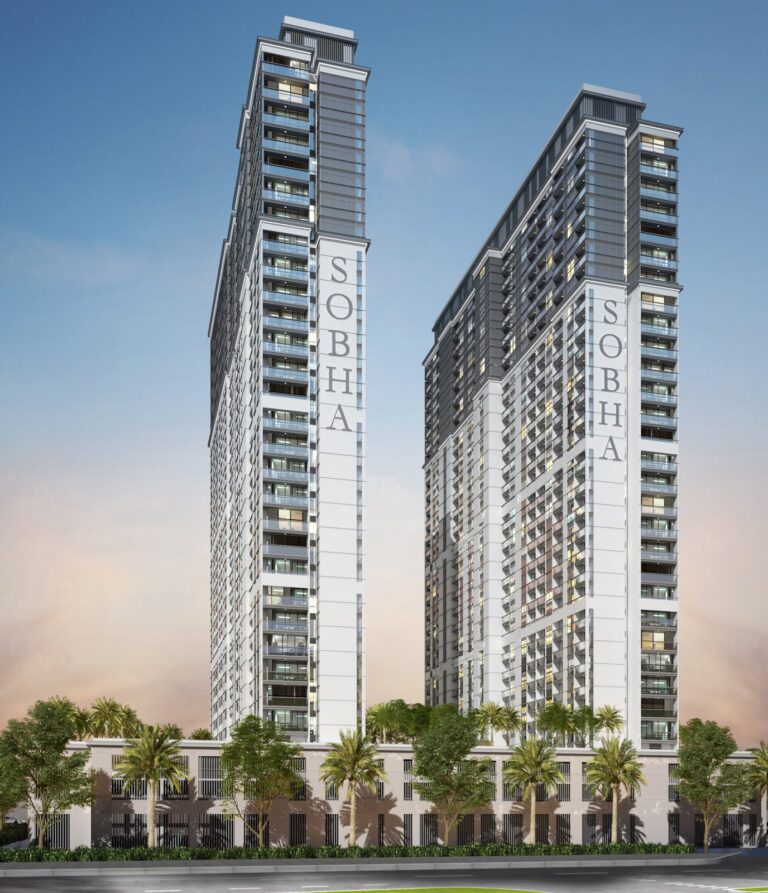
Sobha Realty
Sobha Realty is a subsidiary of the Indian holding Sobha Group and is involved in the development of numerous projects. The company is implementing around 390 projects, highlighting its extensive development activity.
Key Dubai Projects
In Dubai, Sobha Realty is known for:
- Sobha Hartland – a residential district that includes villas and apartments in a master-planned environment.
- Sobha Creek Vistas – residential towers with views towards key city landmarks and waterfront areas.
- The Crest – another residential project within the Sobha portfolio in Dubai.
Sobha’s Positioning in the Market
Sobha Realty is associated with master-planned residential districts and high-specification finishes. For buyers, Sobha projects often appeal to those seeking a combination of quality construction and integrated community planning. For investors, such projects can be attractive due to their positioning in well-conceived master communities and the developer’s broader track record within the Sobha Group.
Select Group
Select Group, founded in 2002, operates in real estate, hospitality, and retail. The company has delivered several prominent residential towers and mixed-use projects in Dubai, particularly in waterfront and central locations.
Notable Projects
Select Group projects include:
- Marina Gate – a residential development in a prime waterfront district.
- Studio One – a residential tower targeting a mix of end-users and investors.
- The Torch – a well-known residential tower.
- Peninsula Four – part of a larger master development with residential components.
- Jumeirah Living Business Bay – a project combining residential and hospitality-style services in a central business district.
Select Group for Waterfront and Urban Living
Select Group’s portfolio is particularly relevant for buyers and investors interested in waterfront living and central urban locations. The mix of residential and hospitality elements in some projects can appeal to tenants seeking serviced-living experiences, while pure residential towers cater to long-term residents and investors focused on rental income.
Deyaar
Deyaar is a full-cycle developer with more than 16,000 units. The company operates across multiple districts in Dubai and offers a range of residential and commercial properties.
Geographic Coverage and Key Projects
Deyaar is active in various areas of Dubai, including:
- Business Bay
- Dubai Silicon Oasis
- Al Barsha
- DIFC (Dubai International Financial Centre)
- Dubai Production City
Notable projects mentioned include:
- Mayfair Tower
- Central Park
- Midtown
- Al Seef Tower
- The Citadel
Deyaar’s Role in Mid-Market and Business Districts
Deyaar’s presence in business districts and emerging residential areas makes it relevant for buyers seeking properties near employment hubs and for investors targeting rental demand from professionals. The company’s full-cycle approach, covering development and related services, supports its ability to manage a large portfolio across different segments.
Omniyat
Omniyat, founded in 2005, specializes in multi-functional properties with unique architecture. The company focuses on design-led developments that combine residential, commercial, and hospitality elements in prime urban locations.
Recent Projects
Recent Omniyat projects include:
- The Sterling – a residential development with distinctive architectural features.
- Langham Place Residences – a project associated with a hospitality brand, combining residential and hotel-style elements.
Omniyat’s Architectural and Design Focus
Omniyat’s emphasis on unique architecture and multi-functional complexes makes its projects attractive to buyers who value design and brand association. For investors, such properties can appeal to a niche segment of tenants and buyers seeking distinctive, design-driven living environments in central locations.
Damac Properties
Damac Properties has been active since 2002 and operates in several countries. The company is known for a wide range of residential and commercial projects, including large master communities and international developments.
Key Projects
The source text highlights:
- DAMAC Hills – a large residential community with villas, townhouses, and apartments, along with extensive amenities.
- DAMAC Tower London – an international project that reflects the company’s presence beyond Dubai.
- Other residential and commercial properties across different markets.
Damac’s Position in the Market
Damac is recognized for its large-scale communities and branded projects. For buyers, DAMAC Hills and similar developments offer a range of property types and amenities within self-contained communities. For investors, the variety of products and the company’s international presence provide options across different price segments and locations.
MAG Property Development
MAG Property Development has been active since 2003 and focuses on both luxury and affordable real estate. This dual positioning allows the company to serve a wide spectrum of buyers and investors.
Key Projects
MAG projects include:
- MAGEYE – a residential development within the MAG portfolio.
- MBL Royal – a residential tower project.
- Keturah Resort – a high-end development with services provided by Ritz-Carlton.
MAG’s Dual Focus: Luxury and Affordable Housing
MAG’s strategy of combining luxury projects like Keturah Resort with more accessible residential developments allows buyers to choose according to budget and lifestyle preferences. For investors, this means access to both premium, service-rich properties and more affordable units that can target a broader tenant base.
Practical Tips for Property Buyers in Dubai
The final part of this guide focuses on practical steps and considerations for buyers and investors in Dubai, taking into account the structure of the local market.
Clarify Handover Conditions and Compensation in Case of Delays
The source text notes that in case of delays, a buyer may receive compensation. In practice, the exact conditions depend on the Sales and Purchase Agreement and applicable regulations. Buyers should:
- Carefully review the clauses related to completion dates and permissible delays.
- Clarify what constitutes a delay and what remedies are available.
- Understand the process for raising claims or complaints if timelines are not met.
Being clear on these points before signing helps manage risk, especially for off-plan investments where construction timelines are a key variable.
Discuss Discounts, Incentives, and Mortgage Options
Visit the sales office to discuss conditions, discounts, and mortgages. In Dubai, developers often offer:
- Promotional discounts on launch or during specific campaigns.
- Flexible payment plans for off-plan properties.
- Partnerships with banks that facilitate mortgage approvals.
When discussing mortgages, buyers should consider:
- Eligibility criteria and required documentation.
- Down payment requirements for residents and non-residents.
- Impact of mortgage terms on overall investment returns.
Aligning the financing structure with the property type and investment horizon is essential for both end-users and investors.
Use Official Channels: DLD, RERA, and DUBAI REST
As emphasized earlier, verifying information through the Dubai Land Department and the DUBAI REST application is a critical step. Buyers should rely on these official sources to confirm:
- Developer registration and licensing.
- Project registration and escrow account details.
- Construction progress and any official updates.
This reduces reliance on unverified information and ensures that the transaction is aligned with Dubai’s regulatory framework.
Work with Experienced Realtors to Navigate the Market
The source text strongly recommends working with experienced realtors. In Dubai’s complex and fast-moving market, professional agents help:
- Compare developers such as Emaar, Nakheel, Meraas, Dubai Properties, Sobha Realty, Select Group, Deyaar, Omniyat, Damac Properties, and MAG Property Development.
- Assess which communities and residential complexes best match the buyer’s goals.
- Understand the implications of service charges, maintenance, and community management.
- Coordinate with developers, banks, and government entities throughout the transaction.
For investors, agents can also provide insights into which developers and projects are currently in demand among tenants and buyers, helping to align purchases with expected rental yield and potential capital appreciation, even without specific numerical forecasts.
Align Developer Choice with Investment Strategy
Ultimately, the choice of developer should be aligned with the buyer’s or investor’s strategy:
- For end-users, priorities may include community infrastructure, school and healthcare access, lifestyle amenities, and long-term maintenance quality.
- For investors, factors such as expected rental demand, resale liquidity, and brand recognition of the developer become more important.
Developers like Emaar, Nakheel, Meraas, Dubai Properties, Sobha Realty, Select Group, Deyaar, Omniyat, Damac Properties, and MAG Property Development each offer different combinations of location, product type, and brand positioning. Understanding these differences, and verifying all information through official channels and professional advisors, is the foundation of a successful property purchase in Dubai.
By following the recommendations in this guide—studying the developer’s history, checking official records via DLD and DUBAI REST, paying attention to construction stages and handover timelines, visiting sales offices, and working with experienced realtors—buyers and investors can significantly reduce risk and make more informed decisions in Dubai’s real estate market in 2026 and beyond.
See also: where renting is cheapest.