Renat BashirovUpdated: 18 November 202518 min read
Introduction
Dubai is widely recognised as one of the most attractive real estate investment destinations in the world. However, investor attention is usually concentrated on the same well-known districts: Dubai Marina, Downtown Dubai, Palm Jumeirah and a few other flagship communities. These locations are already highly liquid and popular, but they are far from the only places where investors can achieve strong returns.
According to UAE real estate expert Andrey Neginskiy, there are at least five less obvious areas in Dubai that currently offer a combination of relatively low entry prices, strong rental potential and solid prospects for capital appreciation. These locations are still under the radar for many buyers, which means lower competition today and a higher probability of price growth once development is completed.
This article analyses these five districts from an investment perspective, based strictly on the information provided by the expert. We will look at their development concepts, infrastructure, developers, expected rental yields and potential price growth, and how they compare to more famous areas of the Dubai property market.
Related Articles
- How to Get a Mortgage for Dubai Property in Emirates Islamic Bank as an Expat in 2026
- Does Dubai Offer Permanent Residency? A Complete 2026 Guide for Investors and Property Buyers
- Residence Visa Renewal in Abu Dhabi (UAE) in 2026: Rules, Deadlines, Fines and Practical Guidance
- What Is a Manager’s Cheque in Dubai Property Transactions?
- How to sell an apartment in Dubai in Building 3 – analysis 2026
The Importance of Choosing the Right Area in Dubai
Dubai is a young, diverse and rapidly changing city. New master communities, transport links and infrastructure clusters are constantly being launched and built out. For an investor, this means that the choice of area is often more important than the choice of a specific building or floor plan. The district largely determines:
- the level of rental demand and achievable rental yield,
- the potential for capital appreciation by the time of handover or in the first years after completion,
- the depth of the resale market and liquidity of the asset,
- the profile of future tenants (families, professionals, tourists, long-term residents).
In Dubai, the difference in performance between two properties of similar quality but in different locations can be substantial. A well-chosen emerging district can offer a higher return on investment than a mature premium area, especially when the entry price per square metre is significantly lower while the lifestyle and infrastructure are comparable.
For this reason, investors should not limit themselves to the most famous names on the map. Understanding the development pipeline, master plans and long-term vision for each area is critical for building a robust Dubai real estate portfolio.
Overview of the Most Promising Underrated Areas
Based on the expert commentary, five districts stand out today as particularly promising yet still relatively unknown to the broader investor audience:
- Dubai Islands – a new island archipelago with a long beachfront, marinas and large-scale lifestyle infrastructure.
- Mina Rashid – a waterfront project by a major state-backed developer, positioned as a strong rental investment location.
- Dubai Maritime City – a maritime-themed district that can serve as a more affordable alternative to Dubai Marina.
- Town Square – a green, low-rise community away from the sea, focused on long-term family rentals.
- Dubai South – a strategic area within Dubai’s 2040 master plan, linked to the Al Maktoum Airport and a major free economic zone.
Each of these locations is at a different stage of development and targets a different tenant and buyer profile. Together, they illustrate how diverse the Dubai property market is beyond the usual headline districts.
Dubai Islands
Description and Infrastructure Concept
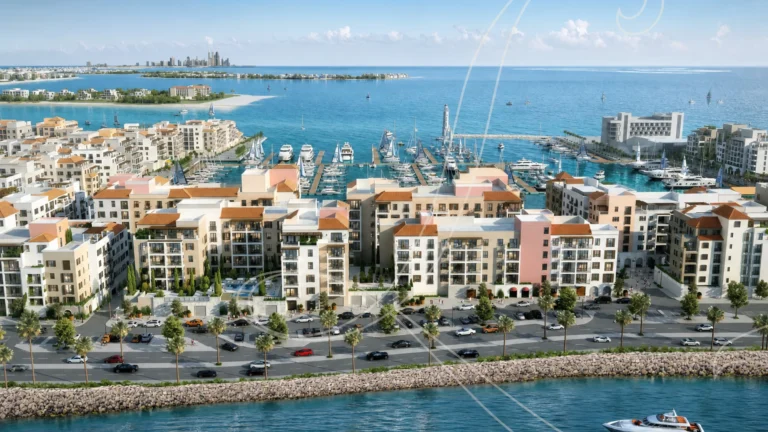
Dubai Islands is a new archipelago of five islands that is being transformed into a large-scale residential and lifestyle destination. According to the expert, by 2026 a new residential district will appear here, featuring:
- a shopping mall,
- a 20-kilometre shoreline,
- yachting marinas,
- 5-star hotels,
- schools,
- an arts centre.
The concept combines beachfront living, tourism infrastructure and community amenities. For investors, this mix is important because it supports both short-term and long-term rental demand, as well as end-user interest in buying for personal use. The long shoreline and marinas indicate a strong focus on waterfront lifestyle, which is traditionally one of the most sought-after segments in Dubai real estate.
Another key point highlighted by the expert is the location: from Dubai Islands it is about 10 minutes by car to Burj Khalifa. This proximity to the central business and tourist hub of the city significantly strengthens the investment case, as it allows residents to combine a resort-style environment with convenient access to Downtown Dubai.
Developer and Construction Timeline
The developer of Dubai Islands is Nakheel, one of the largest and most recognisable developers in the UAE. The company is known for large-scale master developments and waterfront projects. The expert notes that construction on Dubai Islands is planned to be completed by the end of 2025, with the broader district concept unfolding by 2026.
For investors, the presence of a major developer with a strong track record is a critical risk-mitigation factor. It typically means:
- clear master planning and phased development,
- greater confidence in delivery timelines,
- stronger marketing and international visibility of the project,
- higher probability that infrastructure (roads, retail, schools, leisure facilities) will be delivered in line with the residential components.
The planned completion by the end of 2025 also defines the investment horizon. Buyers entering at the current construction stage are essentially targeting the period up to handover and the first years of operation, when the main wave of capital appreciation is expected.
Investment Metrics of the Haven Project
The first residential project on Dubai Islands mentioned by the expert is Haven. According to the provided information:
- apartment prices in Haven start from USD 438,000,
- the expected rental yield is from 7% per annum,
- the projected price growth by the time of handover is around 35%.
These figures position Haven as a competitive investment product in the Dubai market. A starting yield of 7% per year is above what many mature prime districts offer, especially when combined with the potential for substantial capital appreciation by completion.
The expert also notes that Dubai Islands can be seen as a worthy alternative to Dubai Marina. The key comparison point is that the price per square metre on Dubai Islands is approximately half of that in Dubai Marina, while the lifestyle concept (waterfront, marinas, hotels, retail) is broadly comparable. This price gap creates room for future growth as the new district matures and becomes more widely known among tenants and buyers.
For investors, Dubai Islands and the Haven project in particular may be suitable for:
- medium-term capital appreciation strategies (buy during construction, hold until or shortly after handover),
- long-term rental income strategies focused on waterfront living close to central Dubai,
- portfolio diversification away from already fully priced prime waterfront areas.
Mina Rashid
Developer and Purchase Features
Mina Rashid is a project by Emaar, one of the largest state-backed developers in the Emirates. Emaar is associated with many of Dubai’s most iconic developments and is considered a benchmark for large master communities and high-profile residential projects.
The expert emphasises that Mina Rashid has specific payment plan characteristics that investors must take into account. The instalment schedule is described as strict: buyers are required to pay 90% of the property price during the construction phase and the remaining 10% upon handover.
This structure has several implications for investors:
- capital is tied up more heavily during construction compared to more flexible post-handover payment plans,
- the investor must be prepared for higher cash outflows before the property starts generating rental income,
- the project is more suitable for buyers with sufficient liquidity or access to financing that matches the construction schedule.
While the payment terms are demanding, they are offset by the project’s rental potential, as highlighted by the expert.
Investment Attractiveness
According to the expert, apartments in Mina Rashid are particularly attractive for rental investment. The expected rental yield is from 9.5% per annum. This level of yield is high even by Dubai standards and makes the project stand out among many other waterfront developments.
Such a yield suggests strong anticipated demand from tenants, which may be driven by a combination of factors:
- waterfront location and lifestyle appeal,
- developer reputation and quality of the product,
- proximity to key parts of the city (depending on the exact sub-location within Mina Rashid),
- the overall positioning of the project as a modern residential and leisure destination.
For investors, Mina Rashid can be considered primarily as a yield-focused asset. The strict payment schedule means that the investor commits capital early, but in return receives a property with strong rental potential once the project is completed and operational.
This type of investment may be suitable for:
- buyers prioritising high rental income over maximum leverage,
- investors planning to hold the asset for the medium to long term,
- those who value the combination of a state-backed developer and a waterfront concept with strong branding.
Dubai Maritime City
Prospects and Infrastructure
Dubai Maritime City is presented by the expert as an alternative to Dubai Marina, but with lower entry prices. The district is located approximately 20 minutes from the city centre, which positions it within a reasonable commuting distance to key business and leisure hubs.
The future appeal of Dubai Maritime City is expected to be driven by several components:
- 5-star hotels – supporting tourism and business travel demand,
- restaurants – enhancing the lifestyle offering and attracting visitors,
- a marina or pier – reinforcing the maritime theme and waterfront appeal,
- the opening of a metro station – significantly improving public transport connectivity and accessibility.
For real estate investors, the combination of hospitality infrastructure, F&B venues and improved transport links typically leads to increased footfall, stronger rental demand and higher property values over time. The maritime positioning also differentiates the area from other inland communities, aligning it more closely with Dubai’s broader strategy of developing waterfront destinations.
Expected Price Growth and Market Activity
The expert notes that the expected price growth in Dubai Maritime City is in the range of 15–20% per year. While actual performance will depend on market conditions and the pace of development, this projection indicates a strong belief in the area’s appreciation potential as infrastructure is delivered and the district becomes more established.
Another important point is that there are currently many transactions taking place in Dubai Maritime City. Active transaction volumes usually signal growing investor interest and increasing market recognition. For early entrants, this can be a sign that the area is transitioning from a purely speculative stage to a more mature investment phase, where both local and international buyers start to participate more actively.
From an investment strategy perspective, Dubai Maritime City may be suitable for:
- investors seeking a more affordable alternative to Dubai Marina with similar lifestyle characteristics,
- buyers targeting capital appreciation as the metro opens and hospitality infrastructure comes online,
- those who prefer to enter a district while it is still in an active growth phase but already showing strong transaction activity.
Town Square
District Characteristics and Infrastructure
Town Square is described by the expert as a relatively little-known area that is located away from the sea. Because of this distance from the coastline, it is not suitable for short-term rentals focused on tourists seeking beachfront stays. However, the district has a different set of strengths that make it attractive for long-term rental strategies.
Key features of Town Square include:
- abundant greenery – creating a more relaxed, suburban atmosphere,
- convenient layouts – making apartments and townhouses comfortable for everyday living,
- low-rise development – contributing to a more human-scale environment compared to high-rise clusters,
- well-developed children’s infrastructure – appealing to families with kids,
- a large park – serving as a recreational and social hub for residents.
These characteristics position Town Square as a family-oriented community, where residents value space, greenery and community amenities more than proximity to the sea. In Dubai’s market structure, such areas often become popular with long-term tenants who work in different parts of the city but prefer to live in a quieter, more residential environment.
Rental Yield and Projects
The expert indicates that the average rental yield in Town Square is from 7% per annum. This is a solid level of income for a district that is not focused on short-term tourist rentals. It suggests stable demand from long-term tenants, particularly families and professionals seeking value for money.
Within Town Square, the expert highlights the Nshama Aria project. According to the information provided, this project promises a price growth of around 10% per year, which is considered a good result for the economy segment. In other words, investors can potentially combine a relatively low entry price with both decent rental yield and moderate capital appreciation.
Town Square and projects like Nshama Aria may be particularly suitable for:
- investors targeting the affordable housing segment with strong end-user demand,
- those focusing on long-term rental contracts rather than short-term stays,
- buyers who prioritise stable occupancy and family-oriented communities.
The combination of greenery, low-rise buildings, children’s infrastructure and a large park makes Town Square a compelling option for tenants who plan to stay in one place for several years, which in turn supports lower vacancy rates and more predictable rental income for landlords.
Dubai South
Master Plan and District Development
Dubai South plays a strategic role in the city’s long-term development. The expert notes that this area is part of Dubai’s 2040 master plan for urban development and improvement. This means that Dubai South is not just a standalone project, but an integral element of the city’s future spatial and economic structure.
A key driver for Dubai South is the Al Maktoum Airport. According to the expert, once the airport is fully opened, it is expected to create around 200,000 jobs. This scale of employment generation is significant for the real estate market because it implies:
- a large influx of professionals and service workers needing housing,
- increased demand for both rental and owner-occupied properties,
- the relocation of corporate headquarters and operational offices to the area.
The expert also notes that major companies are expected to move their headquarters to Dubai South. As a result, the district is projected to become an important business and service centre with high demand for real estate. This combination of employment, corporate presence and infrastructure development forms the basis for the area’s long-term investment potential.
Another important aspect mentioned is that Dubai South hosted the Expo 2020 exhibition. On the site of the exhibition, an eco-city is being built, with 60% of the area dedicated to greenery. This focus on sustainability and green spaces enhances the district’s attractiveness for future residents and aligns with global trends in urban development.
Free Economic Zone and Investment Parameters
Dubai South is described as a free economic zone. For investors and businesses, this status typically implies a favourable regulatory and business environment, which can attract both local and international companies. The presence of a free zone often leads to increased demand for residential properties from employees and entrepreneurs working in the area.
From a residential investment perspective, the expert highlights several key parameters:
- entry prices from USD 160,000 – indicating relatively accessible pricing compared to many central districts,
- rental yields from 8% per annum – a strong level of income given the price point,
- a growing role as a business and service hub – supporting long-term demand for housing.
The main drawback mentioned is the distance from the city centre. However, this is partially offset by existing and planned infrastructure, including:
- a shopping mall,
- a metro connection,
- entertainment infrastructure.
For investors, Dubai South represents a classic example of a strategic, long-horizon play. The area’s value is closely tied to the development of Al Maktoum Airport, the growth of the free economic zone and the continued build-out of residential and commercial infrastructure. Those who enter at the current stage are effectively betting on the district’s transformation into a major urban and economic centre by 2026 and beyond.
Conclusion
The expert’s analysis shows that today there are at least five districts in Dubai with high potential returns that many investors are still unaware of. These areas share several common characteristics:
- relatively low price per square metre compared to the most famous districts,
- ongoing or early-stage development, which creates room for capital appreciation as construction progresses,
- limited competition at the current stage, both among buyers and landlords,
- a clear concept and development vision, supported by major developers or strategic city plans.
Dubai Islands, Mina Rashid, Dubai Maritime City, Town Square and Dubai South each offer a different combination of rental yield and capital growth potential:
- Dubai Islands – a new waterfront archipelago by Nakheel, with the Haven project offering expected rental yields from 7% per annum and projected price growth of around 35% by handover, at roughly half the price per square metre of Dubai Marina.
- Mina Rashid – a waterfront project by Emaar with strict payment terms but attractive rental yields from 9.5% per annum, suitable for investors focused on income.
- Dubai Maritime City – an emerging maritime district about 20 minutes from the centre, with expected price growth of 15–20% per year and active transaction volumes, positioned as a more affordable alternative to Dubai Marina.
- Town Square – a green, low-rise, family-oriented community away from the sea, with average rental yields from 7% per annum and projects like Nshama Aria targeting around 10% annual price growth in the economy segment.
- Dubai South – a strategic free economic zone within the 2040 master plan, linked to Al Maktoum Airport and the legacy of Expo 2020, with entry prices from USD 160,000 and rental yields from 8% per annum, and a long-term vision as a major business and service hub.
Recommendations for Investors
Based on the expert’s insights, investors considering Dubai real estate should keep several practical points in mind when evaluating these underrated districts:
- Look beyond famous names. Prime areas like Dubai Marina and Downtown Dubai are well established but often come with higher entry prices and more competition. Emerging districts can offer a better balance of price and growth potential.
- Align strategy with district profile. For example, Town Square is more suitable for long-term family rentals, while Dubai Islands and Mina Rashid have strong waterfront and tourism components. Dubai South is closely tied to future business and airport-driven demand.
- Assess developer strength and master planning. Projects by major developers such as Nakheel and Emaar, or districts embedded in the city’s 2040 master plan, typically offer clearer development roadmaps and more predictable infrastructure delivery.
- Consider payment plans and cash flow. Strict instalment schedules, like the 90/10 structure in Mina Rashid, require careful financial planning. Investors should ensure that their liquidity and financing options match the project’s construction timeline.
- Factor in rental yield and expected appreciation together. A district with slightly lower yield but strong projected price growth (e.g., Dubai Islands or Dubai Maritime City) may be as attractive as a high-yield area, depending on the investor’s goals and horizon.
- Use the current low-competition window. The expert notes that these areas still have relatively low competition today. As construction is completed and infrastructure matures over the next few years, prices are likely to rise and the entry barrier will increase.
For investors building or expanding a Dubai property portfolio, it is advisable to analyse these five districts in detail, compare specific projects, and align them with personal risk tolerance, investment horizon and income expectations. The combination of lower current prices, strong development concepts and clear growth drivers makes Dubai Islands, Mina Rashid, Dubai Maritime City, Town Square and Dubai South compelling candidates for inclusion in a diversified Dubai real estate strategy by 2026.
Estimate your mortgage
Monthly payment, income-based eligibility and purchase costs (DLD, registration, trustee) — in our Dubai mortgage calculator.
Open the calculator