Updated: 29 August 202620 min read
Dubai has transformed into a modern, digital and secure global city that consistently attracts high-net-worth individuals and international investors. The emirate offers a wide range of new development projects with the potential for strong rental yields and capital growth, supported by a regulated property market and long-term economic initiatives.
This article explains how the Dubai real estate market is structured, where the growth potential lies, and how to choose between the three main investment strategies: buying off-plan, purchasing for rental income, and flipping ready properties. The focus is on helping investors understand risk, return and practical decision-making in 2026, using only verified structural information from the Dubai market.
Potential for Price Growth in Dubai Real Estate
The Dubai property market has gone through several cycles and is now developing under tighter regulation and more conservative development policies. This creates a foundation for more sustainable growth rather than speculative spikes. For investors, the key question is whether there is still room for price appreciation and rental growth in 2026.
Market Position Relative to Previous Peaks
Residential prices in Dubai remain below their previous peak levels. Even after notable growth in recent years, prices are still significantly lower than the 2014 peak, which indicates remaining upside potential. This gap suggests that, structurally, the market has room to grow before it approaches historically overheated levels.
For investors, this means that Dubai is not currently priced as an extremely mature or saturated market. Instead, it is positioned as a global city that is still in an expansion phase, with infrastructure, population and business activity continuing to develop. When evaluating potential capital appreciation, investors should consider:
- The difference between current prices and past peak levels.
- The pace of new supply entering the market and how it is phased.
- The strength of end-user and tenant demand driven by population and economic growth.
Controlled Supply and Developer Behavior
After a period of oversupply in previous cycles, developers in Dubai have become more cautious. Projects are now planned and launched with greater attention to phasing and absorption. New areas are developed gradually, with infrastructure being built in parallel with residential buildings rather than lagging behind.
This more disciplined approach reduces the risk of sudden oversupply in specific segments and supports more stable price dynamics. For investors, this has several implications:
- Lower systemic risk: The market is less exposed to uncontrolled construction booms.
- Better quality of communities: Infrastructure, amenities and public spaces are more likely to be delivered alongside residential units.
- Improved end-user appeal: Completed communities with schools, retail, healthcare and transport links tend to attract stronger long-term demand.
In 2026, when assessing any project, investors should not only look at the building itself but also at the pace and quality of surrounding infrastructure development. Communities where infrastructure is delivered in tandem with residential stock are generally better positioned for sustained price and rental growth.
Regulatory Framework and Investor Protection
Dubai has strengthened its regulatory framework for real estate development and transactions. All projects must be registered with the Dubai Land Department (DLD), and an escrow account system is in place for off-plan developments. Funds paid by buyers are held in dedicated escrow accounts and released to developers in stages, typically linked to construction progress.
The government also provides mechanisms to protect buyers in the event of developer insolvency or project cancellation. While the exact outcome depends on the specific case and applicable regulations, the general principle is that authorities supervise the completion of viable projects or the management of funds to protect buyers as far as possible within the legal framework.
For investors, this regulatory environment means:
- More transparency in project registration and developer obligations.
- Reduced risk of funds being misused in off-plan projects.
- Greater confidence for international buyers who may not be physically present in Dubai.
This framework does not eliminate all risk, but it significantly improves the risk–return profile of Dubai real estate compared with less regulated emerging markets.
Price Dynamics Across Segments
Different segments of the Dubai market have shown different growth patterns:
- Off-plan apartments: Prices in under-construction buildings have shown notable growth, reflecting strong demand for new projects and modern layouts.
- Secondary (ready) properties: Resale properties have also appreciated, often at a faster pace than off-plan in certain periods, as buyers seek immediate occupancy or ready rental income.
- Premium and luxury segment: Prices in the high-end segment have grown from a relatively low base, with average prices still significantly below those of major Asian capitals such as Hong Kong, Seoul and Singapore.
For investors, this segmentation is important when building a strategy. Off-plan, ready mid-market and premium properties each behave differently in terms of liquidity, volatility and tenant demand. In 2026, investors should align their segment choice with their risk tolerance and investment horizon:
- Mid-market off-plan: Suitable for those seeking capital appreciation with moderate to higher risk.
- Ready mid-market: Suitable for rental income and more conservative profiles.
- Premium segment: Suitable for investors targeting wealth preservation, lifestyle use and selective flipping opportunities.
Impact of Unit Size on Price per Square Meter
In Dubai, unit size has a direct impact on price per square meter. Larger apartments and penthouses often have a lower price per square meter than smaller units in the same building, even though the total ticket size is higher. The market traditionally favors spacious layouts, and large units are popular among end-users and high-net-worth buyers.
However, projects with smaller units can be attractive for investors because:
- They have a lower entry price, making portfolio diversification easier.
- They often appeal to young professionals and small families, supporting rental demand.
- They can show strong rental yields relative to the purchase price.
In 2026, investors should analyze not only the headline price but also the relationship between unit size, price per square meter and achievable rent. In some communities, compact units can deliver more efficient returns, while in others, larger units may offer better long-term capital appreciation due to limited supply.
New Developments in the UAE and Dubai
Related Articles
- How to sell an apartment in Dubai in J ONE Tower A – analysis 2025
- How to buy a home in Dubai in Parkwood Residence – analysis 2025 — 10.01.2026
- How to buy a property in Dubai in Marina Diamond 5 – analysis 2026
- ROI analysis of apartment in WADI TOWER: DLD data and real deals
- How to sell an unit in Dubai in AG 9ine – analysis 2026
New developments (off-plan and recently completed projects) remain a core driver of Dubai’s real estate market. The emirate continues to expand geographically, with new communities being launched and existing ones being densified and upgraded.
Structure of the New-Build Market
The new-build market in Dubai is characterized by:
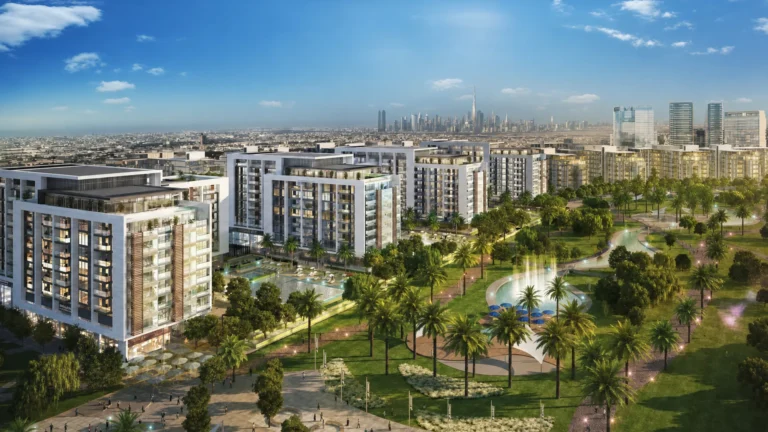
- Master-planned communities: Large-scale developments with residential clusters, retail, schools, healthcare and leisure facilities.
- Phased launches: Developers release projects in stages, allowing them to respond to demand and adjust pricing.
- Diverse product types: Apartments, townhouses, villas, branded residences and serviced apartments.
For investors, this structure offers flexibility. It is possible to choose between early-phase projects with higher potential upside and later-phase projects where the community is more established and risks are lower.
Role of Major Developers
Several major developers are well known in Dubai:
- Emaar
- Dubai Properties
- Nakheel
- Meraas
These developers are associated with large-scale, master-planned communities and iconic projects. Working with such established names typically reduces development risk compared with lesser-known developers, particularly in off-plan investments. Their track record, access to financing and integration with government-related entities often translate into higher confidence among buyers.
In 2026, investors should still conduct due diligence on any developer, but established names can be a starting point for those seeking a more conservative approach within the off-plan segment.
Escrow Accounts and Project Registration
All new projects must be registered with the Dubai Land Department, and off-plan sales are conducted under an escrow account system. This means that buyer payments are deposited into a regulated account and released to the developer based on construction milestones and regulatory approvals.
For investors, this system:
- Improves transparency of project financing.
- Reduces the risk of funds being diverted away from the project.
- Provides a structured framework for monitoring construction progress.
When evaluating a new development in 2026, investors should verify that:
- The project is properly registered with the DLD.
- An escrow account has been opened and is listed in official records.
- Sales and purchase agreements clearly reference the escrow framework.
New Territories and Infrastructure Development
Dubai continues to expand into new areas, but unlike earlier cycles, the development of infrastructure now tends to go hand in hand with residential construction. Roads, utilities, retail centers and community facilities are planned as part of the overall master plan.
For investors, this integrated approach means that new communities are more likely to become livable and attractive within a shorter time frame after handover. This supports:
- Faster lease-up of rental units.
- Earlier stabilization of rental yields.
- More predictable capital appreciation as the community matures.
In 2026, when comparing new developments, investors should pay attention to the timing and scope of planned infrastructure, including schools, healthcare facilities, retail, public transport links and public spaces. Communities with comprehensive infrastructure plans are generally better positioned for long-term success.
Population and Economy of Dubai
The performance of any real estate market is closely tied to demographic and economic trends. Dubai’s property sector is supported by a growing population, a diversified economy and proactive government initiatives aimed at attracting foreign investment and talent.
Population Growth and Housing Demand
Dubai’s population has grown significantly over the past decade and is projected to continue increasing over the long term. The market shows a strong upward trajectory, with forecasts pointing to substantial growth by 2040.
This demographic expansion has several implications for real estate investors:
- Structural demand for housing: More residents mean sustained demand for both rental and owner-occupied properties.
- Diversified tenant base: From young professionals and families to high-net-worth individuals and entrepreneurs.
- Support for multiple segments: Apartments, villas, townhouses and premium residences can all benefit from population growth, though in different ways.
In 2026, investors should consider not only current occupancy levels but also medium- and long-term population trends when selecting communities. Areas aligned with employment hubs, education clusters and transport corridors are likely to see more resilient demand.
Economic Strategy and the Dubai Economic Agenda D33
Dubai’s government has launched the Dubai Economic Agenda, known as D33, with the aim of doubling the volume of foreign trade and foreign direct investment over a multi-year horizon and consolidating Dubai’s position as a leading global center for business and tourism.
The D33 agenda focuses on:
- Expanding external trade.
- Attracting foreign direct investment.
- Strengthening Dubai’s role as a global business hub.
- Enhancing its position as a top tourism destination.
For real estate investors, this strategy is important because it underpins long-term demand for office space, hospitality assets and, crucially, residential properties for expatriates and business owners. As trade and investment flows increase, more companies and individuals are likely to establish a presence in Dubai, supporting both rental and sales markets.
Innovation, Technology and Education Initiatives
The government is actively launching projects to test new technologies, attract leading universities and support private businesses, including small and medium-sized enterprises. These initiatives aim to position Dubai as a global innovation hub and knowledge economy.
From a real estate perspective, this has several effects:
- Creation of new employment clusters: Technology parks, innovation districts and education hubs generate localized housing demand.
- Attraction of skilled professionals: High-skilled workers often seek quality housing in well-serviced communities.
- Support for long-term rental demand: As more professionals settle in Dubai for multi-year periods, the rental market becomes deeper and more stable.
In 2026, investors should monitor where new technology and education initiatives are being concentrated and consider nearby residential communities that can benefit from this demand.
Types of Investment Strategies in Dubai
Dubai offers three main real estate investment strategies, each with its own risk–return profile and operational requirements:
- Buying at the early construction stage (off-plan).
- Buying for rental income.
- Flipping ready properties.
Choosing between these strategies depends on the investor’s experience, risk tolerance, time horizon and operational capabilities. In 2026, investors can also combine these approaches within a diversified portfolio.
Key Considerations When Choosing a Strategy
Before committing to any strategy, investors should clarify:
- Investment horizon: Short-term (1–3 years), medium-term (3–7 years) or long-term (7+ years).
- Risk appetite: Conservative, balanced or aggressive.
- Operational involvement: Hands-on (managing renovations, furnishings, tenant relations) or hands-off (delegating to property managers).
- Capital structure: All-cash purchases or financed acquisitions.
With these parameters in mind, investors can evaluate which of the three main strategies best fits their profile in 2026.
1. Buying at the Early Construction Stage (Off-Plan)
Off-plan investment involves purchasing a property that is under construction or at the pre-launch stage. In Dubai, this is a well-established segment supported by the escrow account system and project registration with the Dubai Land Department.
Risk–Return Profile of Off-Plan Investments
Off-plan is the riskiest but potentially the most profitable strategy. Returns can be substantial when projects are carefully selected and market conditions are favorable. However, risks are higher compared with buying ready properties.
Key characteristics of off-plan investments in 2026 include:
- Potential for high capital appreciation: Investors can benefit from price increases during the construction period and upon handover.
- Flexible payment plans: Developers often offer staged payments, which can improve cash flow management.
- Higher project risk: Construction delays, changes in market conditions and developer-specific issues can affect outcomes.
Under favorable conditions, off-plan investments can deliver high annualized returns. However, these outcomes depend on careful project selection, timing and risk management.
Importance of Developer Selection
Risk is significantly influenced by the choice of developer. Working with lesser-known developers carries higher risk, while established companies such as Emaar, Dubai Properties, Nakheel and Meraas generally provide greater reliability.
In 2026, investors should evaluate developers based on:
- Track record: History of delivering projects on time and as promised.
- Financial strength: Ability to withstand market fluctuations.
- Quality of completed communities: Infrastructure, maintenance standards and long-term performance.
Choosing a reputable developer does not eliminate market risk, but it reduces the probability of severe project-specific issues.
Exit Strategies for Off-Plan Investments
Off-plan investors in 2026 can consider several exit strategies:
- Resale before completion: Selling the contract once a certain percentage of the price has been paid, subject to developer and regulatory rules.
- Sale at or shortly after handover: Exiting when the building is completed and demand from end-users and investors is strong.
- Conversion to rental investment: Holding the property after handover and generating rental income.
The choice of exit strategy should be defined at the time of purchase, with flexibility to adapt to market conditions. Investors should also account for transaction costs and potential holding periods when calculating expected returns.
Who Is Off-Plan Suitable For?
Off-plan is generally more suitable for:
- Investors with higher risk tolerance.
- Those who actively monitor the market and developer announcements.
- Buyers who can commit capital over a multi-year construction period.
In 2026, experienced buyers and market analysts who can evaluate project fundamentals, location, developer reputation and macro trends are best positioned to use off-plan as a speculative or growth-oriented strategy.
2. Buying for Rental Income
Purchasing a property to generate rental income is a more conservative strategy compared with off-plan speculation. Rental investments in Dubai can offer attractive yields relative to major global cities.
Rental Yield and Market Positioning
Dubai’s rental market benefits from a large expatriate population, a dynamic labor market and ongoing business and tourism activity. Rental yields in Dubai can be higher than those in cities such as London, New York and Paris.
For investors in 2026, the rental strategy offers:
- Regular cash flow: Monthly or annual rental income.
- Lower volatility: Compared with short-term speculative strategies.
- Potential for combined return: Rental income plus capital appreciation over time.
Rental yields vary by community, property type and unit size. Investors should analyze net yields after service charges, maintenance, property management fees and other operating costs.
Impact of Rising Rental Rates
Rental rates for villas and apartments have shown strong growth, while premium segment rents have also increased significantly, though they remain below earlier peak levels. This upward trend supports the attractiveness of the rental strategy.
In 2026, investors should consider:
- Historical rental trends: How rents have behaved in the chosen community.
- Tenant profile: Families, professionals, corporate tenants or short-term visitors.
- Lease structures: Annual leases, multiple cheques, and the role of Ejari registration in formalizing contracts.
Communities with stable or growing rents and low vacancy rates are generally better suited for long-term rental investments.
Operational Aspects of Rental Investments
Buying for rental income requires ongoing management. Key operational aspects include:
- Tenant acquisition and screening: Marketing the property, conducting viewings and selecting reliable tenants.
- Lease management: Drafting and registering tenancy contracts, handling renewals and rent adjustments in line with regulations.
- Maintenance and repairs: Ensuring the property remains in good condition to retain tenants and protect asset value.
In 2026, investors who prefer a more passive approach can work with professional property management companies, which typically handle marketing, tenant relations, rent collection and maintenance coordination for a fee.
Who Is the Rental Strategy Suitable For?
The rental strategy is best suited to:
- Investors seeking stable, recurring income.
- Those with a medium- to long-term horizon.
- Owners who are comfortable managing property or delegating to professionals.
Landlords with experience in property management, tenant relations and financial planning can optimize rental performance and minimize vacancies. In 2026, this strategy remains a core component of many Dubai real estate portfolios.
3. Flipping Ready Properties
Flipping involves buying a ready property, upgrading it through renovation and furnishing, and then selling it at a higher price. In Dubai, this strategy is particularly popular in the premium segment, where demand for fully finished, move-in-ready units is strong.
Value Creation Through Renovation and Furnishing
The core of flipping is value creation. Investors identify properties where targeted improvements can significantly enhance market appeal and sale price. Typical value-add activities include:
- Modernizing interiors (kitchens, bathrooms, flooring, lighting).
- Optimizing layouts where feasible.
- Upgrading finishes to align with current buyer preferences.
- Providing high-quality furniture and decor for turnkey living.
In the premium segment, buyers often prefer properties that require no additional work. They are willing to pay a premium for professionally designed and fully furnished units, especially in prime locations.
Risk–Return Profile of Flipping
Flipping can deliver substantial returns when executed professionally, particularly in the premium segment. However, it also carries specific risks:
- Market risk: Changes in buyer demand or pricing during the renovation period.
- Execution risk: Cost overruns, delays and quality issues in renovation works.
- Liquidity risk: Time required to find a buyer at the target price.
In 2026, successful flipping requires detailed budgeting, reliable contractors, realistic timelines and a clear understanding of buyer expectations in the chosen segment and community.
Focus on the Premium Segment
Flipping is especially relevant in the premium and luxury segments, where:
- Buyers often prioritize design, finishes and turnkey readiness.
- There is a strong market for high-quality, fully furnished residences.
- Well-executed upgrades can significantly differentiate a property from competing listings.
In 2026, investors targeting this segment should pay close attention to:
- Micro-location within the community (views, floor level, orientation).
- Building reputation, facilities and service quality.
- Current design trends and buyer preferences.
Flipping in the mid-market segment is also possible, but margins may be tighter, and buyer sensitivity to price is typically higher.
Who Is Flipping Suitable For?
Flipping is most suitable for:
- Investors with expertise in interior finishing and furnishing.
- Those who can manage renovation projects efficiently.
- Professionals with a strong understanding of buyer behavior and pricing in specific communities.
In 2026, flipping should be approached as an active business rather than a passive investment. Success depends on operational skills, market knowledge and disciplined financial planning.
Choosing an Investment Strategy in 2026
The Dubai real estate market offers a spectrum of opportunities, from speculative off-plan investments to conservative rental portfolios and active flipping projects. The optimal strategy depends on the investor’s profile and objectives.
Matching Strategy to Experience and Risk Profile
The following alignment applies:
- Flipping: Suitable for specialists in finishing works and furnishing who can create value through design and project management.
- Off-plan (speculative strategy): Suitable for experienced buyers and market analysts who can assess projects, developers and timing.
- Rental (conservative strategy): Suitable for landlords with property management skills and a focus on stable income.
In 2026, investors can also combine these approaches. For example, a portfolio might include a core of rental properties for stability, one or two off-plan units for growth potential and selective flipping projects for higher, but more volatile, returns.
Key Questions to Ask Before Investing
Before choosing a strategy in 2026, investors should ask:
- What is my primary goal: income, growth or a combination of both?
- How much risk am I willing to take, and over what time frame?
- Do I have the skills and time to manage renovations or tenants, or will I delegate?
- How diversified is my overall portfolio across asset classes and geographies?
Clear answers to these questions will help narrow down the most appropriate strategy or combination of strategies.
Outlook for Dubai Real Estate
Dubai’s real estate market in 2026 is supported by:
- Population growth and a diverse expatriate base.
- Economic initiatives such as the Dubai Economic Agenda D33.
- Regulatory frameworks that enhance transparency and investor protection.
- Ongoing development of infrastructure, technology and education projects.
While no market is without risk, Dubai offers a structured environment where investors can choose strategies aligned with their expertise and risk appetite. By understanding the differences between off-plan, rental and flipping approaches, and by carefully analyzing developers, communities and regulatory frameworks, investors can position themselves to benefit from the emirate’s long-term growth trajectory.
Ultimately, the choice of strategy in 2026 should be driven by informed analysis, realistic expectations and disciplined execution. Dubai’s property market provides the tools and opportunities; it is up to each investor to select and implement the approach that best matches their goals.