A 20/80 payment plan in Dubai means that 20% of the property price is scheduled before handover and the remaining 80% is scheduled later, but the exact split between booking, construction milestones and handover is set out in the Sale and Purchase Agreement (SPA). In the current catalogue, 24 projects use a 20/80 header, representing 1.9% of 1,292 projects with a known numerical payment plan. Developer instalments are interest-free: they are contractual payments under the SPA, not a bank loan. The stated handover dates among listed 20/80 projects range from ready-to-move units to Q2 2028, so the date must be checked project by project.
What a 20/80 payment plan means
The notation 20/80 is a summary, not a complete payment calendar. It normally means that 20% of the agreed property price is payable before handover and 80% falls due at handover or at later points specified in the contract. A buyer should not assume that “20%” always means only the reservation payment, or that “80%” always means one cheque on the day keys are issued.
For one project, the 20% may be divided between a booking amount and a payment on signing the SPA. For another, it may include several instalments during construction. The 80% may be due upon handover, or the schedule may describe more detailed dates and conditions. The payment-plan header is therefore useful for comparison, but the SPA and its payment schedule determine the actual obligations.
This is developer instalment financing, commonly described by Russian-speaking buyers as an interest-free instalment plan. It does not carry interest as a bank mortgage does because it is not a loan: the buyer and developer agree a staged payment of the purchase price in the SPA. That does not remove the need to budget for each due date, registration fees, or any separately agreed contractual charges.
There are 2,846 published English-language projects in the catalogue. A numerical N/M payment-plan structure is available for 1,292 of them. Of those projects, 24 are marked 20/80. You can filter and compare the available structures in the Dubai payment-plan catalogue; each listing should still be checked against the current project documents before a reservation is made.
PDF shortlist · updated 27 October 2026
New Dubai projects of October 2026
30 projects · prices from DLD and developers
-
 Rise By Athlon 1 Wadi Al Safa 5 · 1–3 BR
from AED 1,412,000
-
 Zuha Island Villas World Islands
from AED 68,000,000
-
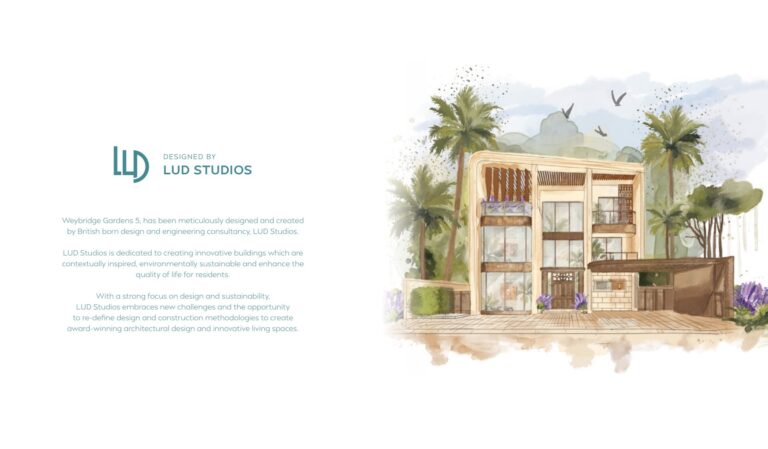 Weybridge Gardens Phase 5 by Leos Developments Dubailand Oasis
from AED 756,782
27 more in the PDF: prices, handover dates, payment plans
The PDF opens instantly. Refreshed monthly from DLD data.
How to read 20/80, 20/40/40 and 60/40
Payment-plan labels can describe the same construction period at different levels of detail. The two numbers in a 20/80 plan usually group all payments into “before handover” and “at or after handover.” Three-part labels separate one of those groups into further stages.
| Plan label | How the figures are usually read | What to inspect in the SPA |
| 20/80 | 20% before handover; 80% at handover or in the later part of the schedule. | Whether the first 20% is one payment or several, and the precise due date for the remaining 80%. |
| 20/40/40 | Usually 20% at booking or signing, 40% during construction, and 40% at handover or later. | The milestones behind the middle 40% and whether the last 40% is due at handover or after it. |
| 60/40 | 60% before handover and 40% at handover or after handover, depending on the schedule. | How the 60% is spread through construction and whether any part of the final 40% is post-handover. |
A 20/40/40 plan is not automatically cheaper or more expensive than 20/80. Both describe the timing of the same total purchase price. The practical difference is cash-flow timing: under 20/80, more of the price is deferred; under 60/40, more is due before handover. A three-part title gives more detail, but it is still not enough to establish every contractual due date.
In the catalogue, 60/40 is the most frequent two-part structure: 301 projects, or 23.3% of projects with a known numerical plan. The 20/80 structure is much less common at 24 projects, or 1.9%. Three-part structures, including 20/40/40, account for 55 projects, or 4.3% of the known-plan group.
Do not read a headline as a promise that no money is due during construction. Open the individual project page and review every instalment, its percentage, its stated trigger and its date. The new-build catalogue is the place to check the published payment stages for a particular development.
Which Dubai projects have a 20/80 structure
The catalogue records 24 projects with a 20/80 payment-plan header. The recorded median down payment for this group is 20%, based on all 24 projects with a populated down-payment field. This confirms the broad label, but it does not replace the payment schedule for a particular unit.
Examples of projects listed with a 20/80 structure include Azizi Riviera 54 and Azizi Riviera 68 in Azizi Riviera, both with a stated handover of Q2 2027; Equiti Garden in Al Furjan, stated Q4 2025; Ghost by Binghatti in Healthcare City Phase 2, stated Q1 2026; Jannat in Midtown by Deyaar, stated Q3 2025; and Me Do Re 2 in Jumeirah Lakes Towers, stated Q4 2025.
Other listed examples are Sera Gardens By Vision in Dubai Production City, stated Q2 2028; Sobha Seahaven in Dubai Harbour, stated Q4 2026; LIV Marina Tower in Dubai Marina, marked ready to move in; and Signature Livings in JVC District 10, also marked ready to move in.
These names identify projects, not a permanent offer available for every unit. A project may have different unit types, a changed schedule, or a separate plan for remaining inventory. The catalogue stores one published plan where several alternatives may exist. It also has no payment-plan data for 1,454 projects, or 51.1% of all published projects. Absence of a 20/80 label does not prove that a developer will not offer another structure for a specific unit.
The published dates above should also be treated as project-card dates rather than a guaranteed timetable. Some stated dates may already have arrived or passed. The catalogue does not provide a calculated median or another single “typical” completion date for all 24 20/80 projects, so no such figure should be inferred from the plan label.
Where the buyer’s payments go: the project escrow account
For an off-plan sale, Law No. 8 of 2007 requires an escrow account for the real-estate development project. The account is opened in the project’s name with an accredited escrow agent. Buyer payments, and financing obtained for the project where applicable, are deposited into that project account.
Each project has its own escrow account. Article 9 of Law No. 8 of 2007 states that the account is dedicated exclusively to construction of that development project and that the amounts deposited there cannot be attached for the developer’s creditors. If a developer has multiple projects, each must have a separate account.
Payments should be made to the designated project escrow account rather than a broker’s own account. Executive Council Resolution No. 6 of 2010 provides that, where a broker markets a project, the broker must deposit the sale price into the project escrow account and may not first deposit it into its own account or deduct commission from that sale price.
The escrow agent manages releases in accordance with the account arrangements and project progress documentation, including engineer-certified construction records used for the relevant releases. The legal framework also requires the escrow agent to submit regular account revenue and expenditure statements to the Dubai Land Department, which may request data and audit the records.
After the developer obtains the completion certificate, Article 14 of Law No. 8 of 2007 requires the escrow agent to retain 5% of the total value of each escrow account. That retained amount is released to the developer one year after units are registered in purchasers’ names. The rule concerns the project escrow account; it should not be confused with an automatic 5% payment withheld by every individual buyer.
For payment instructions, account details and documentary checks, see how to pay a developer through a Dubai project escrow account. A buyer can also request access to their own accounting records or copies of those records under Article 12 of Law No. 8 of 2007.
Oqood registration: the preliminary property register
Off-plan sales are recorded in Dubai’s Interim Real Property Register, commonly called Oqood. Law No. 13 of 2008 regulates this preliminary register, while Executive Council Resolution No. 6 of 2010 sets out implementing rules. Oqood records the legal disposition before the completed unit is transferred onto the final Real Property Register.
The developer registers the off-plan sale in Oqood within 90 days. The published registration charge is 4% of the property price; the law splits it as 2% from the seller and 2% from the buyer, but in practice the sale contract almost always places the full 4% on the buyer. The SPA should state how the parties allocate registration fees and which side is expected to make each payment.
The registration process uses the Oqood portal. Required documents for an individual include a copy of the sale and purchase contract, a valid UAE ID where applicable, and a valid passport for non-residents. Corporate purchasers have separate document requirements.
Details of the process, documents and the 90-day registration requirement are available on the Oqood off-plan registration page. The Oqood record is distinct from the final title registration that follows project completion and fulfilment of the purchaser’s contractual obligations.
Under Article 7 of Executive Council Resolution No. 6 of 2010, after completion and receipt of a completion certificate, the developer may not refuse to hand over or register the unit to a purchaser who has fulfilled contractual obligations. The developer must register the unit and allocated facilities, such as parking, in the purchaser’s name.
What happens if a buyer misses an off-plan instalment
Missing a 20/80 payment is not treated as a simple cancellation without consequences. Law No. 19 of 2017 amended Article 11 of Law No. 13 of 2008 and sets procedures for a purchaser’s non-performance under an off-plan sale agreement.
The developer must notify the Dubai Land Department of the purchaser’s breach. After verifying the breach, the DLD serves the buyer with a written 30-day notice to fulfil contractual obligations. The notice may be delivered in person, by registered mail with acknowledgement, by email, or by another method prescribed by the DLD. Where possible, the DLD may mediate an amicable settlement between the parties.
If the notice period ends without payment or settlement, the DLD issues an official document confirming the procedure and the completion percentage of the relevant unit. The developer’s options then depend on that completion percentage.
- If completion exceeds 80%, the developer may maintain the SPA, retain sums already paid and claim the remaining price; request a public auction sale through the DLD; or terminate the SPA and retain up to 40% of the contractual property value.
- If completion is between 60% and 80%, the developer may terminate the SPA and retain up to 40% of the contractual property value.
- If construction has started and completion is below 60%, the developer may terminate the SPA and retain up to 25% of the contractual property value.
- If work has not started for reasons beyond the developer’s control, without negligence or omission by the developer, the developer may terminate the SPA and retain up to 30% of amounts actually paid by the purchaser.
Where termination results in money exceeding the permitted retention, the excess must be refunded within one year from termination or within 60 days from resale to another purchaser, whichever is earlier. In the no-start scenario described above, the excess is refundable within 60 days from termination.
These are statutory maximums and procedures, not an estimate of what will happen in any individual case. The payment due date, notice details, buyer’s contractual obligations, recorded project completion and any settlement affect the outcome. Law No. 19 of 2017 also preserves the purchaser’s right to resort to courts or arbitration where the developer abuses powers under the article.
20/80 versus post-handover plans and 1% per month
A 20/80 label does not automatically mean that 80% is payable after handover. It can mean that 80% is due at handover. A post-handover plan expressly schedules part of the price after the buyer has received the unit. The difference matters because handover is usually the point at which a large final obligation becomes due under a standard pre-handover schedule.
Among the 1,292 projects with a known numerical payment plan, 154 projects, or 11.9%, have an identified post-handover component. This feature overlaps with the standard N/M labels, so it should not be added to the 20/80 total or treated as a separate competing category.
A “1% per month” plan is another payment frequency, not necessarily a different total allocation. It means instalments are described as monthly payments of 1%, often for a stated number of months. The catalogue identifies 40 projects with a 1%-monthly wording; 28 of these also have a known numerical N/M structure. It remains necessary to check whether those monthly payments occur before handover, after handover, or across both periods.
For a side-by-side explanation of these structures, including schedules with post-handover portions, use the payment-plan guide and catalogue. The decisive question is always the same: what percentage is due, on what date or milestone, and what does the SPA say happens if that payment is late?
What to check before signing a 20/80 SPA
Start with the full payment table. It should show the reservation amount, SPA-signing payment, each construction instalment, the handover payment and any post-handover payments. Add the percentages yourself: the total should equal the agreed property price allocation described in the contract.
- Confirm whether the stated 20% is payable at booking, at SPA signing, or in several pre-handover payments.
- Identify the contractual date or condition for the 80% balance. “At handover” and “after handover” are materially different schedules.
- Check that payment instructions identify the correct project escrow account.
- Review the project name, unit number, price, net area and allocated facilities in the SPA and registration documents.
- Check the Oqood registration process, the 4% registration fee allocation, and the documents required from the purchaser.
- Read the late-payment, notice, termination and refund clauses alongside the procedure in Law No. 19 of 2017.
- Confirm whether the project card presents one of several available payment-plan options.
A buyer should also distinguish project status from a payment-plan headline. A 20/80 structure appears in listings marked ready to move in as well as listings with future stated handover dates. The plan alone does not identify the current construction stage, the current inventory position or the final date by which a particular instalment is required.
Frequently asked questions
Does 20/80 mean 20% on booking and 80% on handover?
It may, but it is not automatic. The label means 20% before handover and 80% later in the stated schedule; the SPA shows whether booking, construction milestones or handover trigger each payment.
Is a Dubai developer instalment plan interest-free?
Yes. It is a contractual staged payment of the purchase price under the SPA, rather than a bank loan with interest.
How many 20/80 projects are in the catalogue?
There are 24 projects with a 20/80 structure among 1,292 projects with a known numerical payment plan.
What is Oqood?
Oqood is the commonly used name for the Interim Real Property Register for off-plan sales, regulated by Law No. 13 of 2008.
Are off-plan payments paid directly to the developer?
For off-plan projects, buyer payments are deposited into the project escrow account under Law No. 8 of 2007. Each development project has a separate account.
What happens if I cannot pay the 80% balance?
The DLD serves a 30-day notice after the developer reports the breach. If the matter is not resolved, the developer’s statutory options and possible retention depend on the verified completion percentage under Law No. 19 of 2017.
Is 20/80 the same as a post-handover plan?
No. A 20/80 plan may require 80% at handover. A post-handover plan specifically schedules part of the price after handover.
PDF shortlist · updated 27 October 2026
New Dubai projects of October 2026
30 projects · prices from DLD and developers
30 more in the PDF: prices, handover dates, payment plans
The PDF opens instantly. Refreshed monthly from DLD data.
Estimate your mortgage
Monthly payment, income-based eligibility and purchase costs (DLD, registration, trustee) — in our Dubai mortgage calculator.
Open the calculator