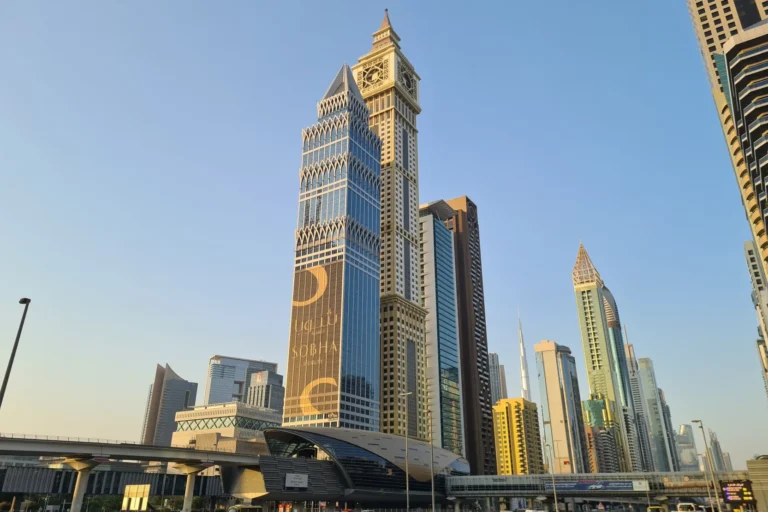
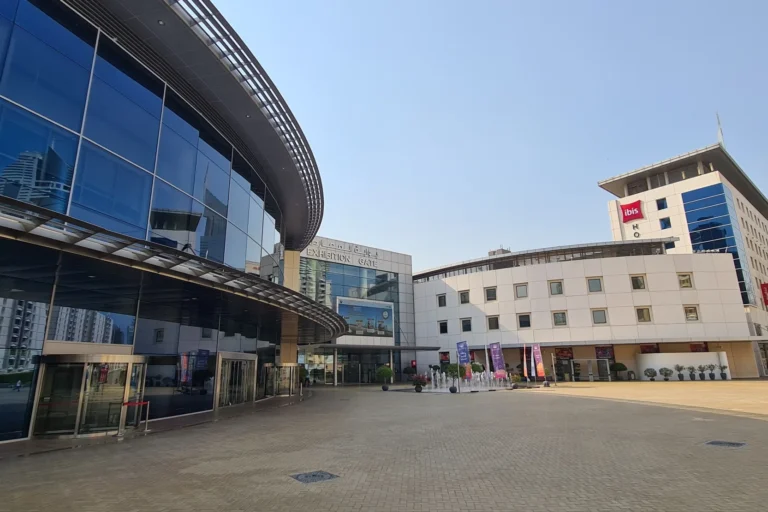
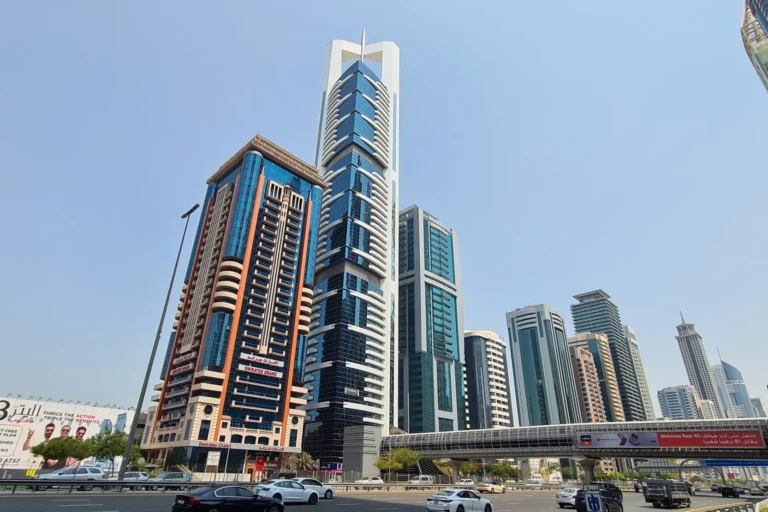
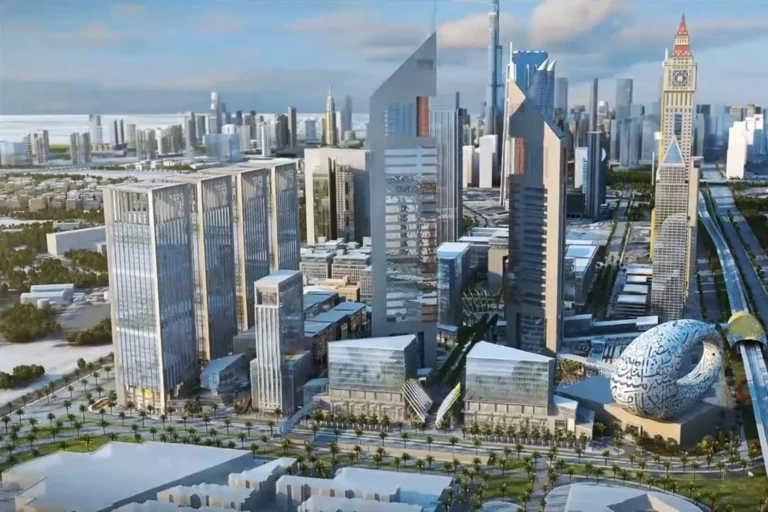
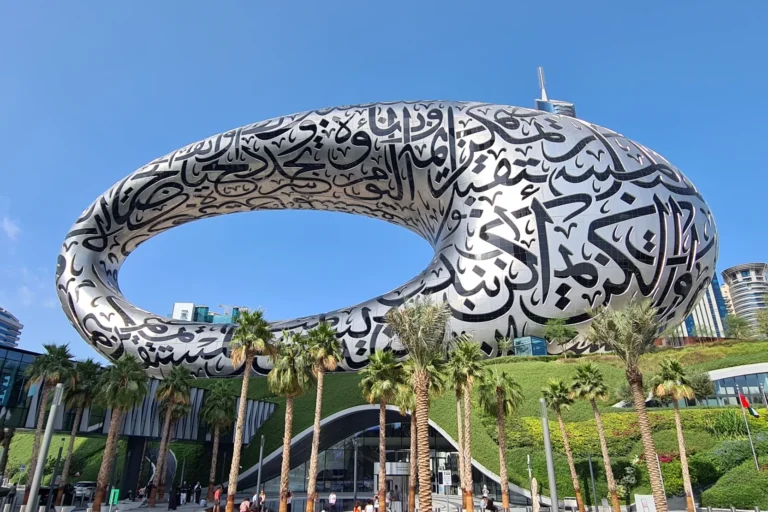
The Museum of the Future is a landmark cultural and architectural object on Sheikh Zayed Road in the Trade Centre Second area of Dubai, adjacent to the Emirates Towers complex. Opened on 22 February 2022, the building is instantly recognisable by its column-free, oval form clad in stainless steel and pierced by illuminated Arabic calligraphy. The project combines exhibition space with public amenities and was conceived as both a museum and a platform for exploring innovation.
What this place is and where it sits
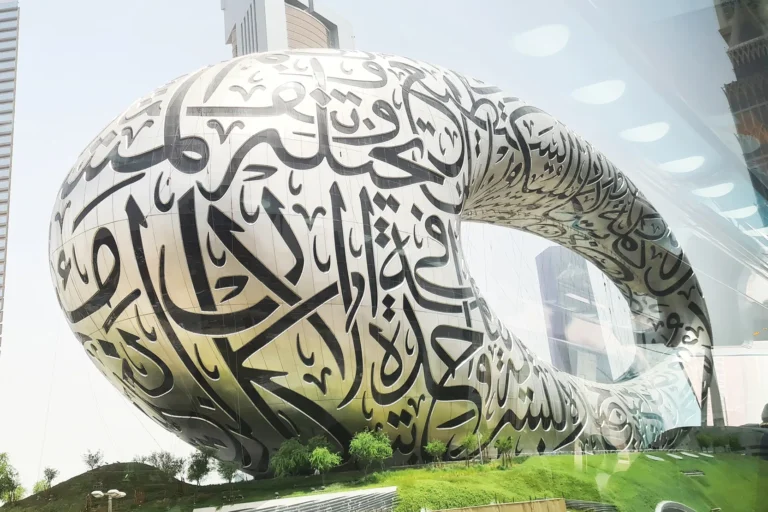
The Museum of the Future is an egg-shaped, 78-metre-high structure organized around a prominent elliptical void. Its design expresses three symbolic elements: a landscaped green base representing the earth, the futuristic upper volumes reflecting human creativity, and the central void representing the unknown future and the process of continuous innovation. The external Arabic script was created by Emirati artist Mattar Bin Lahej and displays statements that emphasise creativity, the active shaping of the future, and innovation as a driver of civilisation. The architectural concept was developed by Killa Design, which described the void as a deliberate counterpoint to the known future represented by the museum’s exhibition floors.
Transport and key distances
The museum is located on Sheikh Zayed Road, next to the Emirates Towers area. The nearest metro access is on the Red Line: station code R23, approximately 271 metres from the building and within comfortable walking distance for most visitors.
Approximate driving times from the Museum of the Future to major Dubai destinations (indicative):
- Dubai Mall — about 10 minutes
- Palm Jumeirah — about 20 minutes
- Burj Al Arab — about 19 minutes
- The Walk, JBR — about 23 minutes
- Dubai International Airport (DXB) — roughly 13 minutes
- Al Maktoum International Airport — roughly 44 minutes

Building composition, technology and facilities
The building comprises six exhibition floors plus one administration floor, sitting above a three-storey podium that houses food and beverage outlets and service areas. The complex also includes an auditorium, retail spaces, parking and the necessary back-of-house services to support large visitor numbers. The museum is designed as a multi-level exhibition and events venue where permanent and rotating displays are combined with visitor amenities.
Construction made extensive use of advanced production methods: large sections of structural steel were fabricated off-site and delivered largely assembled to reduce on-site welding and crane time. Robotic fabrication and digital modelling were used throughout the production process; software such as Tekla was applied to accurately design, fabricate and fit complex steelwork. Sustainability measures are highlighted in the project description, and a substantial solar energy installation is reported as part of the building’s power provision.
Since opening, the Museum of the Future has attracted significant international attention: by its second anniversary it had received more than two million visitors from over 170 countries. The institution also hosts initiatives aimed at identifying and supporting innovation talent, including a programme described as the base for a search for notable Arab minds.
Urban context and development
Placed on one of Dubai’s principal corridors, the museum functions as a standalone cultural destination within Trade Centre Second rather than as part of a larger residential masterplan. Its proximity to Emirates Towers and Sheikh Zayed Road integrates it tightly into the city’s commercial and transport fabric, providing convenience for short visits, events and conferences. The building’s prominent form and public access points make it both a visitor attraction and a visible urban marker for the district.

Who the location suits
The Museum of the Future is primarily suited to cultural visitors, families, school groups and professionals interested in technology, design and innovation. Its exhibition floors and public programmes are designed to engage children and young people with future-oriented skills through interactive experiences. The presence of auditorium and event spaces also makes the location relevant to organisers of conferences, talks and corporate events that target innovation and technology sectors.

FAQ
When did the Museum of the Future open?
The building was inaugurated on 22 February 2022.
How tall is the building and how is it organised?
The tower reaches 78 metres in height and contains six exhibition floors plus an administration floor above a three-storey podium with food and beverage areas, retail, parking, an auditorium and services.
Which metro station serves the museum?
The nearest metro is on Dubai Metro Red Line, station code R23; the entrance is about 271 metres from the station and is walkable.
What makes the architecture distinctive?
The form is a column-free, stainless-steel-clad ellipse featuring illuminated Arabic calligraphy by Mattar Bin Lahej. The project used off-site steel fabrication, robotic construction methods and advanced digital modelling to achieve its complex geometry.
Nearby areas
Neighbouring areas and sub-communities to compare location and prices.