Updated: 17 February 202614 min read
How to buy a home in The Terraces – in this article we analyse real transaction data, prices, rental yields and liquidity for owners and investors.
For clarity, we may refer to the same unit as an apartment, a property, or a home depending on context.
How to buy a 1-bedroom apartment in The Terraces Dubai
How to buy a 1-bedroom apartment in The Terraces Dubai if you are entering the market for the first time and are afraid of overpaying? The key is to separate marketing from hard numbers. In Mohammed Bin Rashid City, and especially in Sobha Hartland, prices can look aggressive on portals, but in The Terraces we have a solid dataset of real transactions that lets you see the actual range where buyers and sellers are closing deals.
Based on our sample of 30 sales transactions for 1-bedroom units in The Terraces between June 2023 and February 2026, as well as current sales and rental listings, we can outline a very practical buying strategy: what is a fair price per square foot, when it makes sense to negotiate harder, and in which cases a seemingly “high” price is actually justified.
This article is written for end-buyers: you may plan to live in the apartment, keep flexibility to rent it out later, and want to understand, in simple numbers, how to avoid a bad entry point in this particular building.
What you must know about the Dubai market before buying
Related Articles
- How to buy a property in Dubai in Oakley Square Residences – analysis 2026
- How to sell a property in Dubai in Imperial Avenue – analysis 2026
- How to sell an unit in Dubai in Palm Jebel Ali – Frond O – analysis 2026
- ROI analysis of apartment in SHAMAL RESIDENCES 2: DLD data and real deals
- How to sell an unit in Dubai in The Residence By Prestige One – analysis 2026
Before you focus on one building, it is important to understand how Dubai’s freehold apartment market behaves today. Prices do not move uniformly across the city: mature coastal areas, older communities, and new prime clusters like Mohammed Bin Rashid City all follow their own micro-cycles driven by supply, handovers, and rental demand.
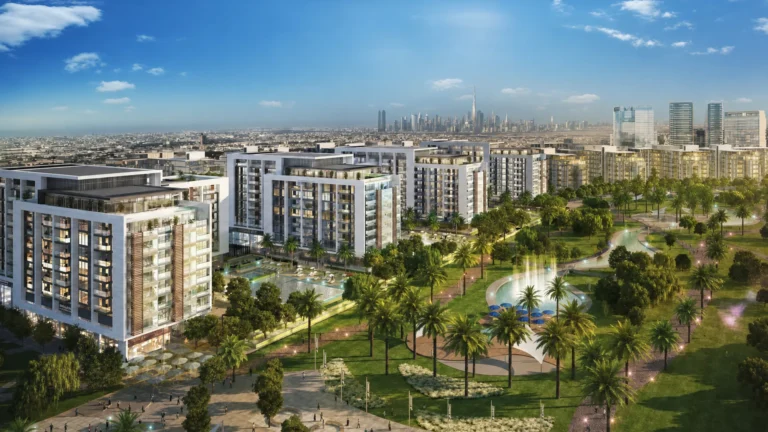
The Terraces sits inside Sobha Hartland, a master community that has been positioned in the upper-mid to premium segment. That means two things for a first-time buyer:
- Prices are relatively high versus outer communities, but the tenant and buyer demand is stronger and more resilient in downturns.
- Most buildings here are ready and modern, so there is less construction risk and more transparent recent transaction history to benchmark your offer.
In our sample, all 30 recorded sales for 1-bedroom units in The Terraces are “Ready” properties. There is no off-plan component in the analysed data, which simplifies your decision-making: you are comparing like-for-like ready apartments, not mixing off-plan brochure prices with completed stock.
Dubai also remains a landlord-friendly, yield-driven market. For an end-user this matters because investor activity directly influences how aggressively sellers price their units and how much room you really have to negotiate.
Deal history for the building: price and demand dynamics
To avoid overpaying, you need to anchor your expectations to actual signed deals, not asking prices. In our sample of 30 sales transactions for 1-bedroom apartments in The Terraces from June 2023 to February 2026, the overall median sale price is around AED 1,290,000, with a median price per square foot of approximately AED 1,716.
However, this full-period median hides a clear upward trend. If we zoom into the last 12 months of data, the picture changes:
- Median sale price in the last 12 months (sample of 4 recent deals): about AED 1,540,000.
- Median price per square foot in this recent sample: around AED 2,031 psf.
This means that, based on recent deals, buyers in The Terraces are already paying roughly 19% more per square foot than the long-term median from mid‑2023. The building has moved into a higher price band, and any realistic negotiation strategy should be built on recent, not historical, levels.
If we look at individual recent transactions in our dataset, we see 1-bedroom deals in 2025 and early 2026 closing in a range between roughly AED 1.30M and AED 1.65M, with most typical unit sizes around 700–760 sq.ft. For example, one transaction in February 2026 shows a 1-bedroom of about 760 sq.ft changing hands at AED 1.65M (around AED 2,172 psf), and several mid‑2025 deals cluster between AED 1.48M and AED 1.60M at around AED 1,900–2,100 psf.
From a demand perspective, our last-12-month sample captures around 0.33 completed 1-bedroom deals per month on average. This is a low-volume but consistent flow: The Terraces is not a highly speculative, high-churn building, but units do sell steadily when priced close to recent benchmarks.
When you plan how to buy a 1-bedroom apartment in The Terraces Dubai, keep this in mind: the realistic working range for a standard-sized 1-bedroom, based on recent evidence, is broadly in the AED 1.45M–1.65M corridor, with larger or premium units sometimes justifying more.
Official data sources and live market tools
For readers who want to explore the raw data behind this analysis, here are the key open sources:
-
Dubai Land Department open data (historical transactions)
-
Property Finder – live listings and asking prices
-
Bayut – live listings and asking prices
Recent sales in this building
| Transaction Date | Price | Property Size | Price Psf | Status |
|---|---|---|---|---|
| 2026-02-02 | 1650000 | 760 | 2172 | Ready |
| 2025-10-13 | 1600000 | 755 | 2120 | Ready |
| 2025-07-02 | 1480000 | 762 | 1942 | Ready |
| 2025-02-21 | 1300000 | 749 | 1736 | Ready |
| 2024-11-18 | 1485000 | 753 | 1971 | Ready |
| 2024-10-18 | 1300000 | 708 | 1836 | Ready |
| 2024-09-17 | 1650000 | 1167 | 1414 | Ready |
| 2024-08-29 | 1425000 | 755 | 1888 | Ready |
| 2024-08-23 | 1300000 | 708 | 1836 | Ready |
| 2024-07-30 | 1350000 | 751 | 1798 | Ready |
Current listings and liquidity: what apartments are really asking now
Once you know where recent deals are closing, the next step is to compare those with current asking prices. In our dataset of active listings, there are 3 one-bedroom apartments for sale in The Terraces. The headline numbers:
- Median asking price: around AED 1,990,000.
- Median size: about 1,002 sq.ft.
- Median asking price per square foot: roughly AED 1,986 psf.
This is noticeably higher than the building’s full-period transaction median, but not wildly out of line with the last-12-months median of about AED 2,031 psf for completed deals. In other words, for The Terraces the current sellers’ expectations per square foot are broadly in line with what buyers have been paying recently.
However, there is an important nuance: one of the currently listed units in our dataset is a compact 708 sq.ft apartment marketed at AED 1.70M, while the other two are larger 1,002 sq.ft layouts asking around AED 1.99M. For you as a buyer this means:
- On smaller 1-beds, anything significantly above the AED 2,100–2,200 psf range should trigger a very careful comparison with recently sold evidence.
- On larger 1-beds around 1,000 sq.ft, headline prices around AED 1.9M–2.0M can still be rational if the layout, view, floor, and finishing are superior, because you are getting more usable space.
From a liquidity standpoint, the building currently shows around 9.1 months of inventory for 1-bedrooms in our model (based on the interplay between the last 12 months’ deal pace and the current number of listings). This is a balanced-to-slightly-buyer-leaning situation: you have some leverage, but it is not a distressed or oversupplied building where sellers must slash prices aggressively.
For anyone exploring how to buy a 1-bedroom apartment in The Terraces Dubai today, the key message is that the spread between “asking” and “achieved” prices is not huge in this building. Success will come from fine-tuning your offer based on unit specifics rather than expecting 20–30% discounts.
Current sale listings in this building
| Listed Date | Price Value | Size Sqft | Price Psf | Status |
|---|---|---|---|---|
| 2026-02-09 | 1700000 | 708 | 2401 | completed |
| 2026-01-12 | 1990000 | 1002 | 1986 | completed |
| 2025-10-28 | 1990000 | 1002 | 1986 | completed |
Rent and yields: how ROI is calculated and what local numbers show
Even if you plan to live in the apartment, understanding rental dynamics in The Terraces gives you a powerful negotiation tool: it shows whether a seller’s price is justified from an investor’s perspective. If investors can achieve healthy yields at a given price level, they are more likely to buy, which supports the seller’s position.
In our dataset of active rental listings, we see 2 one-bedroom apartments for rent in The Terraces with:
- Median asking rent: around AED 117,500 per year.
- Median size: about 753 sq.ft.
- Median asking rent per square foot: roughly AED 156 psf per year.
Using these rental benchmarks together with the recent median sale price of about AED 1,540,000 for 1-beds, our ROI model for this building indicates:
- Estimated annual rent (median): around AED 117,500.
- Gross yield: approximately 7.6% per year.
- Price-to-rent ratio: about 13.1 years.
For Dubai, a gross yield of 7–8% on a ready 1-bedroom in a well-located premium community is competitive. It explains why investor interest in The Terraces is solid and why sellers are often not desperate to accept deep discounts if their asking prices still produce a 6–7% yield for a potential landlord.
Practically, when you evaluate a unit, take the asking price and the realistic annual rent. For example, if you consider a 1-bedroom at AED 1.80M and expect achievable rent of around AED 115,000–120,000, your gross yield would be around 6.4–6.7%. If you can secure a similar unit closer to AED 1.60M with the same rent potential, your gross yield improves toward 7.2–7.5%, which is more in line with the building’s current metrics.
This exercise helps you decide where to draw the line in negotiations: if your target unit at the final price still produces a decent investor-style yield, you are more likely to be buying at a fundamentally sound level rather than emotionally overpaying.
Seller strategy: what this means for the other side of the table
Understanding how a rational seller should think in The Terraces helps you anticipate their flexibility. In our sample, sellers see that:
- Recent median sale prices for 1-beds are around AED 1.54M, with deals up to about AED 1.65M for certain units.
- Current asking prices hover closer to AED 1.99M for larger 1,002 sq.ft apartments, and roughly AED 1.70M for compact 708 sq.ft layouts.
- Gross yields based on current rent levels are attractive in the 7%+ range.
A rational, informed seller will do the following:
- Price slightly above recent comparable transactions to leave room for negotiation while staying inside the band that still makes sense for investors.
- Highlight features that justify being at the top of the range: better views, higher floor, high-quality furniture, or a larger-than-average layout.
- Resist large discounts if their unit can be rented quickly at current rental levels, because holding the asset remains financially attractive.
For you as a buyer, this means that expecting extreme bargains is unrealistic, but structured, data-backed negotiation is welcomed by serious owners. If you can present a clear argument using recent deals (for example, “similar 750 sq.ft apartments recently closed in the AED 1.45M–1.55M range, while you are asking AED 1.70M for a comparable size”), your chances of finding common ground increase significantly.
Also note that there is no off-plan activity in the analysed dataset for this building: all sales are ready units. This keeps the playing field clear. Sellers cannot easily claim that off-plan launches in the area justify huge premiums inside The Terraces itself; the main benchmark is other ready 1-bedrooms in the same tower and community.
How an investor sees this apartment: risks, scenarios and horizons
To refine your decision on how to buy a 1-bedroom apartment in The Terraces Dubai, it is useful to look at the same unit through an investor’s lens. Investors are typically less emotional and more focused on entry price, yield, and exit horizon.
Based on our dataset, an investor would likely draw these conclusions about The Terraces 1-bed market:
- Entry pricing: recent deals around AED 1.5M–1.6M for typical units, with some going up to AED 1.65M for better specifications, define a realistic “fair value” band.
- Income profile: potential annual rent around AED 115,000–120,000 supports gross yields near 7–8%, which is competitive among quality inner-city communities.
- Liquidity: around 0.33 deals per month in the recent sample and roughly 9 months of inventory indicate that exits should be feasible within a reasonable timeframe if priced correctly, but this is not a hyper-liquid, speculative tower.
Key risks an investor would consider:
- Price sensitivity: at significantly higher entry prices (for example, paying close to AED 2.0M for a standard layout), yields compress, and the unit begins to look less attractive versus alternatives in Dubai.
- Future competition: as more buildings in Mohammed Bin Rashid City and Sobha Hartland mature, tenants and buyers will have more choice, so paying a large premium today requires strong unit-specific advantages.
- Lower deal volume: with only a few recorded sales per year in our sample, pricing can become lumpy, and outlier deals (very high or low) may not define the true sustained level.
From a time horizon perspective, an investor-minded buyer would usually look at The Terraces over a 5–7 year window: enjoying strong rental returns in the early years while the community continues to mature, then reassessing capital appreciation potential later.
If you align your own expectations with this investor logic, you will be better equipped to decide whether a specific offer price makes sense for you as a resident-buyer. If your all-in cost would still make the unit acceptable to a typical landlord, you are likely buying at a defensible level.
Summary and answers to common questions
Pulling everything together, here is a practical roadmap for someone thinking about how to buy a 1-bedroom apartment in The Terraces Dubai without overpaying:
- Use recent deals as your anchor: in our recent sample, typical 1-bedrooms have changed hands roughly in the AED 1.45M–1.65M band, with a median of about AED 1.54M.
- Cross-check price per square foot: recent completed sales cluster around AED 2,000 psf; current asking prices are in a similar psf range, especially for larger 1,000+ sq.ft layouts.
- Benchmark with rental yields: aim for a gross yield close to 7–8% based on realistic rents around AED 115,000–120,000; if a proposed price pushes yields far below this, negotiate harder.
- Factor in building liquidity: with around one deal every few months in our sample, expect negotiation, but not distressed selling.
FAQ: buying a 1-bedroom in The Terraces
What is a realistic budget for a standard 1-bedroom in The Terraces based on this data?
For a typical 700–760 sq.ft 1-bedroom, the analysed transactions suggest that a realistic target range is roughly AED 1.45M–1.60M, adjusting up or down for view, floor, and condition.
Why do some listings ask close to AED 2M?
Some of the active listings in our sample are larger 1,002 sq.ft units, which naturally carry a higher ticket price. When you compare, always normalise by price per square foot and by specific unit features, not just headline price.
Is The Terraces more suitable for end-users or investors?
The numbers suggest it works for both: investors see attractive gross yields above 7%, while end-users benefit from a modern, central community with stable demand and a healthy, transparent resale market for 1-bedroom units.
If you want to move from generic portal browsing to a specific, data-backed acquisition plan for a 1-bedroom apartment in The Terraces, the next logical step is to map your budget and timing against the recent transaction band and live listings, then structure offers unit by unit instead of chasing “discounts” in the abstract.
Location on the map
Approximate location of The Terraces, Mohammed Bin Rashid City.