Renat BashirovUpdated: 30 August 202614 min read
How to sell a home in Quortaj – in this article we analyse real transaction data, prices, rental yields and liquidity for owners and investors.
For clarity, we may refer to the same unit as an apartment, a property, or a home depending on context.
How to sell a 1-bedroom apartment in Quortaj Dubai
How to sell a 1-bedroom apartment in Quortaj Dubai in the next 3–6 months at a fair market price, without panic and heavy discounting, is first of all a question of strategy and positioning, not luck. You are dealing with a niche product in a low‑visibility micro‑segment: in our analysed dataset there are currently no recorded sales transactions, active sale listings or rental contracts specifically for 1-bedroom units in Quortaj itself. This does not mean there is no demand; it means you cannot simply rely on automatic “price per square foot” tools. You need to price and market smarter than your neighbours.
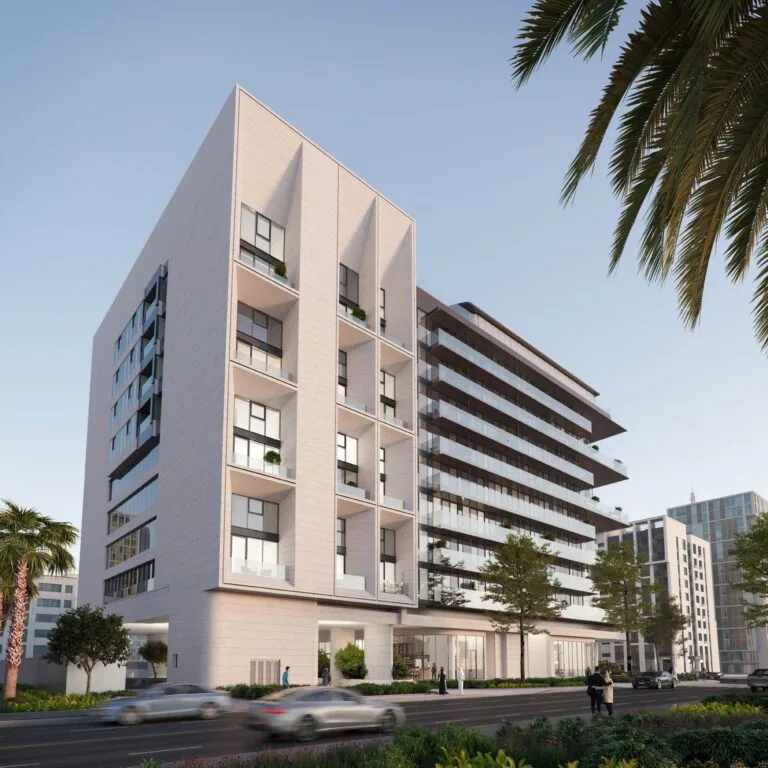
This article is written for an owner who wants to exit calmly and professionally. We will look at how Quortaj as a location fits into the broader Dubai and Al Furjan story, how investors think about such an asset, and what exactly you should do in the next weeks to sell your 1-bedroom apartment in Quortaj, Al Furjan on realistic, defendable terms.
What you must know about the Dubai market before selling
Related Articles
- How to sell an apartment in Dubai in Jomana 3 – analysis 2026
- How to sell an apartment in Dubai in Aria – analysis 2026
- ROI analysis of apartment in Marwa Heights: DLD data and real deals
- ROI analysis of apartment in The Vybe: DLD data and real deals
- Residential Real Estate in Dubai: Key Market Trends
Before deciding how to sell a 1-bedroom apartment in Quortaj Dubai, it is crucial to understand the backdrop: you are not negotiating in a vacuum. Dubai is still in a growth phase driven by population inflows, infrastructure development, and a maturing mortgage market. Al Furjan, where Quortaj is located, has effectively transformed from a peripheral community into a well‑established residential hub with metro access, schools and retail close by.
At the same time, our specific dataset for the building shows zero recent sales and rental transactions and zero active listings for 1-bedroom units. This tells you two things:
- The building-level micro‑segment is illiquid in terms of available data, which makes automated valuations unreliable.
- Serious buyers will compare your asking price with surrounding Al Furjan and similar townhouse-style or low‑rise communities, not necessarily with other 1‑beds in the same building (because there are none visibly on the market).
Practically, this means you should benchmark with the broader Al Furjan and comparable communities, monitor recent deals there, and accept that buyers will negotiate based on community‑wide evidence rather than exact same‑building comparables. Your goal is to position your price in the competitive range for Al Furjan 1‑bedroom stock, then justify any premium with the specific advantages of Quortaj (layout, finishing, access, plot orientation, community feel).
Deal history for the building: price and demand dynamics
In our analysed dataset there are no recorded historical sales transactions for 1-bedroom apartments in Quortaj. That creates a challenge: you cannot point to a clear series of past deals to justify your asking price. But it also creates an opportunity: you can be the price setter for your segment, if you do it intelligently.
Here is how to think about price and demand dynamics in this context:
- In the absence of building-level data, market participants will rely on community-level evidence from Al Furjan and comparable freehold communities with similar product (1‑bedroom low‑rise or townhouse‑style units).
- Demand for 1‑bedroom units across Dubai is typically driven by first‑time buyers, young couples and yield‑focused investors. These buyers compare absolute ticket size, mortgage eligibility, service charges and expected rent.
- If Quortaj has seen very few resales historically, that often signals a “stable holder” community: owners tend to live in or hold long‑term, which can justify a pricing premium compared to more speculative, high‑turnover towers.
When building a pricing narrative for buyers, replace missing “hard” data with structured reasoning:
- Use recent transaction evidence from neighbouring Al Furjan buildings and similar communities at a per‑square‑foot or per‑square‑meter level.
- Adjust for specific value drivers of your unit: view, floor (if applicable), outdoor space, parking, upgrades, proximity to parks and metro.
- Be ready to show a clear band: target price, acceptable negotiation range, and a level at which you would rather hold and rent instead of selling below value.
Your broker should transparently explain to buyers why there is no direct transaction history for this exact product, and then guide them through a sensible comparison set. That is how you avoid emotional lowballing and keep the discussion within a rational corridor of values.
Official data sources and live market tools
For readers who want to explore the raw data behind this analysis, here are the key open sources:
-
Dubai Land Department open data (historical transactions)
-
Property Finder – live listings and asking prices
-
Bayut – live listings and asking prices
Current listings and liquidity: what apartments are really asking now
Our snapshot of the market for this building shows zero active sale listings and zero active rental listings for 1‑bedroom apartments in Quortaj at the moment of analysis. Again, this speaks more about low visible turnover than about weak demand. In practice, owners here may be holding for the long term, with rare units coming to market off‑portal or via private networks.
For you as a seller, this has several implications for liquidity and strategy:
- You will not be directly competing with many similar 1‑bed listings in the same building. That reduces intra‑building price wars but increases the need to justify your ask relative to the wider Al Furjan market.
- Liquidity risk is real: in a niche segment without frequent comparables, time‑on‑market can stretch if you misprice by even 5–10 percent above realistic buyer expectations.
- Because we do not see a pipeline of alternative units in this specific dataset, motivated buyers who fall in love with Quortaj’s product are more likely to negotiate seriously on your listing, rather than “just choose another 1‑bed in the same building”.
To convert this into an advantage, focus on:
- Exposure: professional photography, accurate and rich descriptions, and proper coverage across major portals and broker networks.
- Accessibility: clear viewing windows, easy access instructions, and a broker who can respond quickly to enquiries.
- Flexibility: knowing in advance your acceptable negotiation corridor and any non‑price concessions (furniture, minor repairs, flexible transfer date) you are ready to offer.
In a data‑thin environment, buyers are highly sensitive to perceived value at first viewing. Your listing should be designed to make your 1‑bed the “reference point” they compare others to, not the other way round.
Rent and yields: how ROI is calculated and what local numbers show
Our analysed dataset currently contains no rental transactions for 1-bedroom apartments in Quortaj and no separate sample of rental contracts for the parent community strong enough to derive reliable building‑level yield figures. This means there are no ready‑made ROI percentages that you can simply quote to an investor.
However, serious buyers will still ask the same question: what is the potential rental income and expected yield on this apartment? To handle that conversation confidently, you should understand the basic ROI logic and how to approximate it for your unit, even when building‑specific data is missing.
How ROI is typically calculated in Dubai
Investors in Dubai commonly look at the net annual yield, which can be approximated as:
- Gross annual rent (market rent per year)
- Minus service charges, routine maintenance, and realistic vacancy allowance
- Divided by the purchase price (including transfer and agency costs)
For example, if a comparable 1‑bed in Al Furjan rents for a certain annual amount and the all‑in purchase cost is another amount, an investor will typically look for a net yield in a band that is competitive with other communities. Specific numbers will depend on current community rents, which your broker should source from up‑to‑date Al Furjan transaction feeds and lease registrations, not just portal asking prices.
How to use ROI arguments when selling your unit
- Ask your broker to compile a mini‑report of current 1‑bed rents in Al Furjan and similar communities, then indicate a realistic rent band for your apartment’s size and quality.
- Estimate service charges and maintenance based on current invoices for your building or similar ones in the master community.
- Prepare a simple, transparent net yield illustration for buyers: conservative, base case and optimistic scenarios.
This is particularly important when the buyer is an investor rather than an end‑user. A clear, well‑reasoned ROI story can support your asking price even when the phrase “How to sell a 1-bedroom apartment in Quortaj Dubai” would otherwise sound like a purely emotional lifestyle pitch.
Seller strategy: how to prepare and sell this type of apartment in Dubai
With limited direct data for this building, the way you structure the sale process becomes your main tool. How to sell a 1-bedroom apartment in Quortaj Dubai over the next 3–6 months without panic discounts comes down to four pillars: pricing, presentation, promotion and process.
1. Pricing: define your corridor, not just a number
- Use Al Furjan and similar community comparables to set a realistic asking price. Do not try to “revolutionise the market” with an outlier figure; choose a number aligned with the better units in comparable projects, with room for 3–7 percent negotiation.
- Agree with your agent on a minimum walk‑away price before listing. This takes emotion out of negotiations and prevents you from making impulsive decisions after a few weeks on the market.
- Plan in advance for a structured price review after 45–60 days of marketing if enquiries and viewings remain weak.
2. Presentation: make the property easy to choose
- Fix visible defects before listing: cracked grout, peeling paint, dripping taps, non‑working lights. Buyers in niche segments are often detail‑oriented.
- Declutter aggressively and neutralise decor. A 1‑bed must feel spacious and flexible; tenants and end‑users should be able to imagine their own layout.
- Invest in professional photography and, ideally, a simple floor plan. Without multiple comparables in the same building, visuals have an outsized impact.
3. Promotion: target the right audience
- Ensure your listing highlights both lifestyle (quiet, low‑density, community feel) and investment metrics (estimated rent band, potential yield once rented).
- Use one lead agency that truly understands Al Furjan and Quortaj, rather than scattering the listing among many non‑specialist brokers. In thinly traded segments, quality of representation beats sheer number of agents.
- Ask for feedback after every viewing and be ready to adjust small things: lighting, smell, access instructions.
4. Process: remove friction for the buyer
- Prepare all documents in advance: title deed, passport copies, service charge statements, NOC procedures and approximate costs.
- If the property is mortgaged, obtain a current liability letter and know the exact settlement process and timings.
- Decide ahead of time on tenancy status: will you sell vacant on transfer or with tenant in situ. Each option attracts different buyers and affects perceived value.
A calm, pre‑planned approach allows you to keep your negotiation power. You are not just another seller following the market; you are running a small, structured exit project with a clear timeline and metrics.
How an investor sees this apartment: risks, scenarios and horizons
To sell effectively, you need to see your property through investor eyes. For a rational buyer considering a 1-bedroom apartment in Quortaj, Al Furjan, the absence of a rich transaction history is both a risk and a potential upside.
Main perceived risks
- Data opacity: no direct recent sales or rent records for similar units in the same building makes pricing less transparent.
- Liquidity concern: investors may worry about exit flexibility in 3–7 years, fearing few future buyers and slow resale cycles.
- Market cycle: those aware of broader Dubai cycles will ask whether they are buying near a local peak or still in an uptrend.
Upside scenarios you can credibly discuss
- Community maturation: Al Furjan continues to benefit from infrastructure, schools and retail growth, supporting both rents and prices.
- Low historic churn: if owners rarely sell in Quortaj, that can be read as a sign of resident satisfaction and long‑term desirability.
- Yield normalisation: if Dubai yields compress in prime areas, investors may look more at mid‑market communities like Al Furjan, driving capital values up to keep yields competitive.
Holding horizons and negotiation logic
Many investors will model three horizons:
- Short term (1–3 years): focus on immediate rental yield and minimal capex.
- Medium term (3–5 years): expectation of moderate capital appreciation alongside stable rental demand.
- Long term (7+ years): treating the asset as a hedge against inflation and a foothold in Dubai’s growth story.
Your task is to understand which horizon your potential buyer operates on and tailor your conversation accordingly. When someone searches “How to sell a 1-bedroom apartment in Quortaj Dubai”, they are typically thinking in terms of an orderly exit; the investor on the other side aims for an orderly entry. Align these two agendas through clear numbers, realistic ROI frameworks and transparent discussion of risks.
Summary and answers to common questions
In our analysed dataset for Quortaj we see no direct sales or rental records for 1-bedroom units and no active listings at the time of analysis. This does not block your sale; it simply means that selling is a strategic exercise, not a plug‑and‑play process. You will rely on wider Al Furjan evidence, a strong brokerage partner and professional execution.
Key points to keep in mind:
- Price using community comparables and define a negotiation corridor in advance.
- Compensate for data scarcity with excellent presentation and full transparency on documents and costs.
- Frame the apartment both as a comfortable home and as a rational investment with clear yield logic based on realistic rent estimates.
- Accept that time‑on‑market in a niche product can be longer if mispriced; monitor enquiry volume and be ready to adjust.
Frequently asked questions from owners in your position:
- Can I sell in 3–6 months without heavy discounting? Yes, if you start with realistic pricing, prepare the apartment properly, and work with a focused agent who understands Al Furjan and Quortaj specifically.
- Should I wait for more transactions to appear? Not necessarily. By the time enough visible data appears, market conditions may shift. With the right strategy you can successfully set the benchmark now.
- Is it better to rent first and sell later? This depends on your financial goals. If offers are significantly below your minimum acceptable level, renting for a period to capture yield and revisit the sale later can be a rational plan.
If you want a precise, evidence‑based pricing and exit strategy for your 1-bedroom apartment in Quortaj, Al Furjan, work with a brokerage that can combine live Al Furjan data, on‑the‑ground buyer feedback and a clear marketing plan tailored to this specific micro‑segment.
Estimate your mortgage
Monthly payment, income-based eligibility and purchase costs (DLD, registration, trustee) — in our Dubai mortgage calculator.
Open the calculator