Renat BashirovUpdated: 26 September 202625 min read
The United Arab Emirates has become one of the most attractive global destinations for Russian buyers and investors in residential property. A simple purchase procedure, strong rental demand and the possibility of obtaining residency make the UAE — and especially Dubai and Abu Dhabi — a logical alternative to traditional markets in Moscow and Europe.
This guide explains, in detail and in practical terms, how Russians can buy property in the UAE, what ownership formats exist (freehold and leasehold), how the market of Dubai and Abu Dhabi is structured, which developers are considered key players, and how the purchase process works from the first selection to receiving the Title Deed and residency visa.
UAE Real Estate for Russians: Purchase Stages and Prices
Most UAE residents are expatriates, and Russians form a noticeable and growing part of this community. Interest in UAE real estate among Russian buyers is driven by:
- transparent and relatively straightforward purchase procedures;
- strong rental demand and high potential rental yields compared with Moscow and many European cities;
- the possibility of obtaining residency through property ownership;
- the choice between ready properties, resale units and off-plan projects with developer payment plans.
Russians typically consider three main price-related dimensions when entering the UAE market:
- Entry ticket for residency: a two-year residence visa is available with no minimum property value for a sole owner and a share worth at least AED 400,000 for each co-owner, subject to current rules and conditions.
- Budget for personal relocation: buyers compare the cost of a comfortable apartment in Dubai or Abu Dhabi with similar-quality housing in Moscow or European capitals.
- Investment budget: investors look at the balance between purchase price, expected rental income and potential capital appreciation.
While specific price levels vary by project, location and developer, the structure of the market is clear: there is a wide range of options from more affordable apartments in emerging communities to ultra-luxury residences in prime waterfront and central districts.
Why Russians Buy Property in the UAE
Related Articles
- Dubai Real Estate Market: Growth, Cycles, and Investment Prospects in 2026
- How to sell an apartment in Dubai in ELANO by ORO24 – analysis 2025
- How to sell an unit in Dubai in Red Square Tower – analysis 2026
- ROI analysis of apartment in CLUB VISTA MARE: DLD data and real deals
- How to sell an apartment in Dubai in Reehan 7 – analysis 2026
Russian buyers are motivated by a combination of lifestyle, financial and legal factors. The UAE offers a stable, tax-friendly environment, modern infrastructure and a large international community, which together create a compelling case for long-term property ownership.
Key Drivers of Demand from Russian Buyers
- Ease of transaction: the purchase process is standardized and regulated, and for Russians it requires only a valid international passport and a compliant method of transferring funds via a bank with SWIFT access.
- Investment logic: rental yields in Dubai can reach levels that are difficult to achieve in Moscow or many European cities, especially in liquid, well-managed communities.
- Residency opportunity: property ownership in freehold zones can provide a basis for applying for a UAE residency visa, with the possibility of including close family members.
- Currency and asset diversification: real estate in the UAE allows Russians to diversify holdings geographically and in terms of currency exposure.
- Quality of life: modern infrastructure, safety, international schools and healthcare, and a wide range of leisure options make the UAE attractive for families and long-term relocation.
Main Purposes of Buying Property
Russians typically pursue three main goals when buying real estate in the UAE. The chosen goal directly influences the type of property, location and developer they select.
1. Buying for Personal Residence
Purchasing for own use is increasingly common. Buyers prioritise:
- proximity to workplaces or business districts;
- access to schools, kindergartens and family infrastructure;
- quiet, safe communities with developed amenities;
- long-term comfort rather than maximum rental yield.
In this segment, many Russians choose ready or near-completion properties so they can move in quickly and use the property as a basis for residency.
2. Buying for Rental Income
Investment purchases for rental income are driven by the strong demand for housing from expatriates and corporate tenants. Investors focus on:
- liquid locations with stable tenant demand;
- projects by reputable developers with strong property management standards;
- unit layouts and sizes that are popular with tenants (studios, one- and two-bedroom apartments);
- service charges and operating costs, which directly affect net rental yield.
Dubai and Abu Dhabi both offer opportunities in this segment, but Dubai is generally perceived as more dynamic and internationally visible, while Abu Dhabi is seen as more traditional and family-oriented.
3. Buying for Resale and Capital Gain
Some Russian investors target capital appreciation by purchasing at early stages of construction and planning to resell closer to completion or after handover. In this strategy, they pay particular attention to:
- developer reputation and track record of delivering projects;
- location development prospects and planned infrastructure;
- off-plan payment plans, including interest-free instalments during construction;
- market cycles and timing of entry and exit.
Off-plan investments can be especially attractive when developers offer structured, interest-free payment plans, allowing investors to spread payments over the construction period.
Real Estate and Rental Market in the UAE
Since the pandemic period, the UAE real estate market has shown strong activity. Transaction volumes have been setting new records, especially in Dubai, while rental prices in both Dubai and Abu Dhabi have been rising.
Rental Market Dynamics
In Dubai, the average annual rent for apartments has grown significantly compared with pre-pandemic levels. The rental market is supported by:
- continuous inflow of expatriates;
- growth of international companies establishing regional offices;
- development of tourism and short-term rental segments;
- limited supply in some prime locations.
In Abu Dhabi, rental prices are generally lower than in Dubai, but they have also been growing, supported by the city’s role as the political and administrative capital and by the presence of a large number of Emirati citizens and long-term expatriate families.
Rental Yield and Investment Attractiveness
For Russian investors, one of the main benchmarks is the comparison of rental yields in Dubai with yields in Moscow and European cities. In many cases, Dubai offers higher potential annual returns, especially in well-chosen freehold communities with strong tenant demand. This is a key reason why Dubai is often perceived as more profitable for buy-to-let strategies.
Types of Property Ownership in the UAE: Freehold and Leasehold
The UAE property market is based on two main forms of ownership: leasehold and freehold. Understanding the difference between them is crucial for Russian buyers.
Leasehold (Long-Term Lease)
Leasehold is a long-term lease, typically up to 99 years. Under this model, the buyer acquires the right to use the property for a fixed period but does not own the land outright. Key features include:
- long-term usage rights rather than perpetual ownership;
- the ability to occupy, rent out and, in many cases, resell the leasehold interest;
- reversion of rights to the landowner after the lease term expires, subject to applicable laws and contracts.
Freehold (Full Ownership)
Freehold is full, perpetual ownership of the property and, in designated areas, the underlying land. For foreign buyers, freehold is the key format because it allows:
- unlimited ownership in time;
- the right to rent out, gift, bequeath and resell the property;
- the possibility to use the property as a basis for residency applications, subject to current regulations.
Citizens of Gulf countries can purchase property more broadly, while other foreign nationals, including Russians, can buy freehold property only in specially designated freehold zones.
Freehold Zones and Their Locations
Freehold zones are specific areas where foreign nationals are allowed to purchase property with full ownership rights. These zones are clearly defined by local regulations and are the main focus for international buyers and investors.
Freehold Zones in Dubai
Dubai has a large number of freehold zones, including some of the most prestigious and internationally recognised districts. Among them are:
- Dubai Marina – a waterfront community with high-rise residential towers, promenades and yacht marinas, popular with both residents and tourists.
- Downtown Dubai – the central urban district known for landmark developments and premium residential towers.
- Business Bay – a mixed-use business district with offices, hotels and residential buildings, attractive for those who want to live close to the commercial heart of the city.
- Jumeirah – a coastal area with villas and low- to mid-rise developments, known for its beaches and lifestyle amenities.
- Palm Jumeirah – an iconic man-made island with luxury villas, apartments and hotels, one of the most recognisable addresses in Dubai.
These freehold zones are popular with Russian buyers due to their strong rental demand, established infrastructure and high international visibility.
Freehold Zones in Other Emirates
Beyond Dubai, several other emirates also offer freehold zones where foreigners can purchase property:
- Ras Al Khaimah – a northern emirate with coastal and resort-style communities.
- Umm Al Quwain – a smaller emirate with developing residential and resort projects.
- Ajman – an emirate adjacent to Sharjah and Dubai, offering more affordable housing options.
- Abu Dhabi – since 2019, selected areas have been opened to freehold ownership for foreign buyers.
In Abu Dhabi, the most popular freehold locations include:
- Al Reem Island – a large residential island close to the city centre, with high-rise towers and waterfront views.
- Yas Island – a leisure and entertainment hub with theme parks, a Formula 1 circuit and residential communities.
- Saadiyat Island – a cultural and beachfront destination with museums, resorts and high-end residences.
- Al Maryah Island – a financial and business district with mixed-use developments.
- Masdar City – a sustainable, eco-focused urban development with residential and commercial projects.
These areas are particularly attractive for families and long-term residents due to their infrastructure, schools and lifestyle offerings.
Key Investment Districts in Dubai
For Russian investors, certain Dubai districts stand out as especially attractive due to their combination of liquidity, rental demand and lifestyle appeal.
Dubai Marina
Dubai Marina is one of the most sought-after waterfront communities in the city. It offers:
- high-rise residential towers with marina and sea views;
- promenades, restaurants and retail outlets;
- strong demand from both long-term tenants and short-term visitors.
Investors value Dubai Marina for its established infrastructure and international recognition, which support both rental and resale potential.
Downtown Dubai
Downtown is the city’s flagship urban district, known for its iconic skyline and premium residential towers. It attracts:
- professionals working in central business areas;
- high-income tenants seeking a prestigious address;
- investors focused on long-term capital preservation in prime locations.
Business Bay
Business Bay is a major business and residential hub adjacent to Downtown. It combines:
- office towers and corporate headquarters;
- residential buildings targeting professionals and young families;
- hotels and hospitality projects.
For Russian investors, Business Bay is attractive due to its central location, modern stock of buildings and strong rental demand from white-collar tenants.
Jumeirah and Palm Jumeirah
Jumeirah and Palm Jumeirah are coastal areas with a strong lifestyle component. They are known for:
- villas and townhouses in Jumeirah, suitable for families;
- luxury apartments and villas on Palm Jumeirah, many with direct beach access;
- resort-style living, hotels and fine dining.
These districts are often chosen by high-net-worth individuals and those seeking a combination of residence and investment in a globally recognisable location.
Developers in Dubai: Structure and Oversight
Dubai has a highly diversified development market, with around 1,300 developers operating in the emirate. The sector is regulated and overseen by the Dubai Land Department and related authorities, which monitor project registration, escrow accounts and compliance with regulations.
For Russian buyers, working with established, reputable developers is a key risk-mitigation strategy. Large developers with a strong track record inspire more confidence, especially for off-plan purchases where construction and handover timelines are critical.
Emaar Properties Projects
Emaar Properties is one of Dubai’s flagship developers and a symbol of the city’s modern skyline. The company is known for delivering landmark projects and master-planned communities.
Flagship Developments
- Burj Khalifa – the world-famous skyscraper that has become an emblem of Dubai’s ambitions.
- Dubai Mall – one of the largest shopping and entertainment centres globally, integrated into the Downtown district.
These projects have cemented Emaar’s reputation as a developer capable of executing large-scale, complex developments.
Creek Edge in Dubai Creek Harbour
Emaar is currently developing Creek Edge on Dubai Creek Harbour Island. This project offers residential units in a waterfront setting, with prices starting from approximately 348,500 USD. The community is positioned as a modern, integrated district with views of the creek and the city skyline.
Dubai Creek Tower
Emaar is also behind the planned Dubai Creek Tower, a project intended to surpass Burj Khalifa in height by around 100 metres. This tower is designed to become a new architectural landmark and a focal point for the Dubai Creek Harbour development.
Nakheel Properties Projects
Nakheel Properties is another major Dubai developer, particularly known for its large-scale coastal and island projects.
Palm Jumeirah
Nakheel is the master developer of Palm Jumeirah, the iconic palm-shaped island. The company has delivered:
- villas along the fronds of the Palm;
- luxury residential buildings on the trunk and crescent;
- hospitality and retail components that support the island’s resort lifestyle.
Jumeirah Village
Nakheel has also developed more budget-friendly projects in Jumeirah Village, a community with a mix of apartments, townhouses and villas. This area offers more accessible entry points for investors and end-users while still benefiting from Dubai’s overall infrastructure.
Dubai Properties Projects
Dubai Properties is a well-known developer with a portfolio of residential and mixed-use communities across the emirate.
Jumeirah Beach Residence (JBR)
One of the company’s most recognisable projects is Jumeirah Beach Residence (JBR) in Dubai Marina. JBR is a beachfront community consisting of residential towers, retail promenades and direct beach access. Apartments in this development can start from around 1,906,000 USD.
JBR is popular with both residents and tourists, making it a strong candidate for investors targeting a combination of long-term and holiday rentals.
Meraas Projects
Meraas is a developer focused on lifestyle-oriented projects, often with a strong emphasis on design, public spaces and waterfront locations.
Port De La Mer
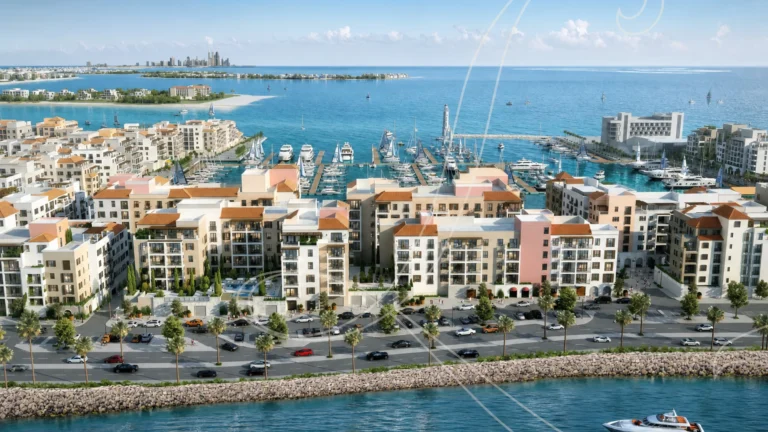
Port De La Mer is a waterfront development combining residential buildings with a marina, promenades and leisure facilities. It targets buyers seeking a Mediterranean-inspired coastal lifestyle within Dubai.
Bulgari Lighthouse on Jumeirah Bay Island
Meraas is also collaborating with Bulgari on the Bulgari Lighthouse residential project on Jumeirah Bay Island. This project is scheduled for completion in 2027, with prices starting from approximately 17,495,000 USD. The development is positioned in the ultra-luxury segment, targeting high-net-worth individuals seeking branded residences and exclusive amenities.
Omniyat Projects
Omniyat is known for its focus on distinctive architecture and design-driven developments in prime urban locations.
The Pad in Business Bay
The Pad is a residential project in Business Bay that stands out due to its original design concept. Apartments in The Pad start from around 444,800 USD. The project targets buyers who value contemporary architecture and proximity to the city’s business core.
The OPUS by Zaha Hadid
The OPUS is another Omniyat development, designed by the renowned architect Zaha Hadid. It is a mixed-use building with a striking, sculptural form. Apartments in The OPUS start from approximately 1,192,000 USD. The project appeals to design-conscious buyers and investors seeking architecturally significant real estate.
Damac Properties Projects
Damac Properties is a major regional developer active not only in the UAE but also in several other countries. The company is known for branded residences and collaborations with international luxury brands.
Bay by Cavalli in Dubai Marina
In Dubai Marina, Damac is developing Bay by Cavalli, a residential project associated with the Cavalli brand. The project is scheduled for completion in 2026, with prices starting from around 789,400 USD. Branded projects like this typically target buyers who value design, branding and lifestyle positioning.
Real Estate in Abu Dhabi
Abu Dhabi is the capital of the UAE and home to around 80% of Emirati citizens. Compared with Dubai, the city is generally perceived as more traditional and calmer, with a strong focus on family life and long-term residency.
At the same time, Abu Dhabi’s real estate market has been actively developing, especially since 2019, when selected areas were opened to freehold ownership for foreign buyers. The emirate offers:
- lower average rental prices than Dubai, though they have been rising;
- a strong base of local and expatriate families seeking stable, long-term housing;
- master-planned islands and communities with schools, parks and cultural institutions.
For Russian buyers, Abu Dhabi can be particularly attractive for family relocation, thanks to its quieter pace of life and strong emphasis on education and culture.
Developers in Abu Dhabi
Several key developers shape the Abu Dhabi residential market. For Russian buyers, understanding their positioning and flagship projects helps in selecting reliable investments.
Aldar Properties Projects
Aldar Properties is one of Abu Dhabi’s leading developers, with a diversified portfolio of residential, commercial and retail assets.
Al Jimi Mall
Aldar owns Al Jimi Mall, a significant retail asset that underscores the company’s presence in the commercial segment and its role in shaping community infrastructure.
Louvre Abu Dhabi-Related Residential Project
Aldar is also developing a residential project associated with Louvre Abu Dhabi. Units in this development start from approximately 353,400 USD, with completion expected in 2025. The project leverages the cultural prestige of Louvre Abu Dhabi and targets buyers who value proximity to major cultural institutions and waterfront living.
SAAS Properties Projects
SAAS Properties positions itself as a developer focused on family values and community-oriented living.
Reem Five on Al Reem Island
The company’s Reem Five project is located on Al Reem Island, one of Abu Dhabi’s key freehold zones. Apartments in Reem Five start from around 474,800 USD. The project is oriented towards families and long-term residents seeking a balance between urban convenience and community atmosphere.
Reportage Properties Projects
Reportage Properties is an active developer in Abu Dhabi, with a track record of successfully delivered projects and ongoing developments.
Leonardo Residences
Leonardo Residences is one of the company’s completed projects, demonstrating its ability to deliver residential buildings in established communities.
Perla 3 on Yas Island
Reportage is also developing Perla 3 on Yas Island. The project is scheduled for completion in 2027, with prices starting from approximately 227,100 USD. Yas Island’s positioning as a leisure and entertainment hub, combined with residential offerings, makes Perla 3 attractive for both end-users and investors.
Step-by-Step Procedure for Buying Property in the UAE
The purchase procedure in the UAE is relatively straightforward for Russians, especially in freehold zones. The process can vary slightly depending on whether the property is off-plan or ready, and whether it is purchased from a developer or on the secondary market, but the main stages are similar.
1. Selecting the Property and Developer
The first step is to define the goal (residence, rental, resale) and budget, then shortlist suitable communities and developers. At this stage, buyers typically:
- compare freehold zones and projects in Dubai and Abu Dhabi;
- evaluate developer reputation and track record;
- analyse payment plans and expected completion dates for off-plan projects;
- review service charges and estimated rental yields.
2. Reserving the Property
Once a specific unit is chosen, the buyer usually signs a reservation form or preliminary agreement and pays a reservation fee or deposit. This step secures the unit for a defined period while the main sale and purchase documentation is prepared.
3. Signing the Main Contract
For off-plan properties, the main document is typically a sale and purchase agreement with the developer. For ready or resale properties, the parties sign a standardised contract, often referred to as a Memorandum of Understanding or a similar form, which sets out the key terms of the transaction.
4. Payment and Registration
Payments are made according to the agreed schedule. For off-plan projects, this usually involves instalments linked to construction milestones. For ready properties, the buyer typically pays the balance on transfer. The transaction is then registered with the relevant land department, and the buyer receives a Title Deed or equivalent ownership certificate.
Required Documents for the Transaction
For Russian citizens, the documentation requirements are relatively simple compared with many other countries.
Basic Documents
- International passport – the main identification document required for the purchase.
- Proof of funds transfer – payments must be made via a bank with SWIFT access or other accepted channels, in compliance with local regulations.
Key Transaction Documents
- Memorandum of Understanding / Contract F – a standardised contract that sets out the terms of the sale. It typically involves a deposit of around 10% of the purchase price.
- Sale and Purchase Agreement – the main contract between buyer and seller, usually prepared in both English and Arabic.
- No Objection Certificate (NOC) – a certificate from the developer confirming that there are no objections to the transfer of the property to the new owner. This is required for registration of the transfer.
- Title Deed – the official ownership certificate issued after registration of the transaction with the land department.
When a mortgage is involved, the bank also issues its own No Objection Certificate or similar document confirming its consent to the transaction and outlining the mortgage conditions.
Buying Property with a Mortgage
Russian buyers can finance property purchases in the UAE using mortgages from local banks, subject to eligibility and compliance with bank requirements. When a mortgage is used:
- the bank conducts its own assessment of the property and the borrower’s financial profile;
- a mortgage agreement is signed in addition to the sale and purchase documentation;
- the bank issues a No Objection Certificate confirming its role as a mortgagee;
- the Title Deed may reflect the mortgage until the loan is fully repaid.
Mortgage financing can be combined with off-plan purchases, depending on the developer, project and bank policies, but buyers should carefully review payment schedules and eligibility criteria.
Additional Costs When Buying Property
In addition to the purchase price, Russian buyers should budget for a range of additional costs and fees. These may include:
- registration fees payable to the land department;
- developer administration fees, where applicable;
- agency commissions if a real estate broker is involved;
- legal or advisory fees if the buyer engages independent legal counsel;
- ongoing service charges and maintenance fees after handover.
These costs vary by emirate, project and transaction structure, so buyers should request a detailed cost breakdown before committing to a purchase.
Possibility of Remote Purchase
One of the advantages of the UAE market for Russian buyers is the ability to complete a property purchase remotely. This is particularly relevant for those who cannot travel to the UAE during the transaction.
Power of Attorney and Remote Transactions
A purchase can be executed through a representative in the UAE acting under a notarised power of attorney. The key steps include:
- preparing and notarising a power of attorney in favour of a trusted representative;
- ensuring that the power of attorney is legalised or attested as required for use in the UAE;
- authorising the representative to sign contracts, submit documents and attend registration on the buyer’s behalf.
Payments can be made via international bank transfers using SWIFT, and in some cases, developers may accept payments in cryptocurrency, subject to their internal policies and applicable regulations.
Obtaining Residency Through Property Purchase
Property ownership in the UAE can provide a basis for obtaining a residency visa, which is a key motivation for many Russian buyers.
Minimum Investment Threshold
Since spring 2026 DLD sets no minimum property value for a sole owner and a share worth at least AED 400,000 for each co-owner for the two-year residence visa. The former AED 750,000 threshold no longer applies.
Eligibility Conditions
To use property as a basis for residency, the following general conditions typically apply:
- the property must be located in a freehold zone;
- the property must be completed (ready);
- the buyer must hold the Title Deed in their name;
- the property value must meet or exceed the required threshold.
Specific conditions and visa categories can vary over time, so buyers should verify current requirements at the time of application.
Visa and Residency Features
Property-based residency visas in the UAE offer several important features for Russian buyers.
Processing Time and Separate Application
The visa is not issued automatically with the property purchase. It requires a separate application process that can take up to four weeks. During this period, authorities review the documentation, including the Title Deed and other required forms.
Inclusion of Family Members
One of the advantages of property-based residency is the possibility to include close relatives in the visa, subject to applicable rules. This makes the UAE particularly attractive for family relocation, as spouses and children can obtain residency linked to the main property owner’s visa.
Use of the Property
A property purchased in a freehold zone can be used both for personal residence and for generating rental income. Owners can choose to:
- live in the property full-time or part-time;
- rent it out on a long-term basis to tenants;
- use it for short-term rentals where permitted by local regulations;
- combine personal use with periods of rental to optimise returns.
Conclusions and Recommendations for Russian Buyers
The UAE real estate market offers Russian buyers a combination of lifestyle, investment and residency benefits that are difficult to replicate in many other jurisdictions. Key takeaways include:
- Clear ownership structures: understanding the difference between freehold and leasehold is fundamental. For most Russian buyers, freehold zones are the primary focus, as they allow full ownership and the possibility of residency.
- Choice of emirate and city: Dubai is more dynamic, internationally visible and often offers higher rental yields, while Abu Dhabi is more traditional, family-oriented and culturally focused. Both cities have freehold zones and reputable developers.
- Developer selection: working with established developers such as Emaar, Nakheel, Dubai Properties, Meraas, Omniyat, Damac, Aldar, SAAS and Reportage can reduce project and delivery risk, especially for off-plan investments.
- Purpose-driven strategy: clearly defining whether the purchase is for residence, rental income or resale helps in choosing the right location, property type and payment structure.
- Simple documentation: for Russians, the main requirement is a valid international passport and a compliant method of transferring funds via SWIFT. The core transaction documents — Contract F, Sale and Purchase Agreement, NOC and Title Deed — form a standardised framework.
- Remote purchase options: the ability to buy remotely via a notarised power of attorney and to pay via international transfers or, in some cases, cryptocurrency, makes the UAE accessible even to those who cannot travel during the transaction.
- Residency potential: a property purchase of any value (for a sole owner) can provide a basis for residency applications, with the possibility of including close family members and using the property for both living and rental income.
For Russians considering the UAE, a structured approach is recommended: start with a clear definition of goals and budget, focus on freehold zones in Dubai and Abu Dhabi, shortlist reputable developers and projects, and carefully plan the transaction structure, including additional costs and potential residency applications. With proper planning and due diligence, UAE real estate can become a stable, income-generating and lifestyle-enhancing asset in a diversified international portfolio.
Estimate your mortgage
Monthly payment, income-based eligibility and purchase costs (DLD, registration, trustee) — in our Dubai mortgage calculator.
Open the calculator