Updated: 23 January 202622 min read
Emaar Properties is one of the central developers behind the construction boom that transformed the UAE in the 2000s and continues to shape Dubai’s skyline today. The company is best known globally for delivering Burj Khalifa, the world’s tallest skyscraper, and Dubai Mall, one of the largest shopping and entertainment destinations. For investors and end-users looking at Dubai real estate in 2026, understanding Emaar’s role, portfolio, and strategy is essential for making informed property decisions.
Founded in 1997 by Mohamed Ali Rashed Alabbar, Emaar has grown from a government-owned developer into a publicly listed holding with multiple business divisions and a strong international footprint. In Dubai, Emaar has delivered and continues to develop large-scale master communities that are now established residential, tourism, and business hubs. These include Dubai Marina, Downtown Dubai, Dubai Hills Estate, Emaar Beachfront, and several villa and apartment communities that are well known to local and international buyers.
This article provides an in-depth, analytical overview of Emaar Properties for investors, buyers, and market observers. It covers the company’s history, business structure, flagship projects in Dubai and the wider UAE, and its international expansion, with a particular focus on how these elements relate to the Dubai property market and investment strategies in 2026.
History of Emaar Properties
Foundation and Early Ownership Structure
Emaar Properties was established in 1997 by Mohamed Ali Rashed Alabbar. At the time of its founding, the sole owner of the company was the Government of Dubai. This government backing provided Emaar with the institutional support and credibility needed to undertake large-scale urban development projects at an early stage of Dubai’s modern real estate cycle.
From an investor’s perspective, this origin is important: it positioned Emaar as a strategic vehicle for implementing Dubai’s long-term urban and tourism vision. The company’s early projects laid the groundwork for the freehold real estate model that later attracted international capital and end-users to the emirate.
Transition to a Public Company
In 2000, Emaar Properties transitioned from being fully government-owned to a publicly listed company by conducting a listing on the Dubai Financial Market. This move opened Emaar to private and institutional investors and integrated the company more deeply into the region’s capital markets.
For real estate investors in 2026, this public status means that Emaar’s performance, strategy, and financials are subject to market scrutiny and regulatory oversight. It also means that the company’s development pipeline and delivery track record are closely watched indicators of broader Dubai property market sentiment.
Launch of Dubai Marina: First Major Master Project
In 2001, Emaar announced Dubai Marina, its first large-scale master-planned waterfront project. Dubai Marina was conceived as a high-density, mixed-use community with residential towers, retail, hospitality, and marina facilities. Today, more than 55,000 people live in Dubai Marina, and upon full completion, the area is expected to accommodate over 120,000 residents and more than 200 skyscrapers.
Dubai Marina is a key case study in how Emaar approaches master community development:
- Integrated planning: Residential towers, retail promenades, and leisure facilities are planned as a cohesive environment rather than isolated buildings.
- Waterfront positioning: The marina canal and proximity to the Arabian Gulf create a premium waterfront lifestyle, which typically supports strong demand and resilient rental yields.
- High-rise density: The focus on vertical development allows for a large number of units within a relatively compact land area, which is relevant for investors assessing supply and long-term capital appreciation potential.
Dubai Marina is located within a freehold zone, meaning foreign buyers can own property and land on a freehold basis. This has made the community a major magnet for international investors, especially those seeking ready apartments with established rental demand.
Development of Downtown Dubai and Global Flagship Assets
In 2003, Emaar began developing Downtown Dubai, a 2 sq. km district that would become one of the most recognizable urban centers in the world. Downtown Dubai includes two of Emaar’s most iconic assets:
- Burj Khalifa: The world’s tallest skyscraper, a mixed-use tower with residential, hospitality, and observation components.
- Dubai Mall: One of the largest shopping and entertainment centers globally, integrating retail, leisure, and tourism attractions.
Dubai Mall opened in 2008, and Burj Khalifa opened in 2010. Together, they transformed Downtown Dubai into a global tourism and business hub. For property investors, Downtown Dubai represents a prime example of how landmark assets can anchor surrounding residential and commercial real estate values.
Within Downtown Dubai, Emaar has delivered and developed a wide range of residential and mixed-use projects, including:
- Act One | Act Two
- Burj Crown
- Forte
- Grande
- Address BLVD
- The Old Town
- Boulevard Heights
- Il Primo Towers
- The Address Residence Fountain Views
- The Address Residence Sky View
- Burj Vista
- Boulevard Point
- Vida Residence
The district also features the world’s largest performing fountain and the Dubai Opera cultural complex. These elements reinforce Downtown Dubai’s positioning as a mixed-use, high-end urban core with strong tourism and lifestyle appeal. For investors, this typically translates into robust short-term and long-term rental demand, particularly for units with direct or partial views of Burj Khalifa, the fountains, or the boulevard.
Creation of the International Division
In 2004, Emaar established its international division, marking the beginning of its expansion beyond the UAE. This strategic move diversified the company’s geographic exposure and allowed it to replicate its master-planning expertise in other markets across the Middle East, Asia, Africa, Europe, and North America.
For Dubai-focused investors, Emaar’s international operations are relevant because they influence the company’s overall risk profile, revenue streams, and brand recognition. A developer with a diversified international portfolio can leverage cross-market experience while maintaining Dubai as a core hub.
Partnership with Giorgio Armani and Hospitality Expansion
In 2005, Emaar signed an agreement with the Giorgio Armani designer brand to develop a network of luxury hotels with an approximate value of around USD 1 billion. This partnership integrated high-end fashion branding into hospitality and real estate, reinforcing Emaar’s positioning in the luxury segment.
From a real estate perspective, branded residences and hotels can command premium pricing and often attract international buyers seeking lifestyle-driven investments. In Dubai, such branding can enhance perceived value, support higher average daily rates in hospitality, and influence the performance of nearby residential units.
Emaar Malls Group IPO and Post-Crisis Positioning
In 2014, Emaar Malls Group conducted a successful initial public offering (IPO), becoming one of the largest listings in the region after the 2007–2008 global financial crisis. The IPO highlighted the scale and importance of Emaar’s retail and mall portfolio, particularly assets like Dubai Mall.
For investors in 2026, this underscores Emaar’s multi-segment business model: the company is not solely a residential developer but also a major player in retail real estate, which can provide diversified income streams and support long-term stability.
Leadership Changes and Market Capitalization
In December 2020, founder Mohamed Alabbar stepped down from his role as chairman but continued to serve as managing director. This change signaled an evolution in the company’s governance while maintaining continuity in strategic leadership.
As of the third quarter of 2022, Emaar’s market capitalization was approximately USD 15.5 billion. While investors in 2026 should always refer to up-to-date market data, this figure illustrates the scale at which Emaar operates within the regional and global real estate landscape.
Business Structure of Emaar Properties
Related Articles
- ROI analysis of apartment in HZ RESIDENCES 4: DLD data and real deals
- Aldar Properties in the UAE: Developer Profile, Flagship Projects and Investment Insights for 2026 Buyers
- ROI analysis of apartment in OXFORD RESIDENCE: DLD data and real deals
- How to sell a home in Dubai in Canal Front Residence 1 – analysis 2026
- ROI analysis of apartment in The Opus By Omniyat: DLD data and real deals
Core Divisions and Their Roles
Emaar’s business is organized into several key divisions, each focusing on specific segments of the real estate and related services value chain. These include:
- UAE Development
- International Development
- Emaar Malls
- Emaar Hospitality
- Emaar Entertainment
- Emaar Leisure Group
- Emaar Investment Holding
In total, the holding company brings together around 60 subsidiaries. For investors and buyers, understanding this structure helps clarify how Emaar generates revenue, manages risk, and supports its development pipeline.
UAE Development
The UAE Development division is responsible for Emaar’s core development activities within the United Arab Emirates, with Dubai as its primary market. This division oversees:
- Master community planning and phasing
- Off-plan project launches
- Construction and delivery of residential and mixed-use projects
- Coordination with Dubai Land Department (DLD) and Real Estate Regulatory Agency (RERA) for regulatory compliance
For buyers of off-plan and ready properties in 2026, the UAE Development division is effectively the engine behind Emaar’s Dubai communities. It is responsible for ensuring that projects progress according to schedule, that Oqood registrations (off-plan registration with DLD) are handled correctly, and that handovers comply with local regulations.
International Development
The International Development division manages Emaar’s projects outside the UAE. This includes residential, commercial, and mixed-use developments in multiple countries across the Middle East, Asia, Africa, Europe, and North America.
While these projects are geographically diverse, they often follow similar principles to Emaar’s Dubai communities: master planning, integrated amenities, and a focus on lifestyle. For investors who are familiar with Emaar’s Dubai track record, the international division offers exposure to other markets under the same brand and development philosophy.
Emaar Malls
Emaar Malls focuses on retail real estate, including large shopping centers and community malls. Dubai Mall is the flagship asset within this division. The performance of Emaar Malls is closely linked to tourism flows, retail spending, and the attractiveness of surrounding communities.
For property investors, strong retail infrastructure can enhance the appeal of nearby residential units, support higher occupancy rates, and contribute to long-term capital appreciation. In Dubai, proximity to major malls is often a key factor for both tenants and end-users.
Emaar Hospitality
Emaar Hospitality manages the company’s hotel and serviced residence brands and operations. This includes luxury and upscale properties that cater to both business and leisure travelers.
In Dubai’s real estate market, hospitality assets and branded residences can influence the positioning of entire districts. For example, hotels and serviced apartments near Burj Khalifa and Dubai Mall contribute to Downtown Dubai’s status as a premium tourism and business destination, which in turn supports demand for residential units in the area.
Emaar Entertainment and Emaar Leisure Group
Emaar Entertainment and Emaar Leisure Group are responsible for leisure, entertainment, and recreational assets. These may include attractions, family entertainment centers, and lifestyle facilities integrated into malls and communities.
From a real estate investment standpoint, such amenities enhance the liveability and attractiveness of Emaar’s master communities. They help create self-contained environments where residents have access to retail, leisure, and entertainment without needing to travel far, which can be a key selling point for both tenants and owner-occupiers.
Emaar Investment Holding
Emaar Investment Holding oversees the company’s investment activities and holdings. This division plays a role in capital allocation, portfolio management, and long-term strategic positioning.
For investors analyzing Emaar as a corporate entity in 2026, this division is relevant to understanding how the company balances development risk, recurring income assets, and strategic stakes in various subsidiaries and ventures.
Key Projects in the UAE
Overview of Emaar’s UAE Portfolio
Within the UAE, and particularly in Dubai, Emaar owns and has developed more than 14,000 properties across multiple master communities. These communities cater to different buyer profiles, from villa-focused family neighborhoods to high-rise waterfront districts and mixed-use urban centers.
Major Emaar communities in Dubai include:
- Arabian Ranches
- Dubai Marina
- The Greens
- The Meadows
- The Lakes
- The Views
- The Springs
- Dubai Creek Harbour
- Emaar Beachfront
- Downtown Dubai
- Dubai Hills Estate
These communities are located in freehold zones, where foreign nationals can own property and land on a freehold basis. This is a critical factor for international investors evaluating Dubai in 2026, as freehold ownership provides long-term security and flexibility compared to leasehold structures.
Arabian Ranches: Established Villa Community
Arabian Ranches is one of Emaar’s flagship villa communities in Dubai. It is designed as a suburban-style, low-density neighborhood with a focus on family living, green spaces, and community amenities.
Key characteristics relevant to investors and end-users include:
- Villa typology: Predominantly townhouses and standalone villas, appealing to families and long-term residents.
- Community facilities: Schools, retail centers, and leisure facilities that support a self-contained lifestyle.
- Freehold ownership: Foreign buyers can own villas on a freehold basis, which is attractive for long-term residency and wealth preservation strategies.
For investors in 2026, Arabian Ranches typically represents a mature, stable community with established service charges, rental demand, and resale liquidity. It is often considered by buyers seeking lower density compared to high-rise districts.
Dubai Marina: High-Rise Waterfront Living
Dubai Marina, as discussed earlier, is a high-density waterfront community with a strong focus on apartment living. It is one of the most recognizable residential districts in Dubai and a key example of Emaar’s master-planning capabilities.
From an investment perspective, Dubai Marina offers:
- Strong rental market: High demand from expatriate professionals and short-term tenants due to its location, amenities, and waterfront lifestyle.
- Diverse unit mix: Studios to large apartments, allowing investors to target different budget segments.
- Established infrastructure: Retail, F&B, and leisure options along the marina promenade and within nearby malls.
In 2026, Dubai Marina remains a key reference point for investors comparing yields, occupancy rates, and capital appreciation trends across Dubai’s apartment communities.
The Greens, The Views, The Springs, The Meadows, and The Lakes
These communities form part of Emaar’s portfolio of mid-rise and villa neighborhoods that offer a mix of apartment and townhouse/villa living. They are generally characterized by landscaped environments, community facilities, and proximity to key business and leisure hubs.
- The Greens and The Views: Primarily apartment communities with mid-rise buildings, often appealing to professionals and small families.
- The Springs, The Meadows, The Lakes: Villa and townhouse communities with a focus on family living, green spaces, and community amenities.
For investors, these communities often represent a balance between urban convenience and residential tranquility. They are typically considered by buyers seeking established neighborhoods with predictable service charges and stable rental demand.
Dubai Creek Harbour
Dubai Creek Harbour is one of Emaar’s major master developments, positioned as a waterfront community with a mix of residential, retail, and leisure components. It is designed to offer views of Dubai’s skyline and the historic Dubai Creek area.
From an investment standpoint, Dubai Creek Harbour is relevant for buyers looking at medium- to long-term capital appreciation, as large-scale master communities often evolve over multiple development phases. The area’s waterfront positioning and integration of lifestyle amenities are key factors for both end-users and investors.
Emaar Beachfront, Downtown Dubai, and Dubai Hills Estate as Prime Districts
Emaar identifies Emaar Beachfront, Downtown Dubai, and Dubai Hills Estate as some of its best-performing and most popular districts. These areas are widely recognized as major residential, tourism, and business centers within Dubai.
- Emaar Beachfront: A waterfront community with direct beach access, positioned as a premium residential and holiday-home destination.
- Downtown Dubai: The urban core anchored by Burj Khalifa and Dubai Mall, with high-end apartments, hotels, and cultural attractions.
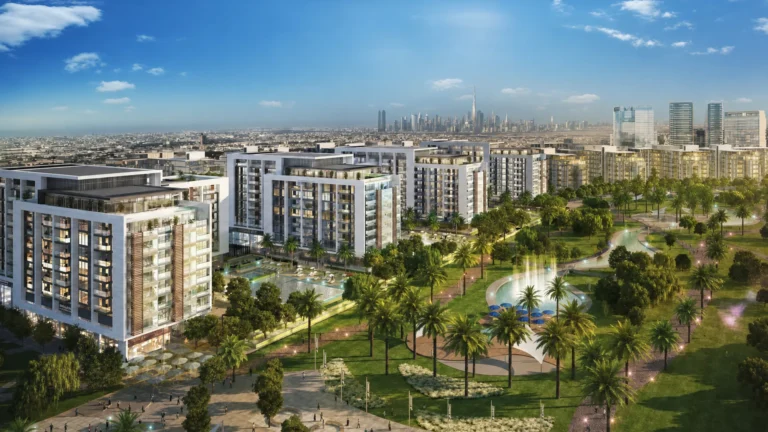
- Dubai Hills Estate: A large master community with villas, townhouses, and apartments, integrated with green spaces and lifestyle amenities.
For investors in 2026, these three districts are often benchmarks for pricing, rental yields, and capital appreciation in their respective segments: beachfront living, central urban luxury, and integrated golf/park-style master communities.
Emaar Projects in Dubai: Detailed Perspective for Investors
Freehold Zones and Ownership Structure
All of Emaar’s major Dubai communities are located in freehold zones. In these zones, foreign nationals can own property and land on a freehold basis, subject to Dubai Land Department regulations. This is a critical factor for international investors evaluating Dubai real estate in 2026.
Key implications of freehold ownership in Emaar communities include:
- Long-term security: Owners hold full title to the property and land, which can be transferred, sold, or inherited.
- Financing options: Freehold properties are typically eligible for mortgage financing from UAE banks, subject to buyer eligibility and bank policies.
- Investment flexibility: Owners can lease properties on a long-term basis (with Ejari registration) or, where permitted, on a short-term/holiday-home basis, subject to local regulations.
Off-Plan vs Ready Properties in Emaar Communities
In 2026, Emaar continues to offer both off-plan and ready properties across its Dubai portfolio. Understanding the difference is essential for investors and end-users:
- Off-plan properties: Units sold during the construction phase. Buyers typically sign a sales and purchase agreement, register the transaction with DLD via Oqood, and follow a construction-linked payment plan. Off-plan purchases can offer entry at earlier price points and potential capital appreciation upon completion, but they also carry construction and market timing risk.
- Ready properties: Completed units that are handed over and can be occupied or rented immediately. These properties allow investors to assess the actual building, community, and service charges, and to generate rental income without construction risk.
Emaar’s track record of delivering large-scale projects is a key consideration for buyers evaluating off-plan opportunities in 2026. The company’s established processes with DLD, RERA, and Oqood registration provide an additional layer of regulatory structure around off-plan transactions.
Service Charges and Community Management
Like all major Dubai communities, Emaar developments are subject to annual service charges. These charges cover the maintenance of common areas, security, landscaping, and shared facilities. In 2026, investors should factor service charges into their net rental yield calculations.
While specific service charge rates vary by community and building, Emaar’s scale and experience in community management are relevant for long-term asset performance. Well-maintained common areas and facilities can support higher occupancy, better tenant retention, and stronger resale values.
Regulatory Environment: DLD, RERA, DEWA, and Ejari
Investing in Emaar properties in Dubai involves interaction with several key regulatory and utility entities:
- Dubai Land Department (DLD): Oversees property registration, title deeds, and transaction recording.
- Real Estate Regulatory Agency (RERA): Regulates the real estate sector, including off-plan project registration, escrow accounts, and broker licensing.
- DEWA (Dubai Electricity and Water Authority): Provides electricity and water connections to properties.
- Ejari: The system for registering tenancy contracts, required for long-term residential leases.
Emaar’s scale and experience mean that its projects and transactions are deeply integrated into these regulatory frameworks. For investors in 2026, this provides a structured environment for property ownership, leasing, and resale.
Investment Considerations: ROI, Rental Yield, and Capital Appreciation
While specific numerical yields and price data must always be obtained from current market sources, Emaar communities are generally regarded as core assets within Dubai’s real estate market. For investors, key analytical points include:
- Rental yield: Emaar’s established communities such as Dubai Marina, Downtown Dubai, and Dubai Hills Estate typically attract strong tenant demand due to location, amenities, and brand recognition.
- Capital appreciation: Large master communities and iconic districts often benefit from long-term infrastructure improvements, amenity additions, and brand strength, which can support capital appreciation over time.
- Liquidity: Emaar properties are widely recognized in the market, which can support resale liquidity compared to lesser-known developers or smaller projects.
In 2026, investors should analyze each Emaar community individually, considering factors such as unit type, view, building age, service charges, and proximity to key amenities when assessing potential ROI.
International Projects of Emaar Properties
Global Footprint
Emaar Properties has a presence in more than 30 countries across the Middle East, Asia, Africa, Europe, and North America. This international footprint allows the company to diversify its development activities and revenue sources beyond the UAE.
For investors familiar with Emaar’s Dubai projects, this global presence reinforces the brand’s recognition and provides additional context for evaluating the company’s long-term strategy and resilience.
Emaar India
In India, Emaar owns a portfolio of residential and commercial real estate as well as a land bank of more than 2,400 hectares. This positions Emaar as a significant player in the Indian property market, with the potential to apply its master-planning and mixed-use development expertise.
While the specific projects and performance metrics in India are market-dependent, the scale of the land bank indicates a substantial long-term development pipeline. For investors in 2026, Emaar’s Indian operations represent an important component of the company’s international diversification.
Pakistan: Emaar Oceanfront and The Canyon Views
In Pakistan, Emaar is implementing projects such as Emaar Oceanfront in Karachi and The Canyon Views in Islamabad. These developments extend Emaar’s master community model into key Pakistani cities.
Emaar Oceanfront, as the name suggests, is positioned as a waterfront development, while The Canyon Views in Islamabad focuses on residential community living. Both projects reflect Emaar’s strategy of combining location advantages with integrated amenities.
Egypt: Emaar Misr, Uptown Cairo, and Marassi
In Egypt, Emaar operates through its subsidiary Emaar Misr. This entity is responsible for major projects including:
- Uptown Cairo: A large-scale development in Cairo.
- Marassi: A resort project.
These projects demonstrate Emaar’s ability to adapt its development model to different urban and resort contexts. For investors, Emaar Misr’s activities highlight the company’s commitment to long-term engagement in the Egyptian market.
Saudi Arabia: King Abdullah Economic City and Jeddah Gate
In Saudi Arabia, Emaar is the main developer of King Abdullah Economic City and the Jeddah Gate project in Jeddah. These developments are part of broader national initiatives to diversify the economy and enhance urban infrastructure.
Emaar’s role as a principal developer in these projects underscores its capacity to handle large-scale, strategic developments in partnership with public and private stakeholders.
Other Markets: Turkey, Syria, Iraq, Morocco, Lebanon, and Beyond
Emaar also implements projects in Turkey, Syria, Iraq, Morocco, Lebanon, and other countries. While the specifics of each project vary, the common thread is Emaar’s focus on integrated communities, lifestyle amenities, and long-term urban development.
For investors analyzing Emaar in 2026, this breadth of international activity highlights the company’s ambition and its role as a global real estate player, not just a local Dubai developer.
Conclusion: Emaar Properties as a Strategic Player in Dubai and Global Real Estate
Emaar Properties is widely recognized as a reliable and ambitious developer that has played a central role in shaping the modern image of Dubai. From Burj Khalifa and Dubai Mall to large-scale communities like Dubai Marina, Downtown Dubai, Dubai Hills Estate, and Emaar Beachfront, the company’s projects define many of the emirate’s most sought-after residential, tourism, and business districts.
For investors and buyers in 2026, several key points emerge:
- Emaar’s origins as a government-backed developer and its subsequent public listing on the Dubai Financial Market provide a foundation of institutional credibility and transparency.
- The company’s diversified business structure—spanning UAE Development, International Development, malls, hospitality, entertainment, leisure, and investment holding—supports multiple income streams and long-term resilience.
- Emaar’s Dubai communities are located in freehold zones, making them accessible to international buyers seeking secure property and land ownership.
- The developer’s track record in delivering large-scale, mixed-use projects is a key consideration for off-plan buyers assessing construction and delivery risk.
- Emaar’s international projects in India, Pakistan, Egypt, Saudi Arabia, and other markets reinforce its status as a global real estate brand with extensive master-planning experience.
As Dubai continues to evolve as a global hub for business, tourism, and lifestyle in 2026, Emaar Properties remains one of the most influential and closely watched developers in the market. For investors and end-users alike, understanding Emaar’s history, structure, and portfolio is an essential step in making informed decisions about property acquisition, portfolio diversification, and long-term real estate strategy in Dubai and beyond.