How to sell an apartment in Downtown Dubai – in this article we analyse real transaction data, prices, rental yields and liquidity for owners and investors.
For clarity, we may refer to the same unit as an apartment, a property, or a home depending on context.
How to sell a 1-bedroom apartment in Downtown Dubai Dubai
How to sell a 1-bedroom apartment in Downtown Dubai Dubai in the next 3–6 months at a fair market price, without panic or a heavy discount? The key is to anchor your expectations in real, recent transaction data and to understand how buyers and investors are currently looking at 1-bedroom stock in Downtown.
In the analysed dataset for the last 12 months, we see 30 sale transactions for 1-bedroom units across Downtown Dubai, with a median price around AED 2,400,000 and a median price per square foot close to AED 2,686. This is a tight, active market where quality listings move, but buyers are well informed and quick to compare alternatives across towers, views and finishes.
This article is written for owners who want to sell calmly and professionally over the next few months. We will walk through recent deal history, current liquidity, how investors think, and a step-by-step seller strategy tailored specifically to a 1-bedroom apartment in Downtown Dubai, so you can position your unit correctly and negotiate from a position of strength.

What you must know about the Dubai market before selling
Related Articles
- ROI analysis of apartment in DIVINE LIVING: DLD data and real deals
- ROI analysis of apartment in Azizi Riviera 24: DLD data and real deals
- ROI analysis of apartment in REEF RESIDENCE: DLD data and real deals
- ROI analysis of apartment in O10: DLD data and real deals
- How to sell a home in Dubai in DAMAC Maison Dubai Mall Street (The Signature) – analysis 2026
Before deciding on your asking price and timing, it is important to see your unit not as an isolated property, but as one data point in a very active Downtown Dubai ecosystem.
Based on our sample of 30 recent 1-bedroom sale transactions in Downtown Dubai over roughly the last two weeks of the recorded period, the median sale price is AED 2,400,000 with a median price of about AED 2,686 per square foot. This level already assumes strong buyer demand for Downtown’s location, lifestyle and brand value.
Several points stand out in the analysed dataset:
- Most of the sample consists of ready units: about 90 percent of transactions are for completed properties, with only around 10 percent off-plan. That tells you that buyers are actively closing on ready, usable apartments, not just speculating on future projects.
- The market is highly segmented inside Downtown. In the sample, prices per square foot range from around AED 2,080 in towers like Burj Views C up to more than AED 5,270 in branded hotel apartments such as The Address Downtown. This spread is what your future buyer will be using to justify a lower or higher offer.
- Liquidity is healthy. The same 30-sale sample over the last 12 months translates into an estimated 2.5 deals per month for similar one-bedroom stock, according to the pre-computed liquidity metric. For a seller, this means you are operating in a live market where comparable units are actually changing hands.
If you want to know how to sell a 1-bedroom apartment in Downtown Dubai Dubai efficiently, you must assume that your buyers also see this data: they will benchmark your price against nearby towers, amenities, view and recent achieved prices – not just asking prices on portals.
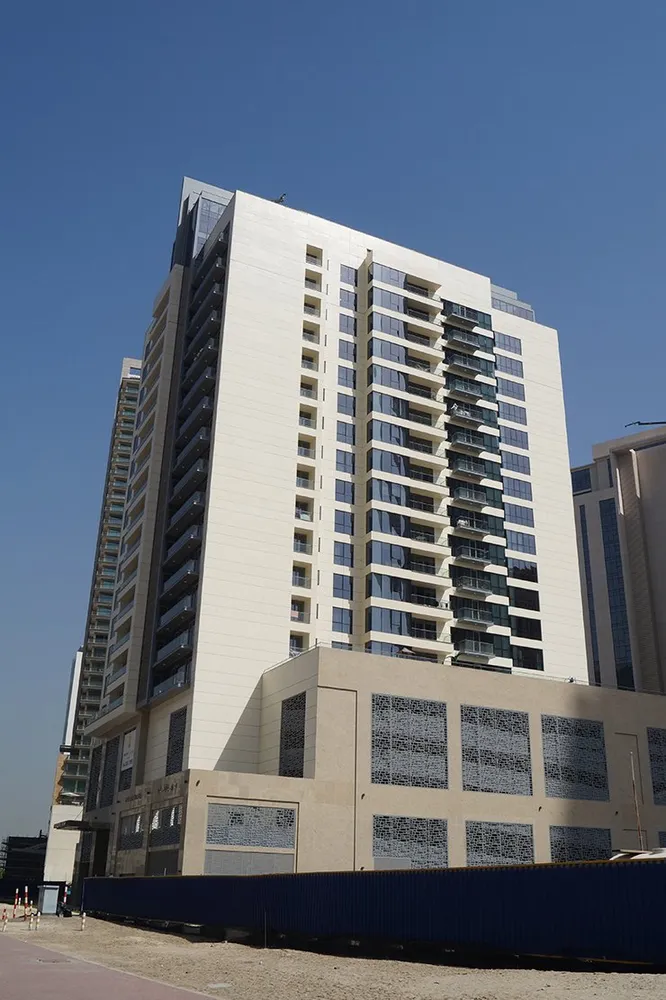
Deal history for the building: price and demand dynamics
The most powerful tool you have as a seller is the very recent transaction history for one-bedroom units in Downtown Dubai. In the analysed 15-day period alone, we see 30 transactions recorded, which gives us a very fresh snapshot of demand.
From the first 10 sample transactions in this dataset, the numbers look like this:
- Typical ticket sizes for standard residential one-beds are between roughly AED 1,630,000 and AED 2,850,000.
- Price per square foot for these standard units (not ultra-prime hotel apartments or new ultra-luxury launches) usually clusters between about AED 2,080 and AED 3,160 per square foot.
- Premium and branded stock can push far higher. One transaction in The Address Downtown shows a price of around AED 4,200,000 for a one-bed at roughly AED 5,276 per square foot. Another high outlier is a Binghatti Skyblade sale at just under AED 4,000 per square foot.
This spread illustrates two important things for an owner:
First, “one-bedroom in Downtown” is not a single price point. Your realistic target price depends heavily on:
- Tower brand and age (classic towers like 29 Burj Boulevard or Standpoint vs newer launches like Act One or ultra-luxury new projects).
- Net size and layout (a compact 600+ sq ft unit vs an 800–900+ sq ft more spacious layout).
- View, floor height and position relative to Burj Khalifa, the Fountains and the boulevard.
Second, current demand is deep enough that both mid-range and premium segments are clearing. Buyers are willing to pay a clear premium for standout assets, but only when the features justify it.
If your unit sits in a mainstream residential tower with a size around 750–900 sq ft, the sweet spot is typically near the overall median of AED 2,400,000 with a modest plus or minus depending on specifics. Listing far above the range justified by recent transactions risks pushing you into “used as a reference, but not purchased” territory.
Official data sources and live market tools
For readers who want to explore the raw data behind this analysis, here are the key open sources:
-
Dubai Land Department open data (historical transactions)
-
Property Finder – live listings and asking prices
-
Bayut – live listings and asking prices
Recent sales in this building
| Transaction Date | Price | Property Size | Price Psf | Status |
|---|---|---|---|---|
| 2026-03-17 | 2175000 | 774 | 2809 | Ready |
| 2026-03-17 | 1630000 | 783 | 2082 | Ready |
| 2026-03-17 | 2600000 | 679 | 3830 | Ready |
| 2026-03-17 | 3844999 | 967 | 3977 | Off-plan |
| 2026-03-13 | 2225000 | 887 | 2507 | Ready |
| 2026-03-13 | 2100000 | 607 | 3460 | Ready |
| 2026-03-12 | 2100000 | 828 | 2538 | Ready |
| 2026-03-12 | 2700000 | 1030 | 2621 | Ready |
| 2026-03-12 | 2850000 | 901 | 3165 | Off-plan |
| 2026-03-11 | 4200000 | 796 | 5276 | Ready |
Current listings and liquidity: what apartments are really asking now
In our current dataset, there are actually zero active sale listings and zero active rental listings captured specifically for one-bedroom units in Downtown Dubai at the time of extraction. This does not mean there are no listings on the open market; rather, the particular snapshot used for this analysis does not include live portal listings for this bedroom type in this community.
For a seller, this absence of visible supply has two strategic implications:
- You cannot rely on this sample of asking prices to set your expectations, because it does not show active competition for your exact segment at this moment.
- You must therefore lean more heavily on achieved transaction prices and liquidity indicators, not on aspirational asking levels.
The liquidity metrics in the pre-computed stats are particularly useful. In our 12‑month sample, there are 30 transactions for one-bedroom units in Downtown Dubai, which translates into about 2.5 deals per month. The “months of inventory” indicator is effectively 0.0 in this dataset, which is a shorthand way of saying that, in this sample, recent supply was absorbed very quickly by demand.
What this means for your sale plan over the next 3–6 months:
- If you price your apartment around the real transaction median and present it correctly, your realistic time on market can be measured in a few months, not years, because comparable units are regularly changing hands.
- If you try to “test the market” at a level that ignores recent achieved prices, buyers have enough alternatives across Downtown (and slightly beyond) to simply bypass your listing, leading to a prolonged marketing period and eventual price reductions.
When we work with owners, we usually combine this kind of transaction-based analysis with a live scan of portal listings and off-market inventory to position the asking price very precisely within the current band of competition.
Rent and yields: how ROI is calculated and what local numbers show
If you are considering whether to sell now or hold the property as a rental asset, the natural question is: what is the realistic ROI for a one-bedroom in Downtown Dubai today?
In this particular dataset, there are no rental transactions recorded either for the specific one-bed segment or at the broader community-parent level over the period analysed. The ROI block in the pre-computed stats is also empty. This means we cannot responsibly quote a yield percentage based on this dataset alone.
However, serious buyers and investors will still run their own ROI calculations, and as a seller you should understand the logic they use. Typically, the process looks like this:
- Estimate annual gross rent for a comparable one-bedroom in the same tower or immediate micro-location, based on current listings and recent rental contracts.
- Subtract realistic running costs (service charges, agency leasing fees, basic maintenance and vacancy assumptions) to get to a net annual income.
- Divide that net annual income by the purchase price to derive a net yield percentage.
For example, if an investor believes your unit can generate an annual net income that equates to 5–6 percent of the AED 2,400,000 purchase price, they will be more comfortable paying close to the median level. If, however, their rental research suggests a weaker yield, they will push harder on the price during negotiations.
When we advise owners on how to sell a 1-bedroom apartment in Downtown Dubai Dubai, we usually prepare an investor-style ROI sheet using live rental data and service charge schedules for the specific tower. This equips you with a rational argument during viewings: instead of simply “defending” your price, you can show how the unit works as an income-generating asset, which is especially persuasive for investor buyers.
Seller strategy: how to prepare and sell this type of apartment in Dubai
To sell a one-bedroom in Downtown Dubai within 3–6 months and avoid painful discounts, you need a structured, data-driven plan. Here is a step-by-step framework aligned with the transaction evidence discussed above.
1. Define a realistic price corridor
Use the transaction band from the recent dataset as your starting point:
- Median sale price around AED 2,400,000 for one-beds in Downtown Dubai.
- Indicative range of AED 1,630,000 to about AED 2,850,000 for typical non-ultra-prime units in the sample.
- Ultra-prime or branded hotel stock occasionally transacts much higher, but only with clear justifications (brand, view, service level).
Place your own unit along this spectrum according to tower, size, condition, view and floor. Then set a tight “price corridor”: for example, a target deal price and a slightly higher public asking price that still sits within the range justified by recent deals.
2. Decide on your time vs price priority
With around 2.5 deals per month in our sample, Downtown is active, but timing still matters. If you must sell within three months, your asking price should be closer to the midpoint of recent deals for your subsegment. If you have six months or more and can accept a smaller pool of potential buyers, you can position slightly above the median, but you must still stay defensible relative to evidence.
3. Prepare the apartment to beat the median
Since buyers compare units across several towers, presentation is critical:
- Resolve obvious defects: repaint, fix fittings, service A/C and ensure all lights, doors and windows function smoothly.
- Neutralise the interior: declutter, depersonalise and keep a light, neutral palette so photos and viewings feel spacious.
- Highlight the strongest features: a Burj view, a large balcony, parking proximity, or a particularly efficient layout.
A well-presented unit helps you sit at the upper edge of the fair market range supported by the transaction sample, rather than being forced into discount territory due to condition.
4. Use data transparently in negotiations
When offers start coming in, buyers will often cite cheaper units in older towers or smaller sizes as justification for a lower price. Being able to reference recent Downtown transactions – including those at or above your level – helps you explain why your price is rational.
This is where the phrase “How to sell a 1-bedroom apartment in Downtown Dubai Dubai” becomes very practical: you sell not just with emotion and views, but with calm reference to comparable sales, positioning your unit as correctly priced within an active, evidence-based market.
5. Work with a brokerage that actually tracks deals
In a data-rich market like Downtown Dubai, the difference between achieving AED 2,200,000 and AED 2,450,000 can be as simple as having accurate micro-location stats, properly structured listing exposure, and a negotiator who can speak the language of investors. Choose an agency that can show you their internal transaction dataset, not just portal screenshots.
How an investor sees this apartment: risks, scenarios and horizons
To maximise your outcome as a seller, you must briefly step into the buyer’s and investor’s shoes. Most serious buyers for Downtown one-beds fall into two groups: end-users who value lifestyle and location, and investors who pay mainly for numbers and exit options.
Based on the analysed sample of 30 transactions, here is how a rational investor typically frames your one-bedroom:
- Entry price: they will benchmark your ask against the AED 2,400,000 median and the AED per square foot range for similar towers and sizes.
- Yield: even though our current dataset does not show rental contracts, investors will cross-check portal rents and past contracts to see whether the implied net yield is competitive with other Dubai communities.
- Liquidity risk: the estimated 2.5 deals per month and very low months-of-inventory value in our sample tell them that, historically, one-beds in Downtown have not been “stuck” on the market. This supports their confidence in a future exit.
- Capital appreciation: they will look at the mix of ready vs off-plan deals (roughly 90 percent ready in this dataset) and at upcoming supply, to decide whether Downtown is still in a healthy cycle for mid-term holding.
For a seller, the strategic move is to pre-empt those investor questions. Have a clear story for:
- Why your asking price is aligned with or slightly better than recent deals for units of similar profile.
- How the apartment performs as a rental (typical rent, occupancy, service charges) and what that implies for net yield.
- What the likely resale horizon looks like for a subsequent buyer, given the community’s status and transaction volume.
If you can articulate this clearly, your apartment stops being “just another listing” and becomes a defined, analysable asset. This is exactly how to sell a 1-bedroom apartment in Downtown Dubai Dubai to an investor-class buyer: by giving them a coherent model, not just a floor plan and asking price.
Summary and answers to common questions
The data from our sample of 30 recent one-bedroom transactions in Downtown Dubai paints a clear picture. This is an active, liquid market with a median sale level around AED 2,400,000 and a broad, tower-specific price per square foot range. Ready stock dominates, and buyers have enough choice to compare across towers and micro-locations.
For an owner planning to sell over the next 3–6 months, the main takeaways are:
- Build your expectations on real achieved prices, not aspirational listings. Your realistic corridor is constrained by the recent AED per square foot band for comparable units.
- Positioning and presentation can move you within that corridor, from the lower edge to the upper edge, without resorting to panic discounts.
- Investors will buy if the numbers make sense. Prepare a simple ROI story using live rental and service-charge data for your specific tower, even though this particular dataset does not provide rental stats.
- Use brokers who understand Downtown’s internal segmentation and can back your asking price with transaction evidence during negotiations.
Below are concise answers to questions owners often ask when they start thinking about how to sell a 1-bedroom apartment in Downtown Dubai Dubai.
How long will it take to sell my one-bedroom?
Our sample implies around 2.5 deals per month for one-beds in Downtown. If you price in line with the latest achieved deals and present the apartment well, a 3–6 month horizon is realistic in current conditions.
Can I list above AED 3,000,000?
Most standard one-beds cluster below that level, while certain premium and branded units exceed it. You can aim higher only if your unit genuinely matches those premium comparables in brand, view, size, and finish; otherwise, expect buyers to resist and to compare you with more affordable, similar-quality options.
Is now a good time to sell, or should I rent first?
The decision depends on your personal objectives. The current sample shows active liquidity for sales, while we do not have direct rental data in this dataset. If you want to lock in capital and reduce exposure, selling now with a data-backed strategy is reasonable. If your priority is income, a deeper rental and yield analysis for your specific tower is essential before deciding.
In any case, approaching the process with clear numbers, rather than emotion, will give you the best chance of achieving a solid, market-consistent price within your desired timeframe.