Updated: 30 December 202517 min read
Overview of the Dubai Hills Estate Project
Dubai Hills Estate is one of the largest master developments in Dubai, located within Mohammed Bin Rashid City (MBR City). The project was launched as a large-scale, master-planned community with a strong focus on green spaces, integrated infrastructure and a wide selection of residential property types. The total area of the community is about 10,800 hectares and the master plan includes more than 25,000 residential units together with extensive social and commercial facilities.
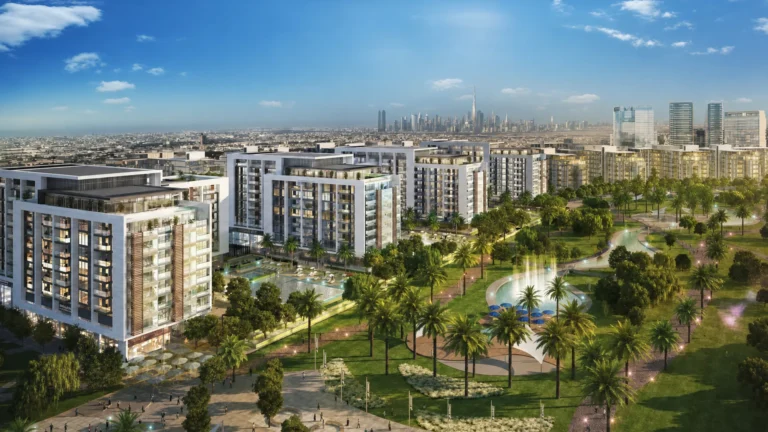
The concept of Dubai Hills Estate combines low- to mid-rise residential buildings, villa communities and townhouse clusters with parks, gardens, golf courses, swimming pools and artificial lagoons. The master plan also provides for schools, nurseries, restaurants, hotels, shopping and entertainment centres. One of the key planned elements is Mall of the World, announced as a future mega retail and entertainment destination with an area of around 8 million sq. m, complemented by wellness centres, about one hundred hotels, a theme park and what has been described as one of the largest swimming pools in the world.
For buyers and investors in Dubai real estate, Dubai Hills Estate stands out as a flagship green community with a clear long-term development vision, strong brand backing from a major master developer and a diversified stock of properties suitable for both end users and investment strategies.
Key Facts About the Project
Related Articles
- How to buy an unit in Dubai in Azizi Riviera Beachfront – analysis 2025
- Do You Need an AED Account to Buy Property in Dubai?
- What Is Dubai Land Department Form I and How Is It Used?
- What Is Expat Life Like in Abu Dhabi?
- What Is a Manager’s Cheque in Dubai Property Transactions?
The master plan of Dubai Hills Estate is based on a large-scale green and recreational concept. According to the project vision, the community will include extensive landscaped areas, golf courses and public parks. The initial concept of greening the area mentioned around 2.2 million sq. m of parks, gardens and golf courses. In a later description of the master plan, the total landscaped area is indicated at about 1.4 million sq. m, which underlines the strong emphasis on greenery and open spaces within the community.
Dubai Hills Estate is planned as a self-sufficient, mixed-use district with residential, retail, hospitality, educational and healthcare components. The community is designed to accommodate around 100,000 residents upon full completion. Within 30 sub-districts, the plan includes approximately 2,000 villas and more than 1,000 apartments, not counting a substantial number of townhouses. Many phases have already been handed over, while the remaining parts of the project are planned to be completed by 2026.
From an investment perspective, such a scale and clear phasing are important: they typically support long-term demand, create a stable rental market and provide opportunities for capital appreciation as infrastructure and amenities are progressively delivered.
Location and Infrastructure
Dubai Hills Estate is strategically located in MBR City, between key highways that connect major parts of Dubai. Thanks to this location, residents can reach Downtown Dubai in about 10 minutes by car, while popular coastal and leisure destinations such as Palm Jumeirah, La Mer beach and yacht marinas are accessible in roughly 30 minutes, depending on traffic conditions.
The master plan includes its own monorail network, which is designed to connect Dubai Hills Estate with both of Dubai’s international airports. In addition, two metro lines with three stations are planned to serve the area, further integrating the community into the wider public transport system of Dubai. For buyers and tenants, this planned transport connectivity is a key factor that can positively influence both quality of life and long-term property values.
Internal infrastructure is conceived as a network of boulevards, local roads, pedestrian and cycling paths, ensuring convenient movement within the community. The presence of retail centres, schools, clinics and recreational facilities within short driving or even walking distance is a major advantage for families and professionals looking for a balanced lifestyle.
Emaar Properties as the Master Developer
Dubai Hills Estate is a flagship project of Emaar Properties, one of the most prominent master developers in Dubai. Emaar is known for landmark developments such as Burj Khalifa, Dubai Mall, Dubai Fountain and Dubai Opera. The company has a track record of delivering large-scale mixed-use communities and regularly receives international recognition for its projects.
For investors, the involvement of Emaar Properties is a significant risk-mitigating factor. In the Dubai real estate market, Emaar is associated with:
- Consistent master planning and phased delivery
- Strong brand value that supports demand and resale liquidity
- Professional community management and maintenance standards
- Well-structured off-plan sales processes and escrow mechanisms in line with Dubai Land Department (DLD) and RERA regulations
In Dubai Hills Estate, Emaar applies its typical community model: a combination of residential clusters, retail hubs, leisure facilities and extensive landscaping, which together create a coherent and recognisable lifestyle brand. This is important for both end users seeking quality of life and investors targeting stable rental yields and long-term capital appreciation.
Master Plan and Residential Clusters
The general master plan of Dubai Hills Estate includes several premium and high-end residential clusters with villas, townhouses and apartments. These are complemented by large landscaped parks, pedestrian and cycling tracks, lounge areas, shopping centres, hotels, medical clinics, schools, nurseries and sports facilities.
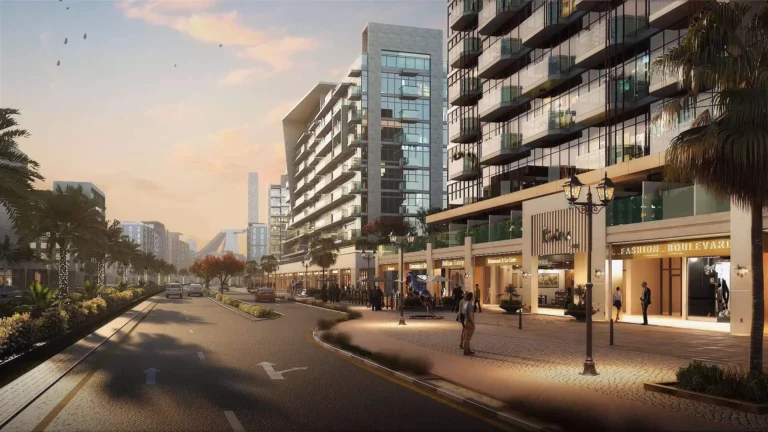
One of the key linear features of the community is a 7 km boulevard with around 400 retail outlets planned along it. This boulevard is designed to become a central lifestyle axis with shops, cafes, restaurants and services, supporting both residents and visitors. The master plan also includes a tennis academy with 14 courts, a football field and one of the largest parks in Dubai – Park Heights – which is planned to feature an ice rink, a water park and multiple recreation zones.
From a planning perspective, Dubai Hills Estate is structured as a series of sub-communities, each with its own internal amenities, yet all integrated into the wider green and transport network. This structure allows for clear segmentation of the property market within the community: golf-course villas, park-facing apartments, family-oriented townhouse clusters and more urban-style apartment buildings near retail and transport nodes.
Community Infrastructure and Facilities
The infrastructure concept of Dubai Hills Estate is based on the idea of a self-contained, multi-functional district. The community is planned to include:
- Residential complexes with villas, townhouses and apartments
- Extensive parks, gardens and landscaped green belts
- Golf courses and a dedicated golf club
- Swimming pools and artificial lagoons
- Retail centres and shopping malls
- Hotels and serviced hospitality options
- Restaurants, cafes and lounge areas
- Medical clinics and wellness centres
- Schools and nurseries
- Sports facilities including tennis courts and football fields
- Pedestrian and cycling paths
For Dubai property buyers, such a comprehensive infrastructure means that daily needs – from education and healthcare to shopping and leisure – can be met within or very close to the community. This typically enhances the attractiveness of the area for long-term residence, which in turn supports rental demand and occupancy levels.
Completed Components and Existing Amenities
Although Dubai Hills Estate is still under phased development, a number of key components have already been completed and are operational. Among them are:
- Four schools within the community
- Several completed residential complexes
- Dubai Hills Mall – a major shopping centre with retail outlets, restaurants, cafes, a cinema, an events venue and an amusement park
- Dubai Hills Golf Club with an 18-hole golf course
The presence of Dubai Hills Mall is particularly important from an investment standpoint. Large retail destinations tend to become anchors that attract footfall from surrounding areas, increase the visibility of the community and support the value of nearby residential properties. The golf club and 18-hole course add a further lifestyle and prestige dimension, positioning Dubai Hills Estate as a desirable address for golf enthusiasts and high-income residents.
As more phases are delivered by 2026, the balance between completed and under-construction components will continue to shift, typically supporting gradual price growth and strengthening the community’s reputation as a mature, fully functional district.
Transport Connectivity
Transport accessibility is a key factor for both end users and investors in Dubai. Dubai Hills Estate benefits from its location between major highways, which allows residents to reach central business and leisure districts within relatively short driving times. The approximate 10-minute drive to the city centre and around 30 minutes to Palm Jumeirah, La Mer beach and yacht marinas make the community convenient for professionals working in key business districts and for families who frequently visit coastal and entertainment areas.
The master plan includes a dedicated monorail network that is intended to connect Dubai Hills Estate with both of Dubai’s international airports. In addition, two metro lines with three stations are planned to serve the area. Once operational, these public transport links can significantly enhance the attractiveness of the community for tenants who rely on public transport, and can also support higher property values due to improved connectivity.
Within the community, the road network is designed to provide smooth internal circulation, while pedestrian and cycling paths offer alternatives to car travel for short distances. For investors, this integrated transport approach is a positive indicator of long-term planning quality and potential resilience of property values.
Educational Institutions and Nearby Leisure Options
Education is a major decision factor for families considering property purchase or long-term rental in Dubai. Dubai Hills Estate already includes four schools, and additional educational facilities are planned. The community’s residents can also benefit from the educational institutions located in nearby districts, which broadens the choice of curricula and school types.
In terms of leisure, residents of Dubai Hills Estate have convenient access to popular beaches and water parks in Dubai. Well-known water parks such as Wild Wadi and Aquaventure are reachable within a reasonable driving time, providing additional weekend and holiday options for families and visitors. Combined with the internal parks, golf courses and planned theme park elements, this creates a diversified leisure ecosystem that supports a high quality of life.
For investors, the presence of schools and easy access to major leisure attractions typically translates into stable demand from family tenants, which can support occupancy rates and rental yields over the medium to long term.
Apartment Communities in Dubai Hills Estate
The master plan of Dubai Hills Estate includes 13 residential complexes with apartments. Among the named projects are:
- Mulberry
- Acacia
- Park Point
- Park Ridge
- Executive Residences
- Collective
- Golfville
- Golf Suites
- Lime Gardens
- Park Horizon
- Elvira
- 399 Hills Park
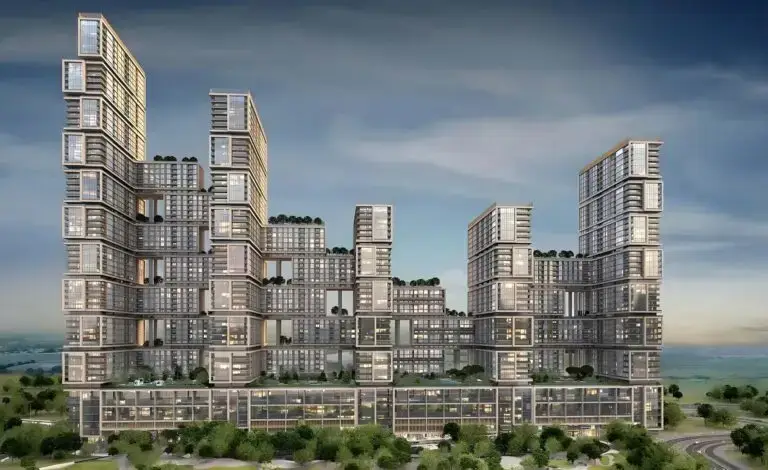
These apartment communities are generally mid-rise, with typical building heights of around 9–10 floors. An exception is Lime Gardens, which includes a 23-storey tower and townhouses within the same project. This mix of building heights allows for a variety of views and layouts, including park-facing, boulevard-facing and golf-course-oriented units, depending on the specific complex.
From an investment perspective, apartment complexes in Dubai Hills Estate cater to a broad tenant base: young professionals, small families, and investors targeting smaller ticket sizes compared to large villas. The presence of multiple distinct apartment projects also creates internal market segmentation, allowing investors to choose between more lifestyle-oriented, co-living style buildings and more traditional residential blocks.
Key Characteristics of Apartments
The apartment stock in Dubai Hills Estate includes studios and 1–4 bedroom units. The approximate size range is from about 46 sq. m for compact units up to around 510 sq. m for the most spacious apartments. This wide range allows buyers to select properties that match different budgets and lifestyle needs, from entry-level investment units to large family apartments.
Indicative pricing in the community starts from around USD 204,000 for the smallest apartments, while the most spacious units are priced at approximately USD 1,738,000. These figures reflect the positioning of Dubai Hills Estate as a premium and high-end community within Dubai, while still offering some relatively accessible entry points for investors and first-time buyers compared to ultra-luxury waterfront districts.
Apartment complexes typically offer a comprehensive set of amenities, which may include:
- Swimming pools
- Parking facilities
- Children’s playgrounds
- Sports courts or multi-purpose play areas
- Fitness gyms
- Restaurants and cafes at podium or ground level
- Libraries or co-working style reading rooms
- Yoga rooms or wellness studios
For investors, such amenity packages are important for rental attractiveness. In Dubai’s competitive apartment market, buildings with well-maintained pools, gyms and social spaces tend to achieve better occupancy and can justify slightly higher rents, supporting rental yield performance.
Villa and Townhouse Communities
Dubai Hills Estate includes eight main residential communities with villas and townhouses. These are:
- Maple Townhouses
- Sidra Villas
- Club Villas
- Golf Grove Villas
- Golf Place
- Golf Place 2
- Fairway Vistas
- Parkway Vistas
Each of these sub-communities has its own character and positioning within the overall master plan. Some are oriented towards golf course views and premium villa living, while others focus on more compact, family-friendly townhouse formats. This diversity allows Dubai Hills Estate to cater to different buyer profiles: from end users seeking a primary family home with a garden to investors targeting high-end villa rentals.
In the context of Dubai’s villa market, Dubai Hills Estate is often considered an attractive alternative to established villa districts due to its newer stock, integrated green planning and strong brand association with Emaar. The combination of golf-front villas, park-side homes and internal community amenities positions these clusters as competitive options for both local and international buyers.
Specifications of Villas and Townhouses
The townhouse segment in Dubai Hills Estate generally includes units with 3–5 bedrooms. Typical built-up areas range from approximately 220 to 250 sq. m. Price indications for townhouses start from around USD 790,000 and go up to about USD 1,400,000, depending on the specific project, size and location within the community.
Villas in Dubai Hills Estate are larger and more varied in scale. They usually offer 3–6 bedrooms, with built-up areas from around 270 sq. m up to approximately 1,700 sq. m. Pricing for villas starts from about USD 830,000 and can reach around USD 12,000,000 for the largest and most prestigious properties. This wide range reflects the internal segmentation of the villa market, from more compact family villas to expansive luxury residences with prime views.
Most properties are sold with interior finishing, and in some complexes, with built-in household appliances. Villas typically include:
- Rooms for live-in staff
- Private garages
- Terraces and balconies
- Private swimming pools in many larger units
- Gardens with barbecue areas
Townhouses are usually two-storey homes with balconies, terraces and private gardens. For buyers, this format offers a balance between the privacy and outdoor space of a villa and the more compact, manageable size and price point of an attached home. From an investment standpoint, townhouses often attract strong family rental demand, while larger villas can target higher-income tenants and long-term end users.
Internal Infrastructure of Residential Complexes
Beyond the community-wide infrastructure, individual residential complexes in Dubai Hills Estate are designed with their own internal amenities. These typically include:
- Swimming pools for adults and children
- Fitness centres and gyms
- Children’s playgrounds
- Sports courts and multi-purpose play areas
- Landscaped parks and internal green belts
- Pedestrian walkways and jogging tracks
- Tennis courts in selected communities
- Restaurants, cafes and sometimes bars
- Cinemas or screening rooms in larger mixed-use components
- Retail and shopping areas within or adjacent to the complexes
For residents, this means that many leisure and daily needs can be met without leaving the immediate neighbourhood. For investors, such internal infrastructure can enhance the perceived value of the property, support higher occupancy and contribute to stronger long-term rental performance. In Dubai’s competitive freehold market, projects with comprehensive internal amenities often stand out in listings and attract more tenant enquiries.
Environmental Concept and Scale of the Community
Dubai Hills Estate is often described as one of the largest and greenest projects in Dubai. The master plan emphasises extensive landscaping, parks and golf courses, with total green areas described at different stages as between 1.4 million and 2.2 million sq. m. Regardless of the specific figure, the underlying concept is clear: greenery and open space are central to the identity of the community.
From an urban planning perspective, this focus on green areas, pedestrian and cycling paths and recreational zones is aligned with global trends towards healthier, more sustainable living environments. For residents, it translates into access to parks, jogging tracks, outdoor fitness and family picnic areas. For investors, such positioning can support long-term demand, as many buyers and tenants in Dubai increasingly prioritise communities with strong environmental and lifestyle credentials.
The projected population of around 100,000 residents upon completion underlines the scale of Dubai Hills Estate. With approximately 2,000 villas and more than 1,000 apartments planned across 30 blocks (excluding townhouses), the community is large enough to support a full ecosystem of retail, education, healthcare and leisure services, which in turn reinforces its self-sufficiency and resilience as a real estate market segment.
Future Development Plans and Sales Dynamics
Dubai Hills Estate is being developed in phases, with many components already completed and others scheduled for delivery by 2026. This phased approach allows the community to grow organically, with infrastructure and amenities being added as new residential clusters are handed over. For investors, this creates opportunities to enter the market at different stages: early in off-plan phases, during construction, or after handover when rental demand is more visible.
Historically, sales in Dubai Hills Estate have shown strong initial demand. It is noted that some apartment launches were sold out within a single day, reflecting the high level of interest from both local and international buyers. Such rapid sell-outs are typical for well-positioned Emaar projects in Dubai and indicate strong market confidence in the community’s long-term prospects.
Looking ahead to 2026, as more schools, retail outlets, leisure facilities and transport links become operational, Dubai Hills Estate is likely to further consolidate its position as a major residential hub in the city. For buyers and investors, the key considerations will include:
- Choosing between apartments, townhouses and villas based on budget and strategy
- Evaluating proximity to parks, golf courses, schools and Dubai Hills Mall
- Assessing potential rental demand for different unit types
- Monitoring the progress of planned infrastructure such as the monorail and metro stations
Within the broader Dubai real estate market, Dubai Hills Estate represents a large, master-planned, green community backed by a leading developer, with a diversified property mix and a clear long-term development horizon. For many investors and end users, these characteristics make it a compelling option to consider when planning property purchases in Dubai by 2026.